
California does not have one cuisine. It has agricultural regions, immigrant neighborhoods, fishing ports, wine country, desert resort towns and cities where a taco stand and a tasting-menu restaurant can be part of the same day. For a first-time visitor, the best food strategy is not to chase a checklist of famous restaurants. It is to understand which eating experiences belong naturally to the places already on your route.
The state’s travel identity is closely tied to fresh produce, global influences and local sourcing, but you can experience that without spending heavily. A farmers market breakfast, fish taco, sourdough sandwich, roadside fruit stop and neighborhood dinner can reveal more about California than a week of generic hotel restaurants.
Quick food-planning summary
| Best rule | Eat regionally instead of chasing one statewide “must-eat” list |
|---|---|
| Best budget strategy | Make lunch the special meal and keep breakfast simple |
| Best road-trip habit | Use food stops to break up driving, not create huge detours |
| Family strategy | One ambitious meal per day is enough |
| Wine-country strategy | Plan food, scenery and non-wine activities too |
| Main mistake | Booking every meal before you know the day’s actual pace |
1. Tacos in Southern California
Start with tacos because California’s Mexican and Mexican-American food traditions are fundamental, particularly in Los Angeles and San Diego. Do not assume the most photogenic restaurant is the best experience. Neighborhood taquerias, food trucks and market counters can be just as memorable. Try different styles rather than searching for a single “best taco in California.”
2. Fish tacos in San Diego
San Diego is a natural place to try Baja-influenced fish tacos, often built around battered or grilled fish, cabbage, sauce and lime. They are ideal road-trip food because the meal can be quick without feeling generic. Pair the stop with a beach or harbor day rather than driving across the county for one famous address.

3. California burritos
The California burrito is strongly associated with San Diego and typically combines carne asada with fries and other fillings. It is heavy, portable and very different from the idea of “California cuisine” as salads and avocado toast. Share one if you are curious but have a full day of eating planned.
4. Farmers markets
Farmers markets are one of the easiest ways to understand the state’s agricultural abundance. They can give you fruit, baked goods, prepared food and picnic ingredients in one stop. Market days and hours change, so check the local schedule instead of assuming the market runs every morning.
5. Seasonal fruit
California road trips pass through major agricultural areas. Depending on season and region, roadside stands and markets may offer citrus, strawberries, stone fruit, grapes, dates and more. Buy what is actually in season rather than expecting every fruit to be equally good all year.
6. Avocado-centered breakfasts and lunches
Avocado toast became a cliché because it genuinely fits the state’s cafe culture and agricultural identity. Try it where it makes sense—coastal brunch spots, bakeries and casual cafes—not because it appears on a tourist checklist. A simple breakfast can also be a smart budget balance before a more expensive dinner.
7. Sourdough in San Francisco
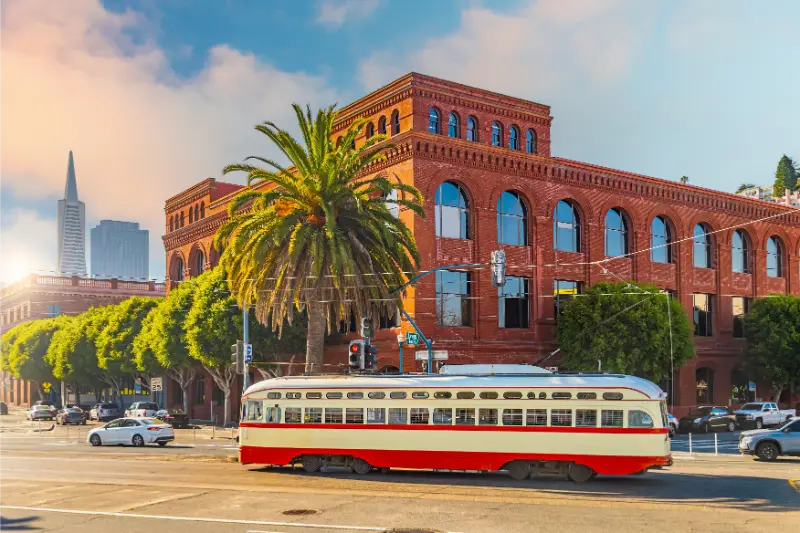
San Francisco sourdough is one of the state’s classic food associations. You do not need to queue for the most famous bread bowl to enjoy it. A good bakery loaf, sandwich or soup with local sourdough can fit naturally into a day around the Ferry Building, Embarcadero or neighborhood walk.
8. Dim sum and Chinese food in the Bay Area
San Francisco and the wider Bay Area have deep Chinese culinary traditions. Chinatown is the obvious starting point for first-time visitors, but excellent Chinese food extends far beyond one neighborhood. If your schedule includes the city, use a meal to explore rather than adding a separate sightseeing block.
9. Mission-style burritos in San Francisco
The Mission District is associated with large foil-wrapped burritos that differ from San Diego’s California burrito tradition. Trying both is a useful reminder that “Mexican food in California” is not a single style.
10. Seafood on the Central Coast
Monterey, Morro Bay, Santa Barbara and other coastal stops are natural places for seafood. Ask what is local and seasonal rather than assuming every menu item was caught nearby. Clam chowder, grilled fish and simple harbor meals often fit a coast road trip better than a long formal lunch.
11. Santa Maria-style barbecue
On the Central Coast, Santa Maria-style barbecue is traditionally associated with tri-tip cooked over red oak and served with regional accompaniments. It is a good example of a food experience tied to a specific part of California rather than the state as a whole.
12. Farm-to-table cooking
“Farm to table” is sometimes marketing language, but in California it also reflects the proximity of restaurants to major growing regions. You will encounter produce-forward menus in Los Angeles, the Bay Area, wine country and smaller agricultural towns. The useful question is not whether a restaurant uses the phrase, but whether the menu changes with season and place.
13. Napa and Sonoma food beyond wine
Wine country is also cheese, bakery, olive oil, produce and restaurant territory. If members of the group do not drink, build the day around a town, a meal, scenery and one or two tastings for those who want them. The trip should still work for the non-drinker.
14. Date shakes in the desert
The Coachella Valley has a long date-growing tradition, and date shakes are one of the more distinctive desert treats. They make sense on a Palm Springs or desert road trip because they connect food with the landscape rather than requiring a special detour across the state.
15. In-N-Out as a road-trip reference point
For international visitors, In-N-Out is often part of the California mythology. It is fast food, not a culinary obligation, but it can be a useful road-trip meal and cultural reference point. Try it if you are curious, then keep room in the trip for the neighborhood food that makes each city different.
16. Korean food in Los Angeles
Los Angeles has one of the world’s most important Korean communities outside Korea, and Koreatown can provide barbecue, soups, noodles, cafes and late-night dining. It is a better use of a city meal than eating every dinner in the tourist district nearest your hotel.
17. Japanese food in Los Angeles and the Bay Area
Japanese-American history and contemporary Japanese dining both shape California food culture. Little Tokyo in Los Angeles is the most visible visitor entry point, but Japanese restaurants and markets are widespread in major metropolitan areas.
18. Vietnamese food in Orange County and San Jose
Large Vietnamese communities have made pho, banh mi and regional Vietnamese dishes part of everyday California food life. If your route includes Orange County or San Jose, a meal in a Vietnamese commercial district can add cultural depth without creating a formal attraction stop.
19. Craft coffee
California cities take coffee seriously, but the best travel use of that culture is practical: pick a local cafe near the neighborhood you are already exploring. A good coffee stop can be the pause that prevents a morning from becoming a forced march.
20. Ice cream, paletas and bakery stops
Not every food experience needs to be dinner. California’s warm-weather travel rhythm makes small dessert stops especially useful with families. A paleta in a Latino neighborhood, bakery pastry in San Francisco or local ice cream on a beach-town walk can become the food memory children mention later.
How much should you budget for food?
California food costs vary enormously. You can spend modestly with markets, counter-service restaurants and grocery breakfasts, or very heavily in resort towns and fine dining. A practical strategy is to decide which meal each day deserves money. If dinner is the experience, keep breakfast simple and lunch casual. If lunch is a famous restaurant, dinner can be tacos near the hotel.
Tipping and service charges
In the United States, table-service restaurants generally expect a tip, and some establishments also add service charges or other fees. Read the bill before adding anything so you understand what is already included. Counter-service tipping screens are common, but they do not all represent the same service situation.
Reservations
Reserve destination restaurants, special-occasion meals and popular weekend wine-country spots. Do not reserve every breakfast and lunch on a road trip. Traffic, weather and attraction timing make overly rigid meal schedules frustrating.
Food allergies and dietary needs
Large California cities generally offer substantial choice for vegetarian, vegan, gluten-free and allergy-aware dining, but never assume a menu label guarantees safety for a severe allergy. Contact the restaurant directly, explain the need clearly and choose places that can describe their cross-contact procedures.
Eating with children
Children do not need a separate “kid food” itinerary. Choose restaurants with one familiar fallback item, eat before peak hunger and let the adults try regional dishes without making every meal a negotiation. One ambitious meal per day is enough for most family trips.
Road-trip food
Keep a small cooler, water and durable snacks in the car, especially for desert, mountain and national-park days. Use grocery stores strategically before entering areas where food choices are limited or expensive. This also reduces the temptation to drive hungry until the next “perfect” stop.
The best California food itinerary
The best food itinerary is the travel itinerary you already wanted, with meals chosen to match place. Tacos in San Diego, Asian food in Los Angeles, sourdough and neighborhood dining in San Francisco, seafood on the Central Coast, date shakes in the desert and produce in agricultural regions tell a more coherent story than a random list of famous restaurants.