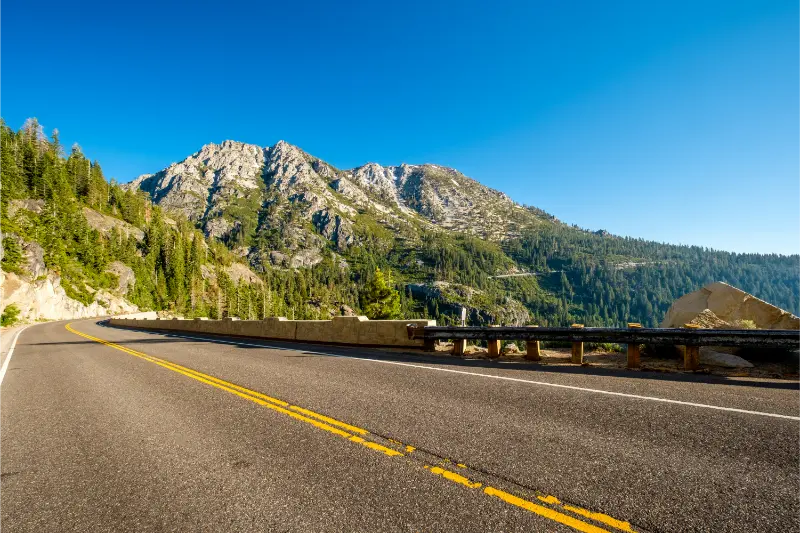
Lake Tahoe in winter can be spectacular, but it is not simply the summer lake with snow added. Weather can change road conditions within hours, mountain passes can require traction devices, parking becomes more complicated around ski areas, and a hotel on the “wrong” side of the lake can create a long winter drive. The most successful first trip begins with a practical base and a flexible schedule.
If you have never visited Tahoe, read our general Lake Tahoe guide first. Summer travelers can use our Lake Tahoe summer guide; the winter plan below is deliberately different.
South Lake Tahoe or North Lake Tahoe?
South Lake Tahoe is usually the easiest first choice for travelers who want a broad selection of hotels, restaurants and nightlife plus access to Heavenly. The North Shore and Truckee side can feel calmer and may be more convenient for Palisades Tahoe, Northstar or a Truckee-focused trip. Choose the base around your main activity rather than trying to drive around the lake every day.

In winter, the distance on a map is less important than road exposure. Snow, chain controls and weekend ski traffic can turn a simple transfer into a major part of the day.
Understand California chain controls before you drive
Caltrans uses R-1, R-2 and R-3 chain-control levels. Under common R-2 conditions, four-wheel-drive or all-wheel-drive vehicles with qualifying snow-tread tires may be exempt from installing chains, but they still must carry traction devices. Requirements can change quickly. Check Caltrans QuickMap immediately before mountain driving and follow posted signs and CHP instructions.
Do not assume that renting an AWD SUV eliminates the need to understand chains. Confirm what your rental contract permits and whether chains or compatible traction devices are allowed on that vehicle.
Do you need to ski to enjoy winter Tahoe?
No. Skiing and snowboarding are major reasons to visit, but winter Tahoe also works for scenic lake walks, snowshoeing, sledding areas, gondola rides, spas, restaurants and simply spending time in a snowy mountain town. Non-skiers should choose lodging with easy access to several activities rather than staying at an isolated ski property.
If only part of your group skis, coordinate one shared meal or afternoon activity so the trip does not feel like two separate vacations.
Day 1: arrive, settle in and keep the first afternoon light
Mountain driving is tiring, especially after a flight. Use the first day for check-in, a short lakefront walk and equipment rental or lift-ticket pickup if needed. This also gives you time to learn whether overnight snow is expected before committing to the next morning’s departure.
Travelers arriving from Sacramento or Reno should still leave room for weather delays. A late-night drive after a winter storm is a poor way to begin the trip.
Day 2: ski day or snow-play day
If skiing is your priority, make Day 2 the anchor. Arrive early enough to handle parking, rentals and lessons without losing the first half of the morning. Beginners should consider a lesson rather than learning informally on busy slopes. Families with young children need extra time for boots, gloves and bathroom stops.
Non-skiers can plan a snowshoe outing, a safe designated sledding experience, a gondola or scenic base-area day. Do not use random roadside slopes for sledding; traffic, hidden obstacles and private property create risks that are easy to miss under snow.
Day 3: lake views and a flexible half-day
Keep the third day flexible so you can adapt to weather. A calm morning may be perfect for lake viewpoints, a short winter walk or a town stop before departure. If a storm is approaching, leaving earlier can be the smartest decision of the trip.
Winter road closures and spinouts can affect departure routes. Check both your planned road and realistic alternatives before you load the car.
Where to stay
For a first winter visit, prioritize covered or reliable parking, walkability to food, good heating and proximity to your main activity. A condo with a kitchen can be valuable for families, but verify snow-removal arrangements. A bargain lodging far from the ski area may become expensive in time if you sit in traffic twice a day.
Truckee is a strong base for the north side. South Lake Tahoe works well for a mixed group. Tahoe City and Kings Beach suit travelers who prefer the North Shore atmosphere but can involve more winter driving depending on activities.
Families with children
Children often enjoy snow more when the day is shorter than adults expect. Plan warm-up breaks, spare gloves and dry socks. If you are booking ski school or childcare, reserve early and verify age requirements. Toddlers may be happiest with one brief snow session followed by indoor time.
Bring sunscreen even in winter because UV reflection from snow can be intense. Hydration matters at elevation, and the dry mountain air can make everyone feel more tired.
Senior travelers and limited mobility
Snow and ice can make short walks difficult. Choose lodging with elevators, minimal outdoor stairs and cleared access from parking. Yak-style traction cleats can improve confidence on icy sidewalks when appropriate, but no device makes unsafe conditions safe. Do not pressure anyone into walking across an uncleared lot for a viewpoint.
Scenic drives should be attempted only when roads are appropriate. On storm days, a warm hotel, restaurant and lake view can be a better experience than proving you can drive through snow.
Winter packing that actually matters
Bring waterproof footwear, warm layers, gloves, a hat, sunglasses, sunscreen and a small car emergency kit. Keep water and snacks in the vehicle. If chains may be needed, practice understanding the equipment before a storm. Do not wait until you are beside the highway in falling snow to read the instructions for the first time.
Also keep phones charged and download your lodging address offline. Mountain cellular coverage can be inconsistent.
Common winter Tahoe mistakes
The biggest mistake is booking activities on opposite sides of the lake every day. Others include driving into a storm without checking QuickMap, assuming AWD means “no chains,” leaving ski parking too late, and scheduling a long drive immediately after a full ski day. Another common error is choosing a hotel by price alone without considering the winter route to it.
A three-day trip should feel simple: one good base, one main mountain day, one flexible lake/snow day and enough margin for weather.
Best time for a winter trip
Snow conditions vary significantly by year. Holiday periods and major powder weekends bring the highest demand, while midweek trips can be much easier. If your trip depends on skiing, check resort operations close to travel. If you mainly want a snowy atmosphere, remember that natural snowfall can never be guaranteed far in advance.
Winter Tahoe is rewarding when you treat weather as part of the itinerary rather than an inconvenience that must obey your reservations.
Should you rent ski equipment in town or at the mountain?
Mountain rental locations can be convenient because equipment is already where you ski, while town shops may offer easier pickup the evening before and sometimes different pricing. Families often benefit from collecting equipment before the ski morning so children can be fitted without watching lesson time disappear. Confirm return deadlines and whether overnight storage is available.
If you are a beginner skiing only one day, renting is normally simpler than traveling with equipment. Experienced skiers should compare airline baggage costs with local rental quality before deciding.
One final planning check
Before travel, reopen official pages for the places in this guide and verify hours, reservations, road conditions, weather and seasonal closures. California conditions change quickly, especially on mountain roads, coastal highways and at heavily visited attractions. Treat the itinerary as a framework, not a promise that every stop will operate exactly as it did when you first saved the article.
Keep one flexible block in the day and decide in advance which stop is optional. That small decision makes it much easier to adapt without turning a delay into a stressful family discussion.
Budget and timing buffer
Keep a buffer in both time and money for parking, food, entrance fees, fuel and last-minute transportation. California distances and queues can remove an hour from a plan very quickly. Download confirmations, key addresses and offline maps before leaving reliable Wi-Fi, and avoid storing visible luggage in a parked car.
The best travel days usually have one or two fixed anchors and several flexible pieces around them. A shorter plan that survives real conditions is more useful than a perfect timetable that collapses after the first delay.
How to keep the plan flexible without losing the day
Choose one experience that defines the day and protect the time around it. If weather, traffic or a closure changes the plan, drop the least important stop instead of moving every activity later. This is especially useful in California, where mountain roads, coastal construction, theme-park queues and city traffic can make a carefully timed schedule unrealistic within minutes.
Keep a second option in the same general area rather than driving across a region to replace a canceled activity. Families should know where the next restroom and easy meal are; older travelers may appreciate a nearby seated break; road trippers should keep enough daylight for the final drive. A good backup plan does not need to be exciting on paper. Its purpose is to preserve the quality of the day when the original plan changes.