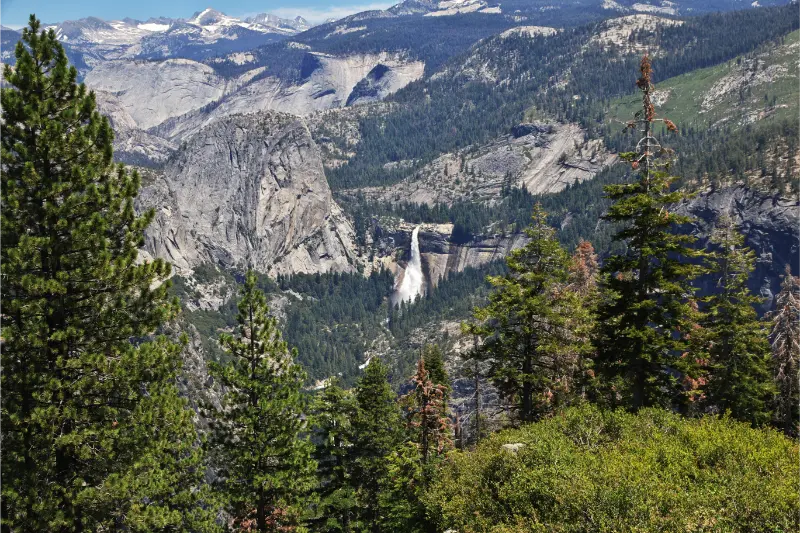
Yosemite is one of the best national parks in California for families because children do not need to complete a difficult hike to experience the scenery. Granite cliffs, waterfalls, giant trees, the Merced River and wildlife can all become part of a memorable trip from Yosemite Valley and other relatively accessible areas. The biggest family challenge is not finding enough to do; it is managing crowds, driving, meals and children’s energy inside a very large park.
The most successful family visits usually have fewer goals than adult hiking itineraries. One easy walk, one ranger or Junior Ranger activity, a picnic and unstructured river or meadow time can fill a day. If you add a major hike, make it the day’s main event rather than one item on a long checklist.
Start with our Yosemite first-time visitor guide if you have never seen the park’s geography. This article focuses specifically on how families should change the pace.
How many days do families need?
Two full days is a good minimum for most first-time families. Three days is better if you are driving a long distance to reach Yosemite or visiting with younger children. One day can produce beautiful memories, but it also increases pressure to see everything before sunset.
With two days, use the first for Yosemite Valley and the second for another area that is seasonally accessible, such as Mariposa Grove or a scenic mountain road. With three days, keep one day deliberately flexible for weather, rest or a child-led activity.
Where should families stay?
Staying inside Yosemite can reduce daily driving and make early mornings or evening walks much easier. The National Park Service notes that lodging reservations inside the park are available up to 366 days in advance and are strongly recommended during busy periods. Check the current official Yosemite lodging page before booking.
If you stay outside the park, compare drive time to the exact area you plan to visit—not just the distance to a park boundary. A hotel marketed as “Yosemite area” can still leave you with a substantial daily drive. With small children, that difference matters.
Do you need an entrance reservation in 2026?
The National Park Service states that Yosemite does not require an entrance reservation in 2026, although the normal entrance fee still applies. Rules can change in future years, so always verify the official park page for your travel dates rather than relying on an older article.
Accommodation, campground and activity reservations are separate issues. A family can be able to enter the park while still having nowhere suitable to sleep, so lodging should be solved early.
Use the free Yosemite Valley shuttle
The free Yosemite Valley shuttle connects lodging, food services, campgrounds and major trailheads. The NPS describes the valley shuttle as accessible, with wheelchair lifts and tie-downs. For families, it also removes the need to find a new parking space at every stop.
Strollers must be collapsed on the shuttle, so bring one that folds quickly if you plan to use transit repeatedly. Check the current Yosemite public transportation page for operating details because routes and seasonal services can change.
Best easy Yosemite experiences with children
Yosemite Valley offers several short walks and viewpoints where the scenery arrives quickly. The exact best choice depends on season, water levels and construction. Families should ask rangers about current trail conditions when they arrive rather than following a rigid list created months earlier.
Good family days often combine a waterfall viewpoint, meadow walk, riverside picnic and the visitor center. Younger children may enjoy looking for animal tracks, drawing Half Dome or counting waterfalls more than walking another mile.
Junior Ranger program
Yosemite’s Junior Ranger program is one of the easiest ways to give children a purpose while exploring. The NPS provides a free Junior Ranger handbook at visitor centers, and children can complete self-guided activities during the visit. Current information is available on the official Yosemite Junior Ranger page.
The park also offers adapted activities for children with diverse communication, learning, motor or sensory needs. Pick up the booklet early in the trip so activities can happen naturally rather than becoming homework during the final hour.
Yosemite with toddlers
With toddlers, make Yosemite Valley the core. Long scenic drives with repeated car-seat stops can become harder than one central day using the shuttle. Choose short walks, picnic areas and open spaces where the child can move safely.
A compact stroller works on many paved valley routes, but not every trail is stroller-friendly. A child carrier can be useful where appropriate, but parents should choose equipment they already know how to use. Do not test a new hiking carrier on a long mountain trail.
Yosemite with school-age children
School-age children can usually handle longer walks when there is a clear destination. Let them choose between two options: a waterfall-focused walk, giant trees, a Junior Ranger activity or a bike ride where services are operating.
Teach children not to approach or feed wildlife. Yosemite animals are wild even when they appear comfortable around people. Store food correctly and follow current park regulations.
Yosemite with teenagers
Teenagers may be ready for a more substantial hike, but fitness and mountain experience vary. Choose the route according to the least experienced member of the group, not the strongest. Heat, elevation and steep descents can make a hike much more demanding than its distance suggests.
Give teenagers some responsibility for navigation, photography or choosing lunch. The park becomes more engaging when they are participants rather than passengers in an adult plan.
Should families hike Mist Trail?
The Mist Trail is famous, steep and can be slippery when wet. It is not automatically the correct first family hike. Some children will love the challenge; others will be happier with easier valley walks. Check current closures, conditions and water flow before deciding.
A family should never feel that missing one iconic trail means missing Yosemite. The park’s scale is visible from many less demanding places.
Mariposa Grove with children
Mariposa Grove adds giant sequoias to the Yosemite experience and can be an excellent second-day destination. Shuttle operations are seasonal, and snow can affect access, so verify current conditions. If your broader California trip already includes Sequoia & Kings Canyon, decide whether another giant-tree day adds value or duplicates the experience.
Our Yosemite vs Sequoia & Kings Canyon comparison can help families choose where to spend limited time.
Food strategy
Do not assume you can buy exactly what your children will eat at every stop. Carry simple snacks and refillable water bottles. Pack a picnic when practical, especially if dietary needs are specific. Food services can be busy at peak times.
Keep all food and scented items stored according to bear-safety rules. “We are only walking away for five minutes” is not a valid exception in bear country.
Weather and clothing
Yosemite can have large temperature changes between morning and afternoon, and conditions vary by elevation. Bring layers, hats, sun protection and more water than you would use on a normal city walk. In spring, waterfall spray can make nearby paths wet; in autumn and winter, ice or snow can change what is suitable for children.
A realistic 2-day family plan
| Day | Morning | Afternoon |
|---|---|---|
| 1 | Yosemite Valley orientation + easy waterfall/viewpoint walk | Junior Ranger, picnic, meadow/river time, shuttle stops |
| 2 | Mariposa Grove or another seasonal area | Return to favorite valley stop or easy scenic activity |
Accessibility and sensory needs
Yosemite publishes a dedicated accessibility page and offers accessible valley shuttles. Families who need step-free routes, adaptive Junior Ranger activities, accessible restrooms or specific mobility information should review the official Yosemite accessibility information before the trip.
Children with sensory sensitivities may prefer quieter times of day, open meadow areas and predictable short activities instead of crowded visitor-center periods. Build a retreat option into the schedule.
Final advice
Yosemite with kids works best when the adults stop measuring success in miles hiked. Children can understand the park through water, trees, animals, rocks, stories and the simple scale of the valley.
Stay as close as practical, use the shuttle, choose one main activity at a time and leave room for discovery. A child who spends 40 minutes watching a squirrel or drawing a waterfall has not “wasted” Yosemite. They may be experiencing it more deeply than the adults rushing to the next trailhead.
Parking strategy with children
Yosemite family days improve dramatically when you park once and use the valley shuttle rather than moving the car between nearby sights. Parking can fill during busy periods, and repeated searching adds stress without creating any extra experience. Arrive with the day bag organized so you do not need to return to the vehicle for every snack or layer.
Keep food storage rules in mind even when the vehicle is parked. Follow current NPS instructions for storing food and scented items, and never leave food available to wildlife simply because you expect to be away only briefly.
Bear safety as a family lesson
Children often find bear-safety rules memorable when adults explain the reason rather than only issuing commands. Food-conditioned wildlife can become dangerous and may ultimately be harmed because of human behavior. Teach children never to feed animals, keep a respectful distance and tell an adult if they see wildlife close to a busy area.
If you see a bear, follow current ranger guidance and park instructions. Do not approach for a photograph or position a child closer to the animal. Yosemite is an excellent place to teach that seeing wildlife is a privilege, not an invitation to interact.