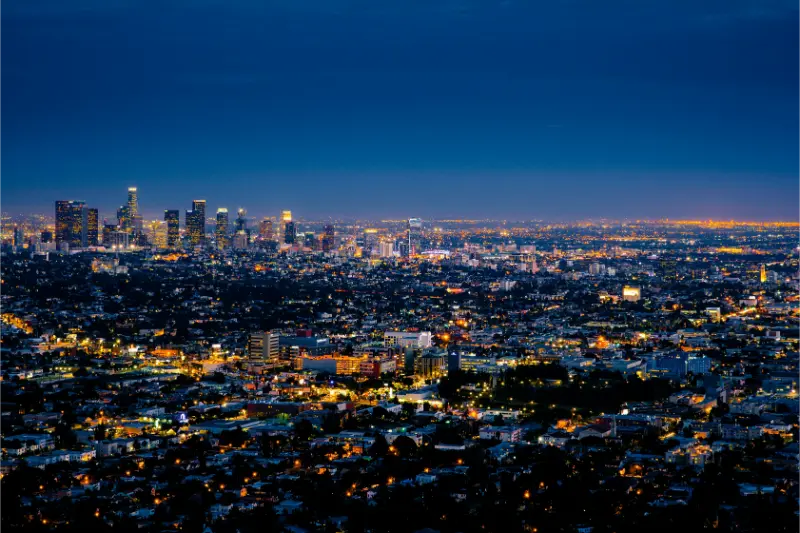
Los Angeles is difficult to understand if you plan it like a compact European city. There is no single center that contains the major sights, and distances that look modest on a map can become long journeys in traffic. The key to a good first visit is not seeing everything. It is grouping each day geographically.
Once you stop treating Los Angeles as one downtown and start treating it as a collection of neighborhoods, beaches and cultural districts, the city becomes much easier—and much more enjoyable.
How many days do you need in Los Angeles?
Three full days is a sensible minimum for a first visit. Two days can cover a handful of highlights, while four or five days gives you room for a theme park, a beach day or a slower neighborhood day without sacrificing the rest of the city.
| Time | Best approach |
|---|---|
| 1 day | Choose one zone only: coast, Hollywood/Griffith or Downtown/arts |
| 2 days | One central/Hollywood day + one coastal day |
| 3 days | Classic highlights + coast + culture/neighborhoods |
| 4–5 days | Add a theme park, museum day or a slower local district |
Where to stay: choose your base around your priorities
Santa Monica
Santa Monica is attractive for first-time visitors who want to walk to the beach, restaurants and an evening promenade. It can be convenient after a Highway 1 road trip and pleasant for families. The trade-off is travel time to Downtown Los Angeles, Hollywood and attractions farther east.
West Hollywood / Beverly Grove area
This is a useful compromise for travelers interested in central-west attractions, dining, museums and nightlife. It is not on the beach, but it can reduce cross-city travel compared with staying at the coast.
Hollywood
Hollywood is convenient if the Walk of Fame, studios and nearby attractions are important, and it has rail access in parts of the area. The atmosphere varies block by block, so read recent hotel-location reviews rather than choosing solely from the neighborhood name.
Downtown Los Angeles
Downtown can work well for museums, sports, food districts and rail connections, but it is not the geographic center of all tourist attractions. Pick it because your itinerary fits, not because “downtown” sounds automatically central.
Anaheim
If Disneyland is the main purpose of the trip, stay near Disneyland. Commuting from central Los Angeles for multiple theme-park days adds unnecessary driving. Treat Anaheim and Los Angeles as separate bases if both matter.

Do you need a car?
A car is useful but not mandatory for every visitor. Rail and bus services connect many important areas, and ride-hailing can fill gaps. The choice depends on where you stay and what you want to see. Parking costs, traffic and valet fees can make a car expensive in dense areas; coastal drives and scattered attractions can make it very convenient.
For a three-day visit, one strategy is to stay in a walkable/transit-friendly base, use public transport and ride-hailing for two grouped city days, then rent a car only for the coast or for the onward road trip. Another is to keep the car but choose a hotel with manageable parking and avoid moving it several times within the same neighborhood.
A realistic 3-day Los Angeles plan
Day 1: Griffith, Hollywood and one nearby cultural stop
Start around Griffith Observatory and the surrounding park area. Early morning is useful for cooler walking conditions and easier traffic. Continue to Hollywood if the Walk of Fame and movie landmarks matter to you, but do not plan to spend the entire day there unless you have a studio tour or specific attraction booked.
Use the afternoon for one museum or neighborhood in the same broad part of the city. The Academy Museum, LACMA area, The Grove/Farmers Market, Koreatown or West Hollywood can be combined more logically than adding Santa Monica at rush hour.
Day 2: Santa Monica and Venice
Make the coast its own day. Walk the Santa Monica Pier and beach area, then continue toward Venice by bike, on foot or short transport depending on your group. Allow time to simply be at the ocean. The point of a beach day is lost if it contains six inland reservations.
Families can use the afternoon for playgrounds, beach time or an early dinner. Older travelers may prefer the flatter coastal paths and frequent places to stop over a day of steep city walks.
Day 3: Downtown, museums or a theme based on your interests
Choose a focused third day. Downtown Los Angeles can combine Grand Central Market, The Broad area, Walt Disney Concert Hall, Little Tokyo or the Arts District. Museum-focused travelers may prefer the Getty Center and nearby west-side areas instead. Food-focused visitors can build a neighborhood day around Koreatown, Thai Town or another district rather than repeating famous landmarks.
What is actually worth doing in Hollywood?
Hollywood is worth seeing if film history and popular culture matter to you, but expectations are important. The Walk of Fame is an urban sidewalk attraction, not a theme park. It can be busy, commercial and visually less glamorous than first-time visitors imagine.
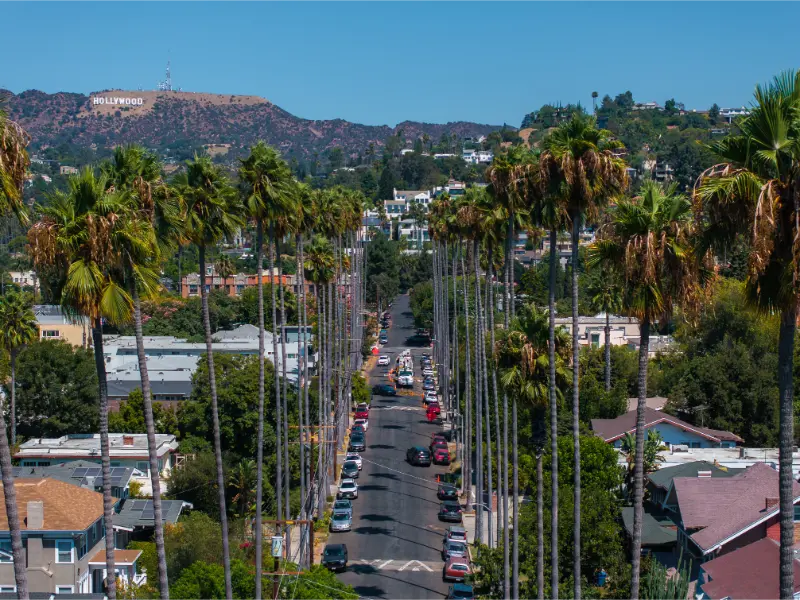
Pair it with an experience that has more depth: a studio tour, the Academy Museum, Griffith Observatory, a live performance or a historic cinema. That gives the day a stronger sense of place than simply photographing stars on the pavement.
Griffith Observatory: plan for the location, not just the building
The observatory is popular because it combines views, architecture, exhibits and access to Griffith Park. Parking and traffic can be challenging at busy times. Check current access information before going and consider public transport/shuttle options when available.
If mobility is limited, confirm drop-off and parking arrangements in advance. The broader park is hilly, but the visit can still be designed around viewpoints and the observatory rather than long hikes.
The coast: Santa Monica, Venice or Malibu?
Santa Monica is the easiest first-time choice because the pier, beach and commercial areas are close together. Venice is more eclectic and street-oriented. Malibu is spread out and works better with a car, particularly if the goal is beaches and scenic stops rather than a walkable center.
Do not try to “do” all three in a couple of hours. Pick Santa Monica + Venice for a walkable beach day, or choose Malibu as a separate scenic drive.
Los Angeles with children
The main challenge is not finding attractions; it is preventing transport from consuming the day. One major attraction plus one neighborhood or beach is enough. If Disneyland or Universal Studios Hollywood is the priority, dedicate the full day and stay near the park when multiple park days are planned.
Build in ordinary breaks. A hotel pool, playground or early dinner can be more valuable than squeezing in a final museum. The California with kids planning guide has a broader family-road-trip strategy.
Los Angeles for older travelers
Choose accommodation close to the areas you most want to explore and use rides for cross-neighborhood movement. Many major museums and attractions are accessible, but the city itself is spread out. A lower-energy visit can be excellent if it emphasizes museums, scenic drives, coastal promenades and a few well-chosen neighborhoods.
Parking and driving
- Read every parking sign carefully; restrictions can vary by day and time.
- Budget for paid parking at hotels and major attractions.
- Do not leave luggage or valuables visible in the vehicle.
- Avoid scheduling cross-city transfers at the tightest possible times.
- Use navigation for traffic, but still check whether the suggested route includes toll lanes or complex parking at the destination.
- For a road trip, leave Los Angeles after the morning peak if your schedule allows.
What to skip if time is short
Skip places that only matter because someone told you they are “must-sees.” If you are not interested in celebrity culture, spend less time in Hollywood. If shopping is not your thing, do not use half a day on shopping streets. If you dislike driving, build a transit-friendly stay rather than forcing a Malibu loop.
A good Los Angeles itinerary is highly personal. The city becomes better when you choose a theme—film, food, art, beaches, music, architecture, family attractions—and let that theme decide the neighborhoods.
Common first-time mistakes
- Changing neighborhoods several times in one day. Each transfer can take far longer than expected.
- Staying near the airport for a whole city trip. It is useful for an early flight, not usually for sightseeing.
- Assuming the beach is warm and sunny every morning. Coastal cloud and cool conditions are normal in some seasons.
- Trying to combine Disneyland with central L.A. sightseeing. Give the park its own day.
- Planning dinner across the city after a full sightseeing day. Eat near the final stop and save the commute.
How Los Angeles fits into a larger California trip
Los Angeles works well as the southern end of a Highway 1 route, as a gateway to San Diego, or as the city base before a desert trip. In a 10-day California road trip, three nights is enough for a strong introduction without allowing the city to dominate the entire holiday.
The biggest improvement you can make to a Los Angeles trip is simple: look at the map before you book each day. Group nearby places, accept that you will not see everything, and leave enough time to notice the neighborhoods between the landmarks. That is when Los Angeles starts to feel like a city rather than a traffic problem.