Three days in San Francisco is one of the easiest short California city breaks to plan because the major visitor areas are relatively close, public transit is useful and you do not need a rental car for most of the trip. The challenge is not distance so much as hills, weather and the temptation to put too many famous stops into the same day.
A realistic first visit should show you three sides of the city: the waterfront and historic core, the neighborhoods, and the Golden Gate/Presidio side. Alcatraz fits naturally if it matters to you, but it should be booked early and treated as a half-day commitment rather than a quick ferry ride.
Where to stay for three days
For a first trip, Union Square, Nob Hill, Embarcadero and selected areas around Fisherman’s Wharf are practical, though each has trade-offs. Union Square is central for transit; Embarcadero gives you waterfront access; Nob Hill feels classic but hilly; Fisherman’s Wharf is convenient for families and Alcatraz departures but more tourist-oriented.
Our San Francisco hotel-area guide compares the neighborhoods in detail. For only three days, prioritize convenience over a larger room far from the places you will visit.
Day 1: Ferry Building, waterfront and North Beach
Start at the Ferry Building. If your dates align with the farmers market, the area is especially lively, but the waterfront is worthwhile on any day. Walk north along the Embarcadero at a comfortable pace. You can stop at the Exploratorium if science and hands-on exhibits interest you, but do not force it into the plan simply because it is nearby.
Continue toward the piers and North Beach. Fisherman’s Wharf and Pier 39 are busy and commercial, yet first-time visitors may still enjoy a brief look. The mistake is spending the entire afternoon there because you did not decide what came next.
North Beach and Chinatown
Move into North Beach for lunch, coffee or a slower neighborhood walk. Then continue toward Chinatown. These areas are close enough to connect on foot, but the hills can be tiring. If someone in your group has limited mobility, use transit or rideshare for the uphill sections rather than turning the day into an endurance test.
Finish near Union Square or return to the waterfront. A cable-car ride can fit if the line is reasonable. The experience is fun, but waiting 90 minutes for one specific departure is not mandatory when other cable-car boarding points may be easier.
Day 2: Alcatraz and the Presidio
If Alcatraz is a priority, reserve the official ferry in advance and use the morning departure when possible. Our Alcatraz guide explains ticket timing, the uphill walk and accessibility options. Allow several hours from check-in to return; the island is not a one-hour attraction.
After returning, head toward the Presidio rather than squeezing in another downtown museum. The Presidio offers trails, viewpoints, historic buildings and access toward the Golden Gate Bridge. The free Presidio GO shuttle can be useful, and the area has more space than the waterfront.
Golden Gate Bridge viewpoints
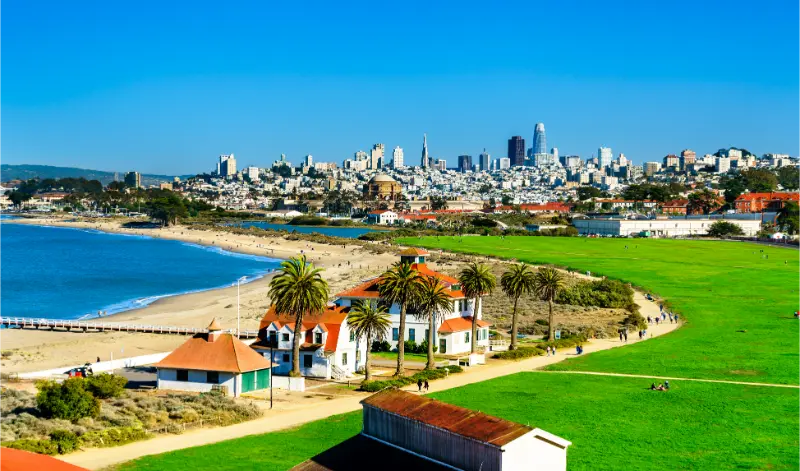
You do not need to walk the entire bridge to enjoy it. Crissy Field, Battery East and other Presidio viewpoints provide excellent angles. If you want to cross, remember that wind and fog can make the bridge feel much colder than downtown. A sunny hotel departure is not a guarantee of warm conditions at the Golden Gate.
For photographers, late afternoon can be beautiful, but fog may arrive at any time. Treat clear bridge views as a bonus rather than scheduling the entire day around a forecast that can change.
Day 3: Golden Gate Park and neighborhood San Francisco
Spend the morning in Golden Gate Park. Choose one major museum or garden rather than trying to enter everything. The California Academy of Sciences works particularly well for families; the de Young suits art-focused travelers. Outdoor areas give you flexibility if the weather is good.
After lunch, move into a neighborhood: Haight-Ashbury for cultural history, the Inner Sunset for food, the Mission for murals and restaurants, or Castro/Noe Valley for a different urban feel. The point of the third afternoon is to see San Francisco as a lived-in city rather than a sequence of postcard landmarks.
Mission District option
If you choose the Mission, start around Mission Dolores or Dolores Park, then walk toward Valencia Street and selected mural areas. Like any large city, San Francisco has blocks that feel more comfortable than others. Stay aware of your surroundings and do not wander simply because an app drew a straight line between two points.
Do you need a car?
No. For this itinerary, a car is more likely to create parking costs and stress than save time. Use Muni, cable cars, BART where relevant, walking and rideshare. If your California road trip continues to Yosemite or Napa, collect the rental car on the morning you leave San Francisco.
This split-rental strategy is one of the easiest ways to reduce costs; see our car-rental guide.
How much walking is realistic?
San Francisco can produce 15,000–20,000 steps without you noticing because attractions connect naturally. The issue is elevation. A one-mile route with steep hills can feel much harder than a flat two-mile waterfront walk.
Families, seniors and travelers with limited mobility should use transit strategically. Do not save a few dollars on a bus only to spend the rest of the day exhausted.
Weather and what to wear
Layers are useful year-round. Summer can be surprisingly cool and windy, especially near the ocean and bridge. Spring and fall can be pleasant, but conditions vary by neighborhood. Carry a light outer layer even if the morning begins sunny.
San Francisco microclimates are real: the Mission can be warm while the western side of the city is foggy. Dress for the coldest part of the day rather than the warmest.
Alcatraz: should everyone include it?
No. It is excellent for history-focused travelers, but if you dislike prisons, boats or audio tours, use the half-day for neighborhoods, Sausalito or a museum. Do not book it only because “everyone does Alcatraz.” Three days is short enough that personal interests should decide.
Sausalito as an alternative
If Alcatraz is not your priority, a ferry to Sausalito can create a relaxed half-day. You get bay views and a different atmosphere without renting a car. Check the current ferry schedule before travel.
Food strategy
Do not spend every meal at Fisherman’s Wharf. Use the neighborhood you are already exploring: North Beach for Italian-influenced food, Chinatown for a huge range of Chinese cuisine, the Mission for Mexican food and modern restaurants, and the Ferry Building for market-driven options.
Reserve one special dinner if you care about a specific restaurant, but keep lunch flexible. A spontaneous meal is easier when you are not crossing three neighborhoods for a booking.
San Francisco with kids
Children often enjoy cable cars, ferries, the Exploratorium, California Academy of Sciences and open space around Crissy Field. The main adjustment is reducing hill-heavy walking. Our family itinerary reorganizes the city around shorter days.
A sample schedule
| Day | Morning | Afternoon | Evening |
|---|---|---|---|
| 1 | Ferry Building / Embarcadero | North Beach / Chinatown | Union Square or neighborhood dinner |
| 2 | Alcatraz | Presidio / Golden Gate views | Marina or North Beach |
| 3 | Golden Gate Park | Mission, Haight or another neighborhood | Final dinner |
What to skip
Do not try to add Napa, Yosemite or Monterey as a casual half-day from San Francisco. They deserve their own overnight planning. Muir Woods can be a day trip, but adding it to an already full three-day city itinerary means removing something else. Muir Woods also requires advance planning for parking or shuttle reservations.
Final advice
Three days in San Francisco works because you can experience the city at human scale. Walk the waterfront, take one major bay excursion, spend time in the Presidio and leave room for a real neighborhood. Skip the rental car until you leave, wear layers and let transit handle the hills when necessary. The city becomes much more enjoyable when you stop treating every steep street as a challenge you have to complete.
If you arrive in the afternoon
Many California itineraries count an arrival day as a full San Francisco day when it is not. If your flight lands after lunch, do not immediately try to fit Fisherman’s Wharf, the Golden Gate Bridge and Chinatown into the remaining hours. Check in, walk the Embarcadero or your hotel neighborhood and have an early dinner. Jet lag makes the city’s hills feel steeper than they are.
If you are arriving from Yosemite or the Central Coast by car, return the rental vehicle as soon as it stops being useful. Airport and downtown return locations can have different prices, so compare this when you book the car rather than on the final day.
What to do if the weather turns wet
San Francisco is easy to adapt in rain because excellent indoor attractions are spread across the city. The Exploratorium, California Academy of Sciences, de Young Museum, Asian Art Museum and Museum of Modern Art can all anchor a wet half-day. Choose the museum closest to the area you already planned instead of crossing town only to stay indoors.
Alcatraz boats generally operate in a wide range of conditions, but wind and weather can affect ferry service. Keep the official operator’s notifications in mind and avoid booking a flight immediately after a time-sensitive island visit.
Should you add Muir Woods or Napa with only three days?
Only by giving up a substantial part of San Francisco. Muir Woods requires transport plus the visit itself, and parking or shuttle reservations are part of the planning. Napa is not a quick side trip once tastings, meals and responsible transportation are included. Both are excellent, but neither is “free time” on a three-day city itinerary.
If this is your only California trip and giant trees matter more than urban neighborhoods, replace day three with Muir Woods. If wine country is a priority, add two nights rather than turning San Francisco into a hotel you barely use.
If you have half a day extra
Use it for one thing you skipped: a longer Presidio walk, the Mission, Sausalito by ferry, or a museum. Avoid using the bonus time to start a distant road trip. San Francisco’s strength is that small areas reward slow exploration. A spare morning in North Beach or along Crissy Field can add more to the trip than another two hours in traffic.