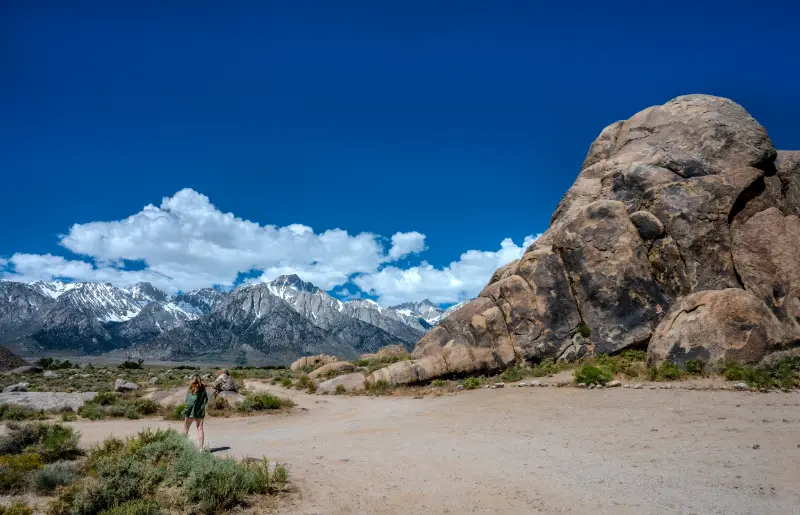
California’s Eastern Sierra is one of the best road trips in the state for travelers who want huge scenery without changing hotels every night. U.S. Highway 395 runs between desert basins and the steep eastern wall of the Sierra Nevada, linking film landscapes, hot-spring country, alpine lakes, volcanic geology, ghost towns and some of the oldest living trees on Earth.
The mistake is treating Highway 395 as a shortcut between Los Angeles and Lake Tahoe. The road itself can be fast, but the places that justify the trip sit on side roads and require time. A realistic five-day itinerary should therefore move north slowly: Lone Pine, Bishop, Mammoth Lakes and Lee Vining/Mono Lake, with seasonal options rather than a rigid checklist.
This route assumes you are comfortable driving and is best when snow and high-elevation roads do not create major complications. Always check Caltrans conditions before departure; mountain weather can change the plan even when the valley floor is dry.
5-day route at a glance
| Day | Base | Main focus |
|---|---|---|
| 1 | Lone Pine | Alabama Hills, Mount Whitney views, town |
| 2 | Bishop | Manzanar, Independence, Bishop |
| 3 | Mammoth Lakes | High Sierra lakes and Mammoth area |
| 4 | Mammoth Lakes or Lee Vining | Mono Lake, June Lake Loop, optional Bodie |
| 5 | Lee Vining / onward | Mono Basin sunrise, seasonal pass or continue north |
Day 1: arrive in Lone Pine and explore Alabama Hills
Lone Pine is the right place to slow down immediately. The Alabama Hills sit just west of town, where rounded rock formations frame the Sierra crest and Mount Whitney. The landscape has appeared in decades of film and television, but you do not need movie knowledge to appreciate it.
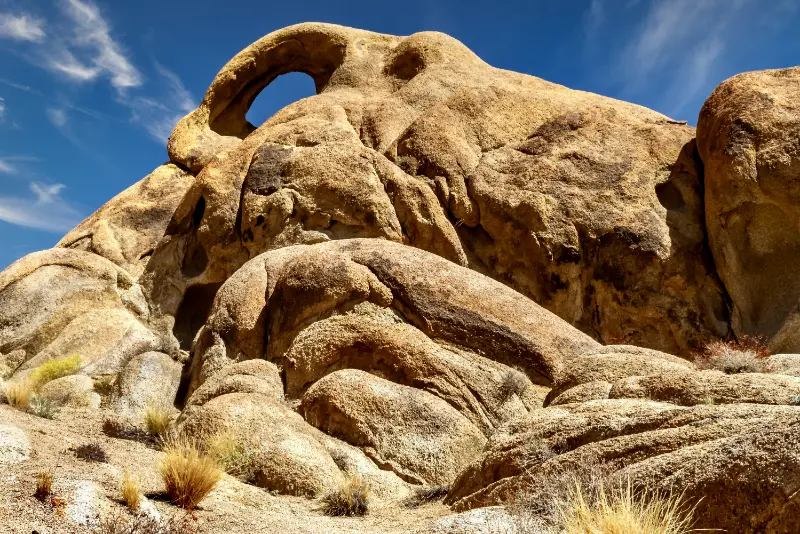
Use the afternoon for a short drive and walk rather than trying to hike at high altitude immediately after a long transfer. Sunset light can be excellent, but return to paved roads and town before darkness if you are unfamiliar with the area. Dispersed camping rules and designated sites have changed in recent years, so use current Bureau of Land Management information if you plan to camp.
Our Lone Pine and Alabama Hills guide covers the area in more detail.
Day 2 morning: Manzanar deserves unhurried time
Drive north to Manzanar National Historic Site and allow enough time for the visitor center, exhibits and the site itself. This is not a quick roadside curiosity. More than 10,000 Japanese Americans were incarcerated here during World War II, and the visit deserves attention and respectful pacing.
Our Manzanar guide explains how to visit without reducing the site to a photo stop. If children are traveling with you, use age-appropriate explanations rather than skipping the history entirely.
Day 2 afternoon: Independence and Bishop
Continue through Independence and the Owens Valley toward Bishop. The driving distance is modest, which is intentional: the Eastern Sierra trip works because the road days leave room for side trips.
Use Bishop as a practical base for groceries, restaurants and the next day’s mountain outing. If you still have energy, walk around town or make a short local excursion rather than driving deep into another canyon. Our Bishop guide covers longer options.
Optional side trip: Ancient Bristlecone Pine Forest
The Ancient Bristlecone Pine Forest is extraordinary, but it should not be treated as a casual detour. The road climbs to high elevation, conditions are seasonal, and services are limited. When access is open and everyone is comfortable with altitude, the Schulman Grove area can be one of the most memorable stops of the road trip.
Do not force it into a day with too many other activities. Read our Ancient Bristlecone Pine Forest guide and check current forest information before driving up.
Day 3: Bishop to Mammoth Lakes
The drive north is short enough that you can choose a scenic stop before reaching Mammoth. Depending on season, consider a lake, a short walk or simply several highway viewpoints. The contrast between arid valley and snow-streaked peaks is the defining visual theme of Highway 395.
Once in Mammoth Lakes, avoid trying to “see Mammoth” from the car. Choose one area and spend time outside. Summer and early autumn favor lakes and trails; winter turns the destination into a snow-sports base and changes road access completely.
Our Mammoth Lakes guide separates the seasonal options.
Day 4 morning: June Lake Loop
When roads are open, the June Lake Loop is an excellent half-day change of scale. It gives you alpine scenery without requiring a major hike and works well for families and older travelers who want mountain views from short walks and pullouts.
Do not judge the loop only by mileage. Stops at lakes, cafés and viewpoints add time. If you also plan Bodie and Mono Lake on the same day, choose priorities rather than rushing through all three.
Day 4 afternoon: Mono Lake
Mono Lake is unlike the alpine lakes you have just seen. The saline ecosystem, broad basin and tufa formations create a landscape that feels almost geological rather than recreational. South Tufa is the classic first stop, but access conditions and sensitive habitats should guide where you walk.
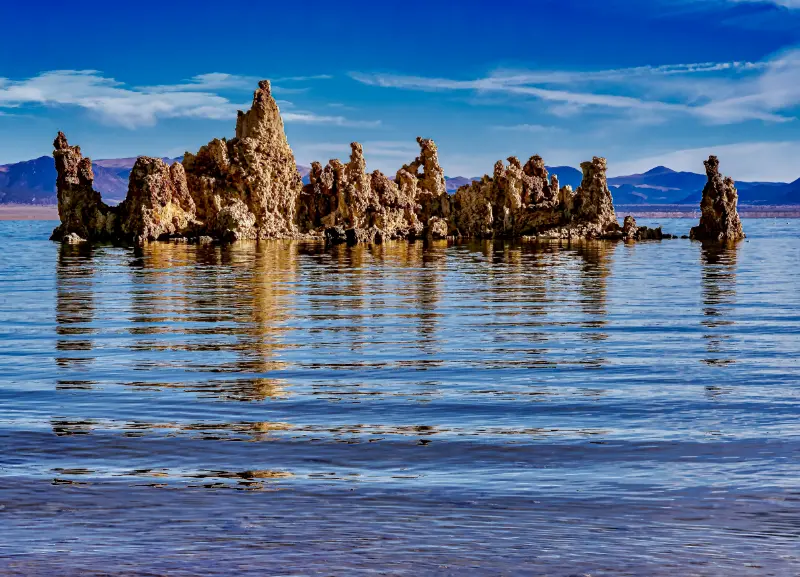
Our Mono Lake guide explains South Tufa, Lee Vining and realistic timing.
Optional Day 4 detour: Bodie
Bodie State Historic Park is one of California’s most evocative ghost towns, but the access road and seasonal conditions make it a deliberate excursion. It is not a five-minute detour from 395. If Bodie is a priority, leave Mammoth early and give the historic site a substantial block of time.
Check current road and park conditions first. Our Bodie guide covers access and what the preserved “arrested decay” setting actually means.
Day 5: choose your exit based on season
This is where many Eastern Sierra itineraries fail by assuming one mountain pass is always available. If Tioga Road through Yosemite is open and Yosemite is part of your trip, Lee Vining can be the gateway west. When the pass is closed, the detour is enormous and you need a completely different route.
Another option is to continue north on 395 toward Bridgeport, Carson Valley and Lake Tahoe. This keeps the road trip on the east side of the Sierra and avoids building the final day around a seasonal pass.
Do not use summer timing in winter
The Eastern Sierra changes more dramatically by season than many California visitors expect. In winter, high-elevation roads, trailheads and mountain passes may be inaccessible. In spring, snow can remain at altitude even when Bishop is warm. In summer, lower desert areas can be hot while evenings at elevation are cool.
Check Caltrans road conditions, weather forecasts and the official pages for individual parks or forests before each major detour. Do not rely on a saved itinerary from another month.
How much driving is too much?
Highway 395 itself tempts you to add distance because the road is scenic and often moves well. But every side trip—Alabama Hills, Bristlecones, mountain lakes, Bodie—turns a simple transfer into half a day. The five-day plan works because base changes are limited.
If you have only three days, choose Lone Pine/Bishop or Mammoth/Mono Lake rather than attempting the full route at the same pace. If you have seven days, add a second Mammoth day and a slower northern section instead of driving farther just because time exists.
Where to sleep
Lone Pine is best for Alabama Hills and southern Eastern Sierra scenery. Bishop has useful services and food and works for mountain detours. Mammoth Lakes has the broadest resort infrastructure. Lee Vining is small but strategically excellent for Mono Lake and the Tioga Pass junction.
Book early on holiday weekends, during peak fall color periods and when major events or snow conditions concentrate demand.
Families with children
Children often enjoy this road trip because the scenery changes quickly and many stops do not require long hikes. The challenge is altitude, sun exposure and too much car time. Build a real outdoor stop every two or three hours rather than asking children to admire mountains through the window all day.
Do not make a high-elevation hike the first activity after arriving from sea level. Keep early days flexible and use shorter walks until you know how everyone feels.
Older travelers and limited mobility
Highway 395 can be rewarding without strenuous hiking. Alabama Hills viewpoints, Manzanar, scenic lakes, Mono Basin and many roadside vistas provide high-impact scenery from short walks. Choose accessible visitor facilities and avoid stacking multiple rough-surface stops into one day.
Altitude can also affect how tiring ordinary walking feels. Build more recovery time than you would at the coast and choose lodging where parking and room access are straightforward.
Fuel, food and phone coverage
Major towns provide normal services, but long side roads do not. Fill the tank before remote excursions, carry water and snacks, and download maps for areas where coverage may be weak. This is especially important when driving to high-elevation forests or ghost towns.
Do not let the fuel gauge become a planning tool. The Eastern Sierra is easy to enjoy when you treat the main towns as resupply points.
Final advice
A five-day Eastern Sierra trip should feel like a sequence of landscapes, not a race from Los Angeles to Tahoe. Spend the first night in Lone Pine, slow down for Manzanar and Bishop, give Mammoth real time, then finish with Mono Lake and a seasonal route choice.
That structure leaves enough room for the experiences that make Highway 395 special—and enough flexibility to change the plan when mountains remind you that they set the schedule.