Death Valley is one of the easiest California places to misunderstand. The name suggests one empty basin, yet the national park contains salt flats, dunes, mountain viewpoints, colorful badlands, canyons and long roads that can take hours to cross. A first visit succeeds when you respect the scale and plan around the season.
The park is open year-round, but that does not mean every month offers the same kind of trip. Extreme heat, flash floods, road damage and long distances between services can change what is sensible from one week to another. The most useful Death Valley advice is therefore not a fixed checklist. It is a framework for deciding what is safe and realistic when you arrive.
How many days do you need?
One full day can cover the Furnace Creek area, Badwater Basin, Artists Drive and Zabriskie Point. Two days is much better because you can add Mesquite Flat Sand Dunes, Dante’s View, a short canyon walk and sunrise or sunset without spending the entire visit in the car.
Three days makes sense for travelers who enjoy photography, geology, longer hikes or remote roads. For most first-time California road trips, two nights is the sweet spot.
Where should you stay?
Furnace Creek is the most convenient base for a first visit because it sits near many major sights and reduces unnecessary mileage. Stovepipe Wells is useful for Mesquite Flat Sand Dunes and the western side of the park. Staying outside the park can save money, but you should calculate the real driving time before deciding that a distant motel is a bargain.
A room that is one hour from the first viewpoint and another hour from your final sunset stop effectively adds two more hours of driving to an already road-heavy day.
The best season for a first trip
Late autumn, winter and early spring are the easiest periods for sightseeing and walking. Summer heat can be life-threatening and should fundamentally change the itinerary. The National Park Service warns visitors to take extreme temperatures seriously and to avoid treating summer as a normal hiking season.
Even outside summer, weather matters. Flash floods can damage roads and create sudden hazards in canyons. The park maintains a frequently updated current conditions and road status page. Check it before entering, not after you discover a closure.
Day 1: the classic Death Valley landscapes
Start around Zabriskie Point in the cooler morning light. It offers a broad introduction to the eroded badlands and requires relatively little time compared with a major hike. From there, continue toward Furnace Creek and the Badwater Road corridor.
Badwater Basin is the famous salt-flat stop, but the experience changes depending on recent weather and how far you choose to walk. Do not assume you need a long walk to appreciate the landscape. In hot conditions, the exposed return to the car matters more than reaching a particular point on the salt.
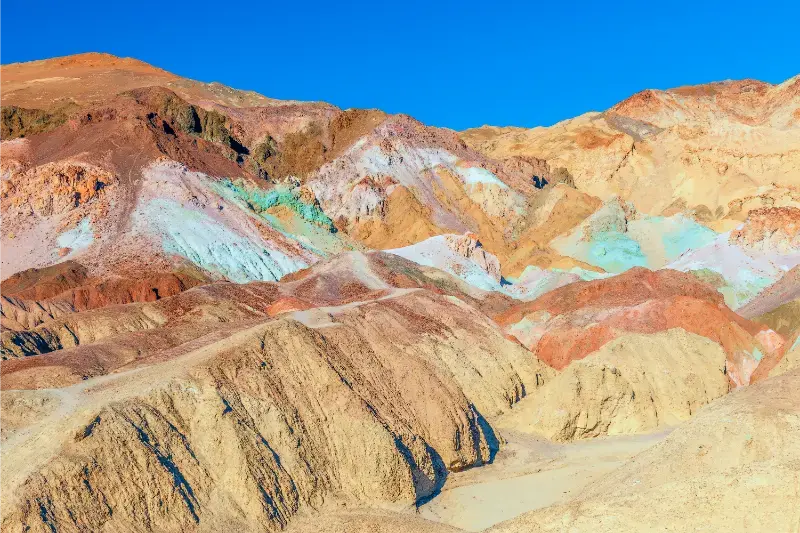
Continue to Artists Drive and Artists Palette if the road is open and your vehicle is suitable for posted restrictions. The colors are strongest in favorable light, but the drive itself is part of the attraction. Finish the day at a viewpoint or near Furnace Creek rather than adding another distant stop simply because daylight remains.
Day 2: dunes, canyons and a high viewpoint
Visit Mesquite Flat Sand Dunes early. The dunes look close from the parking area, but walking in sand takes more effort than walking the same distance on a normal trail. There is no single summit you must reach. Turn around while the return is still comfortable.
If temperatures allow, add a short canyon walk such as Mosaic Canyon, checking current trail and road conditions first. Later, drive to Dante’s View if the access road is open. The altitude changes the temperature dramatically and gives you one of the best ways to understand the depth and scale of the valley below.
This two-day plan avoids chasing remote attractions. Death Valley is enormous; saving Scotty’s Castle, Racetrack Playa or long backcountry drives for a future trip is often a sign of good planning, not a missed opportunity.
Road conditions are part of the itinerary
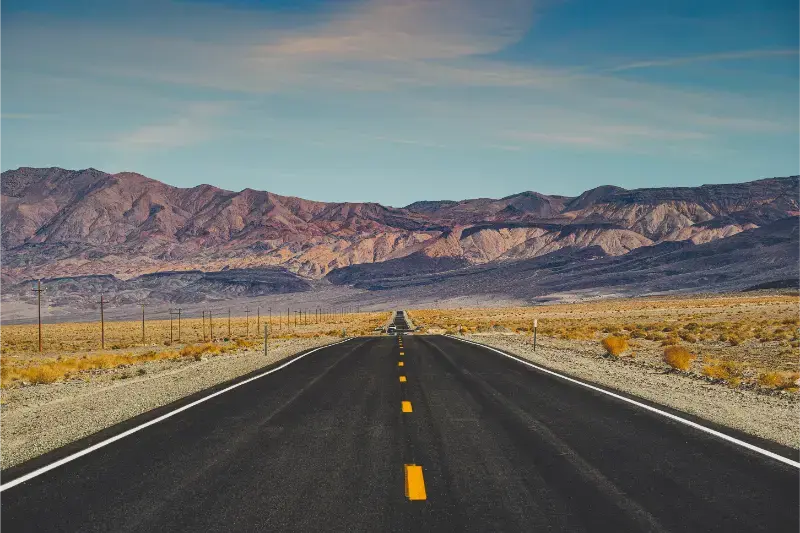
Death Valley roads can be affected by flooding and repair work long after a storm has passed. As of late September 2026, the National Park Service was still listing specific closures and damaged road sections. Conditions can change quickly, so a blog itinerary should never override the official road report.
Use paved main roads for a first visit unless you have confirmed the condition and vehicle requirements of an unpaved route. A rental car agreement may also restrict travel on unpaved roads, even when the road is technically open.
Do not rely on GPS alone
The National Park Service explicitly warns visitors not to depend only on vehicle GPS navigation in remote Death Valley. Incorrect routing can send drivers toward unsuitable or closed roads. Download the official park map, keep an offline navigation option and compare any unexpected shortcut with the road map before following it.
Mobile coverage is limited. This is one of the California destinations where “I will look it up when we get there” is a poor strategy.
Fuel, water and food
Begin each major drive with more fuel than you think you need. Services exist in and around the park, but distances are large and availability can change. Carry substantial drinking water in the vehicle even if you are not hiking. A mechanical problem or road delay can turn a short sightseeing stop into hours outside normal services.
Bring snacks or a simple picnic so that lunch does not force you to cross the valley at the wrong time of day. In remote landscapes, flexibility is worth more than a perfectly timed restaurant reservation.
Death Valley with children
Families can enjoy Death Valley when temperatures are mild and the day is built around short stops. Salt flats, dunes and colorful rocks are visually engaging without requiring a long trail. The main risks are heat, separation from the car and underestimating distances.
Children should not be encouraged to “push a little farther” across an exposed salt flat or dune field in warm conditions. The return is always part of the walk. For a broader family plan, see our California with kids guide.
Older travelers and low-effort sightseeing
Death Valley is one of the national parks where you can see major scenery with relatively short walks. Zabriskie Point, roadside viewpoints, Artists Drive and the main Badwater area can all be adapted to a lower-walking day. The limiting factors are heat, sun exposure and getting in and out of the vehicle repeatedly.
Plan fewer stops, carry a lightweight layer for high viewpoints in winter and use the coolest hours for any walking. If a traveler uses mobility equipment, check the official accessibility page for current surface and facility details before the trip.
What not to combine in one day
Do not schedule Death Valley as a casual morning detour between Las Vegas and the California coast if you also expect to reach Los Angeles, Yosemite or Sequoia at a comfortable hour. The park deserves its own day because sightseeing requires leaving the through-road repeatedly.
Similarly, pairing Death Valley and Yosemite can be seasonal. The direct-looking Sierra routes shown on a map may be closed by snow, forcing a long drive around the mountains. Our California seasonal guide explains why mountain access should shape the route.
Photography without building the whole day around it
Zabriskie Point and Mesquite Flat Sand Dunes are famous for early or late light, but you do not need to chase every sunrise and sunset. Choose one. A visitor who wakes before dawn, drives all day and then stays out until dark can become too tired for the long desert roads.
If photography is not your priority, use sunrise or sunset simply as a calmer scenic period and keep the rest of the itinerary comfortable.
A practical safety rule
If the temperature, road condition or fuel situation makes you uncertain, choose the easier option. The park will still be there. The most common first-time mistake is thinking that turning around means the day has failed. In Death Valley, knowing when not to continue is part of competent trip planning.
How Death Valley fits into a California road trip
Death Valley works naturally between Las Vegas and the eastern side of California, and it can combine with the desert around Joshua Tree on a longer Southwest route. It does not combine efficiently with every classic California itinerary, especially when Sierra crossings are closed.
Compare the driving load with our 10-day California road trip itinerary before adding the park. If it creates two consecutive very long driving days, save it for a desert-focused trip.
Final advice
Death Valley is most rewarding when you plan conservatively: two or three strong landscapes per half-day, plenty of water, a full fuel tank and a current road report. The park’s scale does the rest. You do not need a complicated itinerary to feel that you have arrived somewhere unlike the rest of California.