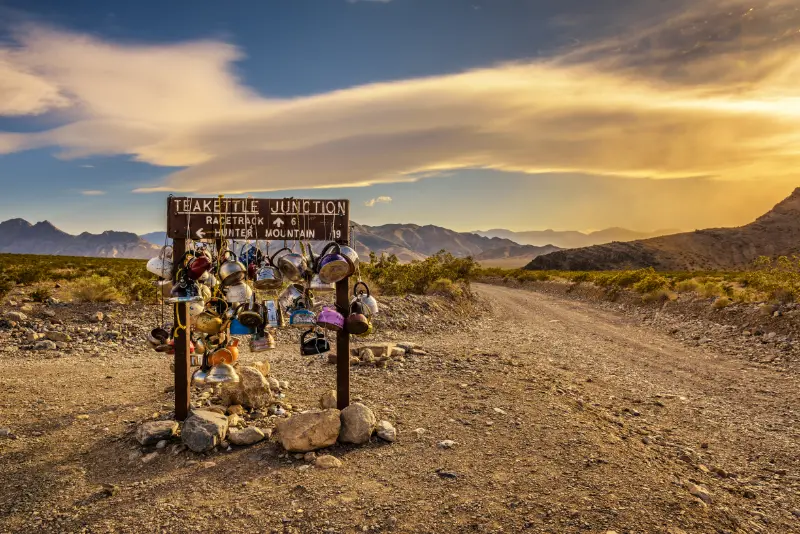
Death Valley can be an excellent family destination, but only when adults plan around the environment rather than trying to make the desert fit a normal sightseeing schedule. Children often love the huge salt flats, colorful badlands, sand dunes and strange stories of extreme heat. The challenge is distance, exposure and the fact that conditions that feel merely uncomfortable to an adult can become unsafe for a child much faster.
Use the official Death Valley National Park planning information to check temperatures, road conditions, alerts and service availability shortly before entering the park. Our first-time Death Valley guide covers the broader two-day structure, while this article focuses on families.
Best season for families
For most families, late fall through early spring is the best period. Winter generally offers the most comfortable daytime temperatures, while spring can add wildflowers in some years. Summer is not the time to prove that your family can “handle the heat.”
If your trip falls in a hot shoulder season, start before sunrise, keep outdoor stops extremely short and spend the hottest hours in air-conditioned spaces or driving only when absolutely necessary. Always follow current park warnings.
Where to stay
Staying inside or very close to the park can reduce exhausting drives. Furnace Creek is practical for many central sights, while Stovepipe Wells works for western areas. A distant hotel may save money but can turn a family itinerary into hours of extra car time.
Choose accommodation with reliable air conditioning, food access and a pool only as a bonus. In extreme heat, the priority is a safe indoor retreat, not resort atmosphere.
Best family stops
Badwater Basin, Zabriskie Point, Mesquite Flat Sand Dunes and Artists Drive/Artists Palette are strong family choices because they offer big visual rewards without requiring long hikes. The exact order should depend on temperature, road conditions and where you sleep.
Do not assume “short trail” means easy in heat. A flat salt walk can still feel punishing when the sun is intense and there is no shade.
A realistic one-day family plan
Early morning: Zabriskie Point or a short dunes walk in cool conditions. Mid-morning: drive Artists Drive if open. Late morning: Badwater Basin with a short walk only. Lunch: return to an indoor or shaded service area. Afternoon: visitor center, rest or pool. Late day: one final viewpoint if everyone still feels good.
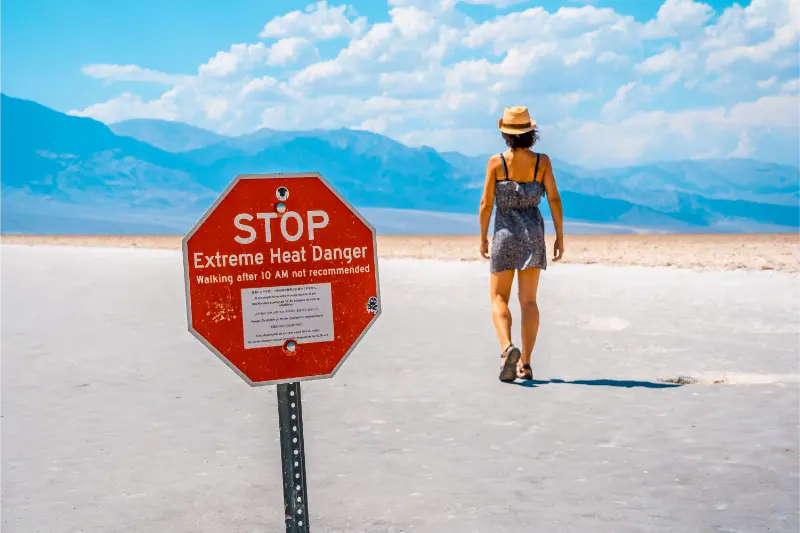
Two days are better because the family can stop when energy drops instead of forcing the schedule.
Water and car preparation
Carry substantially more drinking water than you expect to use, plus food and basic emergency supplies. Keep the fuel tank comfortably above empty because services are far apart. Download maps before entering remote sections and tell children that the car is not a place to wander away from during roadside stops.
A reliable vehicle matters more than a scenic detour. Stay on roads appropriate for your car and current conditions.
Junior Ranger and learning
Check the visitor center for the current Junior Ranger program. A workbook can give school-age children a purpose beyond “look at another view.” The park is ideal for discussing geology, elevation, adaptation and how people survive in extreme environments.
Toddlers and preschoolers
Keep stops very short, use shade whenever possible and do not depend on a stroller over salt, sand or rough terrain. A toddler may enjoy ten minutes at a viewpoint more than a forty-minute walk. That is fine.
Car-seat safety also matters in heat. Never leave a child in a parked vehicle, even briefly, and check that metal buckles and surfaces have not become dangerously hot.
School-age children and teenagers
Older children may enjoy sand dunes, photography and the extreme-elevation story of Badwater. Teenagers can take responsibility for checking the temperature or road-status board before a stop, turning safety planning into part of the trip.
Older relatives on a multigenerational trip
Many signature sights can be experienced with minimal walking, which makes Death Valley surprisingly good for multigenerational travel in cool weather. The key is access to restrooms, shade and seating. Do not make the least-mobile traveler wait in a hot car while others hike.
What not to do with kids
- Long exposed hikes in hot conditions.
- Remote rough-road excursions without the right vehicle and preparation.
- Sunset drives so far from lodging that children are exhausted on the return.
- Skipping meals or hydration to stay “on schedule.”
- Treating summer warnings as optional.
Road closures and weather
Flash floods, storm damage and maintenance can close roads unexpectedly. This is one of the California parks where checking conditions on the morning of travel can genuinely change your route. Keep a backup day built around central paved roads and viewpoints.
Combining Death Valley with other family destinations
Death Valley pairs logically with Las Vegas, Mammoth/Eastern Sierra in suitable seasons or a longer desert route. Do not combine it with Joshua Tree as a same-day family sightseeing sprint. Distances are too large and both parks deserve daylight.
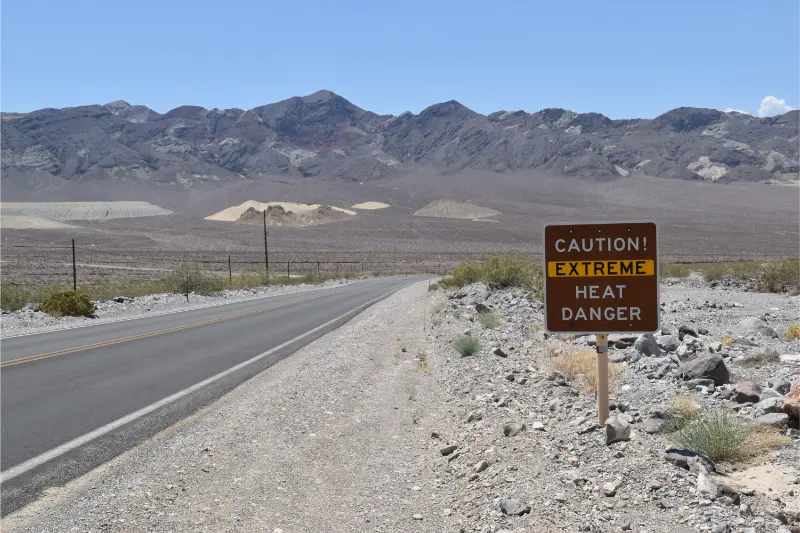
Our Death Valley in winter guide is the best companion if your trip falls in the cool season.
Is Death Valley worth it with kids?
Yes, if you choose the season carefully and make safety the organizing principle. Children do not need long hikes to understand how extraordinary the park is. A handful of dramatic viewpoints, a short dunes walk and a Junior Ranger activity can create a stronger family memory than an overloaded itinerary.
A few final planning notes
California trips are easier when you leave a little slack in the day. Traffic, parking, weather, timed-entry systems and simple travel fatigue can all change the pace. Build the day around one or two priorities, keep a backup option nearby and check the official site again shortly before you go. That approach is especially useful for families, older travelers and anyone who prefers a calmer itinerary rather than a checklist.
For accommodation, favor the base that reduces your hardest travel day rather than the one that looks best on a map. For transportation, compare the cost of parking and rideshare with the value of having a car available. If you are combining this stop with a longer California road trip, avoid changing hotels for a single attraction unless the transfer clearly saves time the following morning.
Finally, keep seasonal conditions in mind. Coastal fog, desert heat, mountain snow and wildfire smoke can affect completely different parts of the state on the same day. A good California itinerary is flexible enough to absorb those differences without ruining the trip. The articles linked above can help you build alternatives around the same region.
How to fit this stop into a larger California trip
The most efficient way to use this experience is to group it with places in the same part of the state. California distances are deceptive: two attractions can both be described as being in Los Angeles, San Francisco or a national park region and still require a meaningful transfer. Before adding another stop, compare real drive or transit time at the hour you expect to travel, not only straight-line distance. A good day normally has one major anchor, one secondary activity and enough unstructured time for meals, parking and delays.
If this is your first California trip, protect the places you care about most by putting them earlier in the day or earlier in the itinerary. Weather, wildfire smoke, road work, timed-entry systems and sold-out parking can all force changes. A flexible backup nearby is more useful than an ambitious list on the opposite side of the city or region. Families and multigenerational groups should also plan around the slowest realistic pace in the group, not the fastest person.
Budget and booking strategy
The headline ticket price is only one part of the cost. Parking, fuel, rideshare, food, special exhibits, lockers and reservation fees can matter just as much. Before booking, compare the total day cost and decide which extras genuinely improve the visit. Free attractions can become expensive when reached by repeated rideshare trips, while a paid attraction near your hotel may be the better value because it saves time and transportation.
Book only the elements that are capacity-limited or difficult to replace, and keep the rest of the day flexible. If a ticket has a fixed entry time, schedule a generous arrival buffer. If no reservation is required, early morning is often the easiest option for parking and crowds. Always use the official website for the final check because operating calendars, temporary closures and special-event rules can change after an article is published.
A slower alternative
Not every traveler wants a full sightseeing schedule. A slower version can be better: choose the single experience that matters most, add a relaxed meal nearby and leave the rest of the day open. This works especially well for older travelers, parents with small children and anyone recovering from a long flight or several road-trip days. California rewards repeat visits, so there is no advantage in exhausting yourself simply to say you saw one more attraction.
Before you leave
Check the official site one final time on the morning of the visit. Confirm weather, road or transit conditions, parking instructions, accessibility needs and any reservation requirements. Carry water, a phone charger and a light layer appropriate to the region. Most importantly, give yourself permission to shorten the plan if the day is more crowded, hotter, colder or more tiring than expected. A well-paced California trip is usually more memorable than a perfectly completed checklist.