A one-day Death Valley itinerary must be selective. The park is enormous, distances are long and road conditions can change faster than an old guidebook suggests. The best first day focuses on the Furnace Creek–Badwater corridor, adds one dune or overlook stop and leaves enough daylight for safe driving out of the park.
If you can stay two nights, our Death Valley first-time guide and two-day itinerary is the better plan. If you only have one day, this route gives you the landscapes most visitors hope to see without pretending you can cover the entire park.
First rule: check current road conditions
Do this on the morning of the visit, not a month before. Flood damage and repair projects can close roads for long periods. The National Park Service maintains a live Death Valley conditions and road-status page. In late September 2026, for example, several roads and facilities still have closure or caution notices.
If your planned route uses an unpaved road, understand the vehicle requirements and current condition before you commit. A one-day itinerary is not the time to recover from a flat tire on a remote backcountry road.
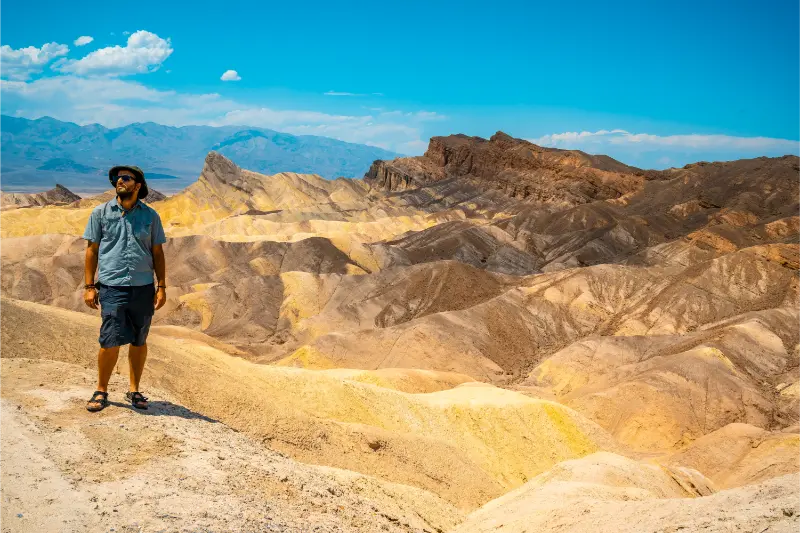
Sunrise or early morning: Zabriskie Point
Zabriskie Point is one of the easiest high-impact viewpoints in the park. Sunrise can be beautiful, but you do not need to arrive in total darkness to enjoy it. An early stop gives you cooler temperatures and keeps the rest of the day moving toward Furnace Creek and Badwater Basin.
Morning: Furnace Creek and Badwater Road
Use Furnace Creek for orientation, restrooms, water and any visitor-center needs, then drive south toward Badwater Basin. Stop selectively. Devil’s Golf Course may be closed or access may change after weather, so treat it as optional rather than the structure of the day.
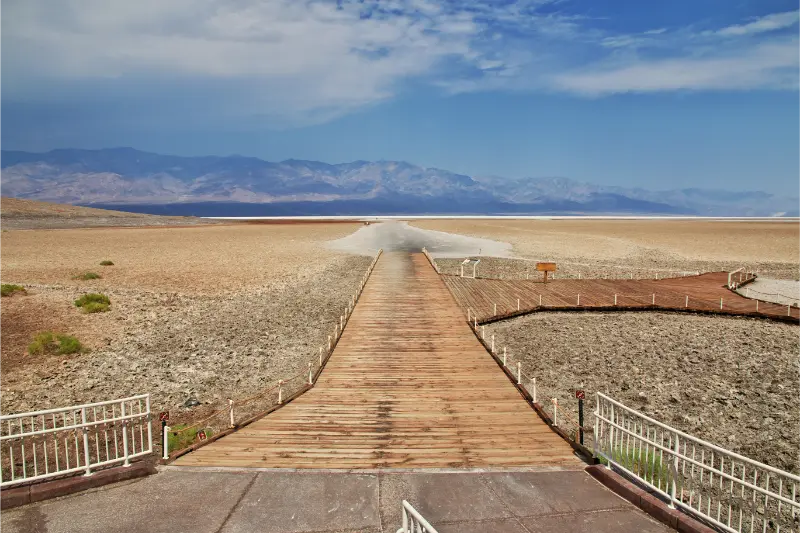
Badwater Basin
Badwater is essential for a first visit, but the amount of walking should match the weather. The famous salt polygons may require a longer walk depending on recent surface conditions. In hot weather, there is no prize for walking far onto the basin. Enjoy the scale, take photographs and return before heat becomes a problem.
Artist’s Drive and Artist’s Palette
Artist’s Drive is a scenic one-way loop with narrow, winding sections and vehicle-length restrictions. It fits naturally after Badwater when open. Stop at Artist’s Palette, then continue rather than repeatedly pulling over in unsafe places. Large RVs should confirm current restrictions before entering.
Lunch and midday heat
Midday is when a sensible itinerary slows down. Eat, refill water and spend time in air conditioning if temperatures are high. Death Valley is not a place to “push through” heat because you have only one day. In summer, a continuous daylight itinerary may be unsafe; our Death Valley in winter guide explains why cooler months are much easier.
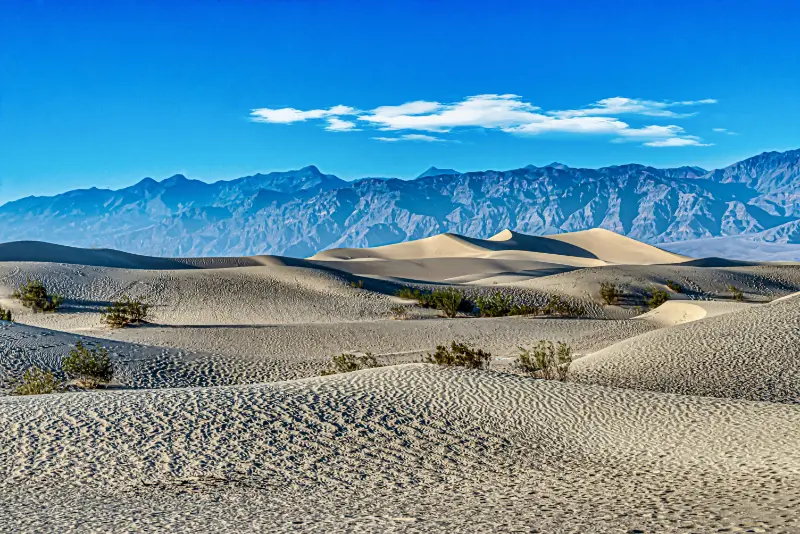
Afternoon: Mesquite Flat Sand Dunes
The dunes near Stovepipe Wells are a strong afternoon stop if the day is cool enough. You do not need to reach the tallest dune to appreciate the landscape. Walk until the effort or heat no longer feels comfortable, then turn around. Sand walking is slower and more tiring than the distance suggests.
Alternative afternoon: Dante’s View
If road access is open and your route makes sense, Dante’s View offers a dramatic high-elevation perspective over Badwater Basin. It can replace the dunes rather than being added on top. Choosing between them is exactly the kind of tradeoff that keeps a one-day plan realistic.
Fuel, water and navigation
Start with a full tank. Services are limited and expensive compared with nearby cities, but that is secondary to simply having enough range. Download offline maps before entering and carry more water than you expect to drink. Tell someone your route if you are traveling alone.
Families
With children, keep walks short and make the day about the strange landscapes rather than distance. Our Death Valley with kids guide covers child-specific safety. Avoid letting a “quick stop” turn into a long exposed walk when temperatures are rising.
Common mistakes
- Trying to include Scotty’s Castle or remote canyons without checking closures.
- Assuming a one-day trip can cover both major paved highlights and backcountry roads.
- Running the fuel tank low.
- Planning the dunes at the hottest part of the day.
- Driving out after dark when the driver is already exhausted.
A realistic one-day sequence
Early: Zabriskie Point. Morning: Furnace Creek, Badwater Basin and selected Badwater Road stops. Late morning: Artist’s Drive. Midday: food, water and rest. Afternoon: Mesquite Flat Sand Dunes or Dante’s View, not both if time is tight. Exit: leave enough daylight for the road to your next lodging.
When one day is not enough
If you care about sunrise and sunset photography, remote canyons, stargazing or multiple hikes, stay overnight. Death Valley rewards slower travel because the park’s scale is part of the experience. One day can be excellent, but it should feel deliberate rather than incomplete.
Planning for families, seniors and a slower travel pace
A good California itinerary should work for the slowest realistic pace in the group, not the fastest person. Families need bathroom, snack and reset time; older travelers may prefer shorter walks and more reliable parking; travelers with mobility limitations need to know which viewpoints or facilities can be reached without stairs or rough terrain. Build at least one comfortable break into the middle of the day and keep one attraction optional. That simple choice makes the plan far more resilient when traffic, heat, altitude, queues or fatigue change the day.
If accessibility is essential, use the official attraction or park accessibility page shortly before the visit. Construction, seasonal shuttle routes and temporary closures can change which paths are practical. A short accessible viewpoint that everyone can enjoy together is often a better choice than splitting the group simply to complete a famous hike or attraction.
Budget and booking strategy
Separate the costs that are unavoidable from the costs that are optional. Parking, entrance fees, fuel and accommodation usually matter more than a small difference in meal prices. Reserve the elements that are capacity-limited or difficult to replace, but avoid turning every hour into a reservation. California travel is easier when part of the day remains flexible for weather, traffic and spontaneous stops.
Before paying for an upgrade, ask what problem it solves. A closer hotel can be worth more than a larger room if it removes two rideshare trips every day. A paid shuttle can be better value than parking if it reduces stress. Conversely, a premium tour may add little when the main experience is already easy to visit independently. Compare the total day cost rather than one headline price.
How to fit this into a longer California trip
California distances are deceptive, so combine places by geography rather than by fame. Two attractions can both appear under the same city or park name yet require a substantial transfer. Use real driving or transit time at the hour you expect to travel, and avoid changing hotels for a single attraction unless the move clearly improves the following day. A longer stay in one well-chosen base is often more enjoyable than collecting one-night stops.
Protect the experiences you care about most by scheduling them earlier in the trip or earlier in the day. Keep a backup nearby rather than on the opposite side of a metropolitan area or mountain range. Road work, fog, wildfire smoke, snow, heat and sold-out parking can all force changes. Flexibility is not wasted time in California; it is part of a realistic plan.
Before you leave
Check the official website again within 24–48 hours of the visit. Confirm opening hours, reservations, road conditions, parking instructions and any weather or safety alerts. Carry water, a phone charger and one extra layer even when the forecast looks simple. Most importantly, be willing to shorten the day if conditions or energy are worse than expected. A well-paced California trip is usually more memorable than a perfectly completed checklist.
One final practical rule is to separate the one experience that would disappoint you to miss from everything else. Put that priority first, then build the rest of the day around it. This keeps a late meal, parking delay or weather change from destroying the itinerary and makes it easier to adapt without feeling that the trip has failed.
One final practical rule is to separate the one experience that would disappoint you to miss from everything else. Put that priority first, then build the rest of the day around it. This keeps a late meal, parking delay or weather change from destroying the itinerary and makes it easier to adapt without feeling that the trip has failed.
One final practical rule is to separate the one experience that would disappoint you to miss from everything else. Put that priority first, then build the rest of the day around it. This keeps a late meal, parking delay or weather change from destroying the itinerary and makes it easier to adapt without feeling that the trip has failed.
One final practical rule is to separate the one experience that would disappoint you to miss from everything else. Put that priority first, then build the rest of the day around it. This keeps a late meal, parking delay or weather change from destroying the itinerary and makes it easier to adapt without feeling that the trip has failed.