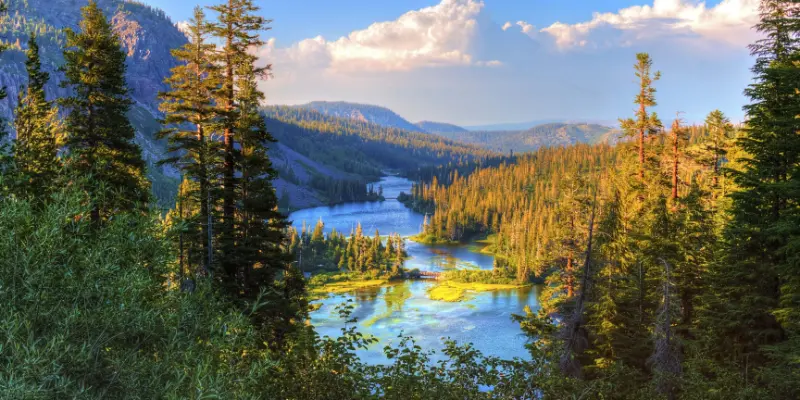
Lake Tahoe and Mammoth Lakes are both major California mountain destinations, but they create very different trips. Tahoe is a huge lake region split between California and Nevada with multiple towns, beaches and ski areas. Mammoth is a more concentrated Eastern Sierra mountain base where skiing, high-altitude lakes and volcanic landscapes dominate the identity.
Read the Lake Tahoe guide and Mammoth Lakes guide for destination details. This comparison is about choosing efficiently: which is better from your starting city, how seasons affect access, what families actually do between activities and when the longer drive to one destination is worth it.
Quick answer
Choose Lake Tahoe for lake scenery, multiple town choices, beaches and a broader resort region. Choose Mammoth Lakes for a more mountain-focused Eastern Sierra trip, strong skiing, summer hiking and easier pairing with Highway 395 destinations.
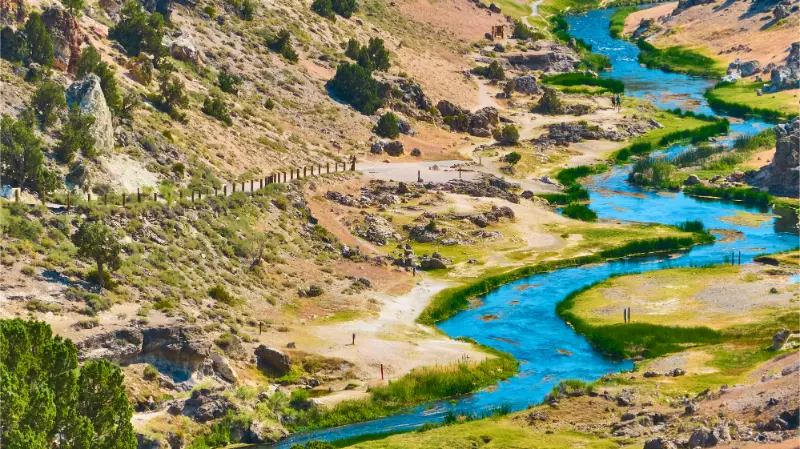
Side-by-side comparison
| Best lake-focused summer trip | Lake Tahoe |
|---|---|
| Best Eastern Sierra base | Mammoth Lakes |
| More towns and lodging zones | Lake Tahoe |
| More compact mountain identity | Mammoth Lakes |
| Easier from San Francisco/Sacramento | Lake Tahoe |
| Easier from Los Angeles | Mammoth Lakes |
Geography and the feeling of the destination
Tahoe is a region, not one town. South Lake Tahoe, Tahoe City, Kings Beach and Truckee can feel like different vacations. The lake is the organizing feature, and choosing the wrong shore can add substantial driving around water that looks deceptively compact on a map.
Mammoth is more concentrated. The town, ski resort access and nearby lakes create a clearer center, while day trips spread along Highway 395. That makes the planning map easier, although high-elevation roads and seasonal closures can dramatically change what is reachable.
Summer
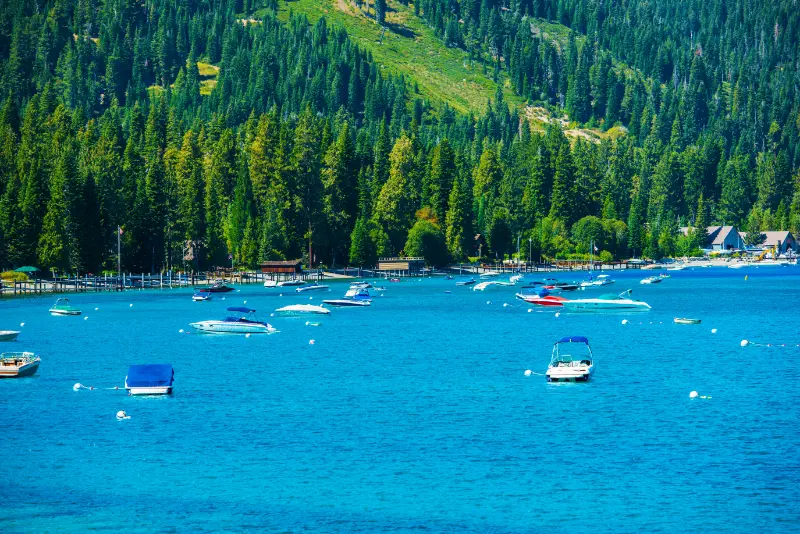
Tahoe summer is about beaches, lake views, paddling, hiking and scenic drives. Families can mix one active morning with an easy beach afternoon, which makes the region forgiving for mixed energy levels.
Mammoth summer shifts toward alpine lakes, hiking, biking and Eastern Sierra day trips. It is stronger for travelers who want mountains every day and do not need a traditional beach-resort atmosphere. Some high-country access opens late depending on snow.
Winter
Tahoe offers multiple ski resorts and a large winter tourism ecosystem. The choice can be overwhelming, but groups with different budgets and skiing interests have more options. Snowstorms can make driving around the lake slow and chain controls are a serious trip-planning factor.
Mammoth Mountain creates a more centralized ski trip. For Southern California travelers, that focus is a major advantage. The drive is long but direct compared with flying north, and the town is designed around winter recreation. Chain controls and storm travel still require flexibility.
Road-trip combinations
Tahoe pairs naturally with Sacramento, Gold Country and Northern California. It can also connect toward Reno and the eastern side of the Sierra when passes are open.
Mammoth is the stronger link in a Highway 395 road trip with Bishop, June Lake, Mono Lake, Lone Pine and the Alabama Hills. If that corridor is already on the itinerary, choosing Tahoe instead can create unnecessary backtracking.
Who should choose option A?
Choose Tahoe when the lake itself is the dream. If part of the family wants beaches, another wants hiking and another wants casinos, restaurants or multiple ski-area choices, the region provides more ways to split and regroup.
Tahoe also makes sense for Bay Area travelers because access is more straightforward and the trip can be shorter. The time saved on transport can become an extra lake morning rather than another highway day.
Who should choose option B?
Choose Mammoth when the mountain landscape is the main goal and when Highway 395 already fits the route. It is a particularly strong choice from Los Angeles and for skiers who want one major resort to organize the trip.
In summer, Mammoth is excellent for travelers who value trail access, alpine lakes and cooler temperatures more than a large destination lake with beaches. The trip feels more like an Eastern Sierra base camp than a multi-town resort region.
Families, seniors and mixed-age groups
Families with young children often appreciate Tahoe’s beaches and wider range of low-effort activities, while active families may prefer Mammoth’s concentrated outdoor focus. Neither is automatically easier in winter: snow, altitude and gear create work in both places.
For seniors or travelers with limited mobility, hotel location matters more than destination reputation. Choose a base where the views, food and one or two scenic experiences remain enjoyable even if the group does not hike or ski.
Where to stay and how many nights
Tahoe requires a deliberate shore choice. Use the where to stay in Lake Tahoe guide before booking. A cheap room on the wrong side of the lake can produce hours of unwanted driving.
Mammoth is simpler: decide whether you value walking/shuttle access to the Village, ski convenience or a quieter condo zone. In peak ski periods, proximity to your morning lift strategy can be worth more than extra square footage.
Budget: compare the whole day, not only admission or hotel price
Both can be expensive in peak seasons. Tahoe has more lodging variety but also more temptation to drive, park and pay across multiple resort zones. Mammoth can concentrate costs around one resort, which makes the total easier to predict but not necessarily cheaper.
Compare transport. A flight plus rental car to Tahoe, or a very long drive to Mammoth, may outweigh a nightly room difference. Mountain-trip budgets should include chain equipment, parking and winter flexibility—not only lodging.
Best time to go
Late summer and early fall are strong for both when high-country access is open and wildfire smoke is not a problem. Winter choice depends on snowfall, road conditions and the activity you want.
Shoulder seasons are the most unpredictable. A road or trail that was open last year on the same date may still be snow-covered this year. Treat seasonal access as current information, not as a calendar guarantee.
Mistakes I would avoid
- Choosing Tahoe without deciding which shore to stay on.
- Choosing Mammoth without understanding altitude and seasonal road access.
- Comparing hotel prices without transport cost.
- Assuming summer mountain roads open on fixed dates.
- Planning a winter drive with no storm-day flexibility.
- Trying to combine Tahoe and Mammoth in a short trip when the route adds little value.
The biggest mistake is seeing both destinations as interchangeable ‘California mountains.’ Their geography should determine the choice before hotel photos do.
A simple decision framework
Start with origin: San Francisco/Sacramento points toward Tahoe; Los Angeles points toward Mammoth. Then ask whether the trip should revolve around a huge lake or around Eastern Sierra mountains. Those two answers usually resolve the decision quickly.
Only after that should you compare resorts, rooms and restaurants. Transportation logic is the foundation; amenities are the refinement.
Can you combine both?
Yes, on a longer Eastern California road trip, especially when seasonal Sierra passes are open. But the drive between them is significant and should serve the itinerary rather than exist because both names are famous.
For a one-week mountain vacation, I would usually choose one and explore it deeply. Tahoe can easily fill a week across different shores; Mammoth can fill a week when paired with June Lake, Mono Lake and Bishop.
Frequently asked questions
Which is better from Los Angeles?
Mammoth Lakes is usually the more natural mountain choice from Los Angeles, especially for a driving trip.
Which is better from San Francisco?
Lake Tahoe is generally easier and faster from the Bay Area.
Which is better with young kids?
Tahoe often has more low-effort summer options and beaches, but the best choice depends on season and hotel location.
Which is better for a Highway 395 road trip?
Mammoth Lakes. It sits directly in the Eastern Sierra corridor with June Lake, Mono Lake and Bishop nearby.
My final choice
I would choose Tahoe when the lake and variety are the reason for traveling. I would choose Mammoth when the mountains and Eastern Sierra route are the reason.
The best decision usually comes from geography, not from a list of attractions. Choose the destination that fits the direction your California trip is already moving.
Before you lock the itinerary
Check the official operating calendar, weather and transportation information again during the final week before departure. California trips are unusually sensitive to traffic, coastal fog, mountain snow, wildfire smoke, heat and attraction operating changes. A plan that was sensible when you booked can still need a small adjustment on the day.
I also recommend building a thirty- to sixty-minute margin around the day’s single most important experience. That margin absorbs parking, restroom stops, a slow breakfast, a child who needs a break or a road delay without forcing you to cancel the rest of the itinerary. Travelers often try to gain value by scheduling more; in practice, the margin is what allows the expensive or memorable part of the day to happen calmly.
Finally, choose one thing you are willing to skip. Naming the optional item in advance makes it much easier to adapt when the group is tired. A flexible itinerary is not an unfinished itinerary—it is a plan that recognizes that real people, weather and traffic do not follow a spreadsheet.