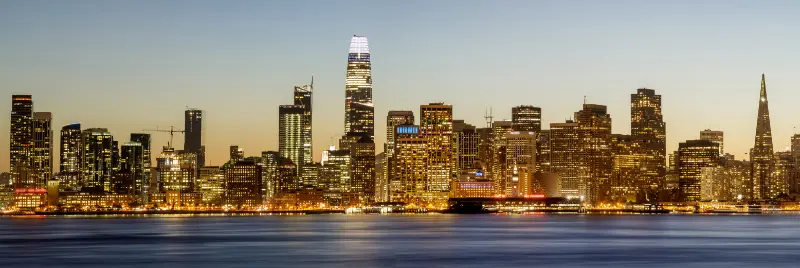
San Francisco is expensive to sleep and eat in, but many of its best experiences are free: hills, bridges, waterfront walks, parks, murals and neighborhood wandering. The city is compact enough that a budget day can also be a great sightseeing day—if you avoid wasting money on unnecessary car parking.
Our San Francisco first-time guide explains the basic three-day structure. Use this list to replace one or two paid attractions, not to turn the trip into a challenge to spend nothing.
1. Walk onto the Golden Gate Bridge
Pedestrian access is free, weather permitting. You do not need to cross the entire bridge: walking partway gives excellent views and reduces the return distance. Wind can be strong even when downtown feels mild.
2. Golden Gate viewpoints in the Presidio
The Presidio offers multiple viewpoints, trails and open spaces with no general admission fee. Transit and the free Presidio GO Shuttle can reduce the need for parking.
3. Crissy Field
The flat waterfront path is one of the easiest ways to enjoy the bridge. It works well for families, runners, photographers and older travelers who prefer to avoid steep city streets.
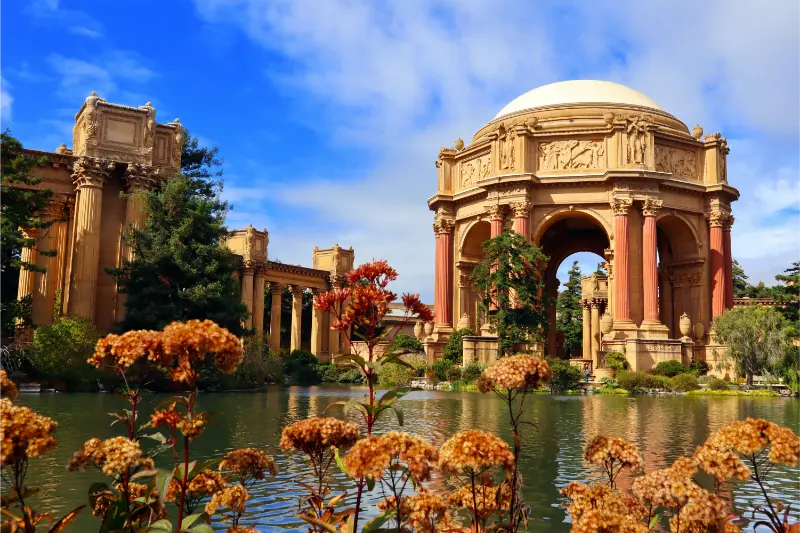
4. Palace of Fine Arts exterior and grounds
Walking the lagoon and exterior is free. It is an easy addition to a Marina or Presidio day and does not require a long visit.
5. Golden Gate Park
The park itself is free even though many museums and attractions charge admission. Use our Golden Gate Park guide to choose gardens, car-free roads and walking routes that match your day.
6. Ocean Beach
The beach is dramatic and often chilly. Strong currents make it more of a walking and sunset beach than a swimming destination. Pair it with the western edge of Golden Gate Park.
7. Lands End trails and overlooks
This is one of the best free coastal experiences in the city. Trails include uneven sections and stairs, but several viewpoints require less walking. Fog can reduce bridge views while still making the cliffs atmospheric.
8. Chinatown streets and alleys
Walking Chinatown is free, while food and shopping are optional. Our dedicated Chinatown guide provides a half-day route that avoids simply wandering Grant Avenue and leaving.
9. North Beach
Explore Washington Square, Italian heritage streets and exterior Beat-history landmarks. The neighborhood pairs naturally with Chinatown and the waterfront.
10. Mission District murals
Murals around Balmy Alley, Clarion Alley and surrounding streets can form a free art walk. Be respectful of residents and remember that the Mission is a living neighborhood, not an outdoor museum set.
11. Dolores Park
The park offers one of the classic free skyline views. It is especially good for a picnic on a clear afternoon, but crowd atmosphere changes by day and time.
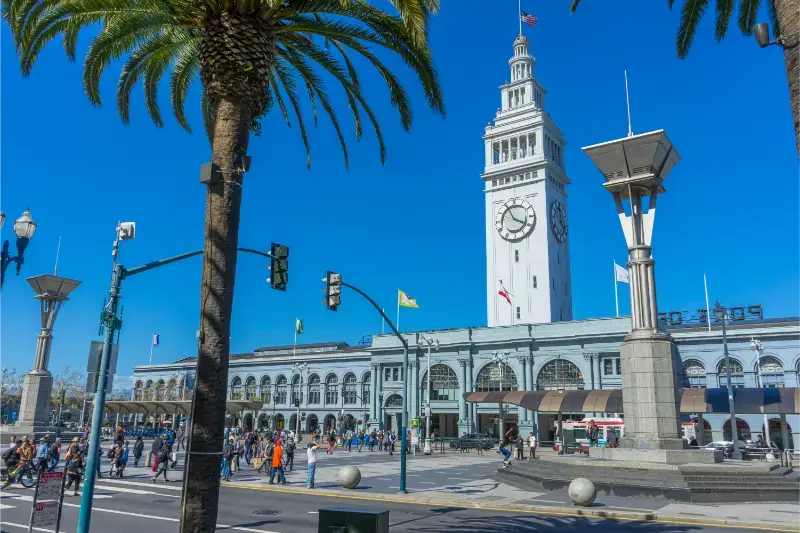
12. Ferry Building and Embarcadero walk
You can walk through the public market building and along the Embarcadero without buying anything. Our Ferry Building and Embarcadero guide helps turn the stop into a coherent waterfront half-day.
13. Pier 39 sea lions
Viewing the sea lions is free, although the surrounding pier is commercial. Treat it as a short stop within a waterfront walk rather than an obligation to spend half a day shopping.
14. Fisherman’s Wharf waterfront
The area itself has no admission fee. Walk the waterfront, see historic vessels from public areas and continue toward Aquatic Park. Paid museums and cruises are optional.
15. Cable car watching
Riding costs money, but watching the turnaround and photographing the cars is free. If the queue is enormous and your budget is tight, you can still enjoy the iconic streetscape without buying a ticket.
16. Painted Ladies viewpoint at Alamo Square
The park and view are free. Do not confuse the famous row of houses with the only attractive Victorian architecture in the city—walking surrounding streets is just as rewarding.
17. Twin Peaks viewpoint when accessible
The panorama can be excellent on a clear day. Fog may erase the view entirely, so treat it as weather-dependent and check road/access conditions before going.
18. Salesforce Park
The elevated public park provides a surprising green space in the downtown area. Hours and programming can change, so check current access if it is a priority.
19. City Hall and Civic Center exterior architecture
The grand civic buildings are impressive from public spaces. Combine them with Hayes Valley or another nearby stop rather than making a long standalone trip.
20. Neighborhood stairways and hill views
San Francisco is full of public stairways, but not every traveler needs the steepest one. Choose a staircase near the neighborhoods already in your itinerary and respect residential quiet.
How to save money without exhausting yourself
Walk and use Muni strategically rather than treating the city like a free hiking challenge. San Francisco hills add up. A transit day pass or individual rides can be excellent value even on a “free attractions” day because they preserve energy for the places you came to see.
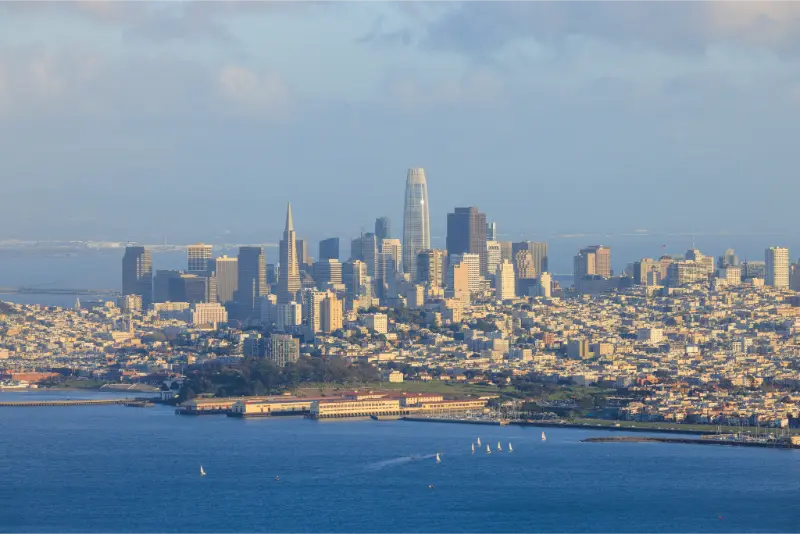
A realistic free day
Morning: Golden Gate Bridge, Crissy Field and Presidio. Afternoon: one neighborhood such as Chinatown/North Beach or the Mission. Evening: Ferry Building waterfront or a sunset park. Three coherent areas are better than ten disconnected pins.
Planning for families, seniors and a slower travel pace
A good California itinerary should work for the slowest realistic pace in the group, not the fastest person. Families need bathroom, snack and reset time; older travelers may prefer shorter walks and more reliable parking; travelers with mobility limitations need to know which viewpoints or facilities can be reached without stairs or rough terrain. Build at least one comfortable break into the middle of the day and keep one attraction optional. That simple choice makes the plan far more resilient when traffic, heat, altitude, queues or fatigue change the day.
If accessibility is essential, use the official attraction or park accessibility page shortly before the visit. Construction, seasonal shuttle routes and temporary closures can change which paths are practical. A short accessible viewpoint that everyone can enjoy together is often a better choice than splitting the group simply to complete a famous hike or attraction.
Budget and booking strategy
Separate the costs that are unavoidable from the costs that are optional. Parking, entrance fees, fuel and accommodation usually matter more than a small difference in meal prices. Reserve the elements that are capacity-limited or difficult to replace, but avoid turning every hour into a reservation. California travel is easier when part of the day remains flexible for weather, traffic and spontaneous stops.
Before paying for an upgrade, ask what problem it solves. A closer hotel can be worth more than a larger room if it removes two rideshare trips every day. A paid shuttle can be better value than parking if it reduces stress. Conversely, a premium tour may add little when the main experience is already easy to visit independently. Compare the total day cost rather than one headline price.
How to fit this into a longer California trip
California distances are deceptive, so combine places by geography rather than by fame. Two attractions can both appear under the same city or park name yet require a substantial transfer. Use real driving or transit time at the hour you expect to travel, and avoid changing hotels for a single attraction unless the move clearly improves the following day. A longer stay in one well-chosen base is often more enjoyable than collecting one-night stops.
Protect the experiences you care about most by scheduling them earlier in the trip or earlier in the day. Keep a backup nearby rather than on the opposite side of a metropolitan area or mountain range. Road work, fog, wildfire smoke, snow, heat and sold-out parking can all force changes. Flexibility is not wasted time in California; it is part of a realistic plan.
Before you leave
Check the official website again within 24–48 hours of the visit. Confirm opening hours, reservations, road conditions, parking instructions and any weather or safety alerts. Carry water, a phone charger and one extra layer even when the forecast looks simple. Most importantly, be willing to shorten the day if conditions or energy are worse than expected. A well-paced California trip is usually more memorable than a perfectly completed checklist.
One final practical rule is to separate the one experience that would disappoint you to miss from everything else. Put that priority first, then build the rest of the day around it. This keeps a late meal, parking delay or weather change from destroying the itinerary and makes it easier to adapt without feeling that the trip has failed.
One final practical rule is to separate the one experience that would disappoint you to miss from everything else. Put that priority first, then build the rest of the day around it. This keeps a late meal, parking delay or weather change from destroying the itinerary and makes it easier to adapt without feeling that the trip has failed.
One final practical rule is to separate the one experience that would disappoint you to miss from everything else. Put that priority first, then build the rest of the day around it. This keeps a late meal, parking delay or weather change from destroying the itinerary and makes it easier to adapt without feeling that the trip has failed.
One final practical rule is to separate the one experience that would disappoint you to miss from everything else. Put that priority first, then build the rest of the day around it. This keeps a late meal, parking delay or weather change from destroying the itinerary and makes it easier to adapt without feeling that the trip has failed.