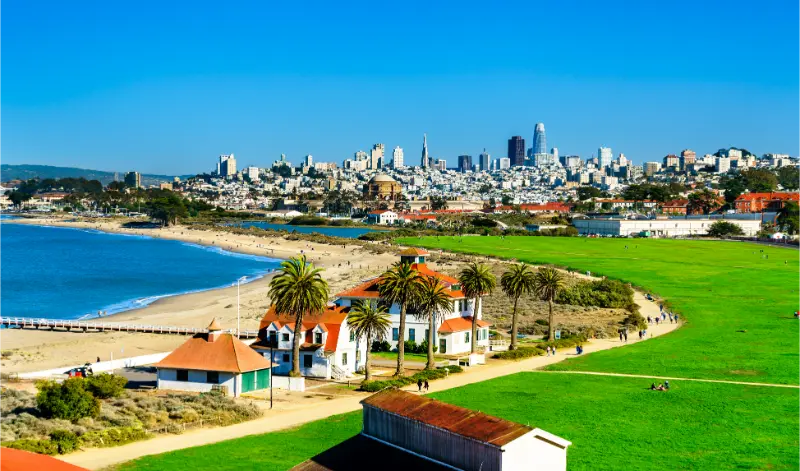
The drive from San Francisco to Lake Tahoe is not just a transfer between a city and a mountain lake. It crosses the Bay Area, Central Valley foothills and Sierra Nevada, and the route you choose should depend on which side of Tahoe you are staying on. The two main options—I-80 toward Truckee and North Lake Tahoe, or US-50 toward South Lake Tahoe—are not interchangeable once traffic, snow and hotel location enter the decision.
Use our San Francisco guide before departure and Lake Tahoe first-time guide for the destination. The road-trip decision becomes easier when you choose the Tahoe base first, then select the approach road.
Route 1: I-80 for Truckee, North Lake Tahoe and the northwest shore
I-80 is the natural route for Truckee, Donner Summit, Tahoe City and much of North Lake Tahoe. It is a major interstate, which can make winter operations more robust, but snow and chain controls still cause significant delays. Sacramento and Auburn are the logical urban/historic stops along the way. If your hotel is in Truckee, do not drive US-50 simply because someone called it more scenic.
Route 2: US-50 for South Lake Tahoe
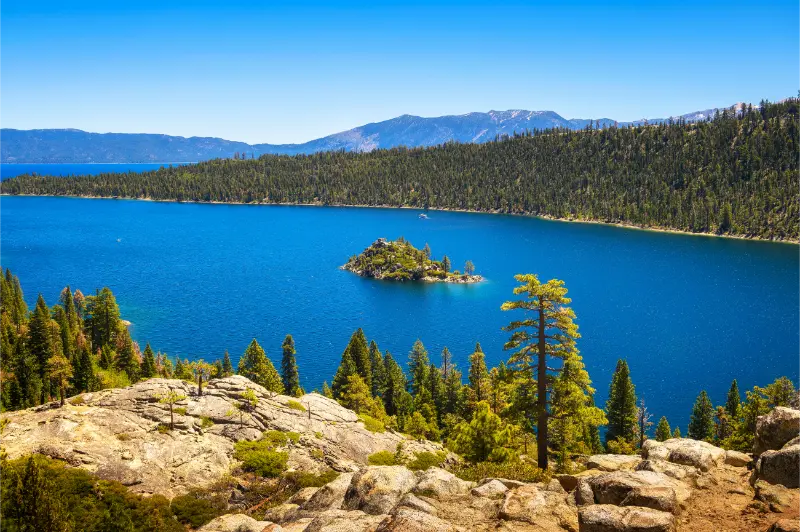
US-50 is the direct approach for South Lake Tahoe, passing through Sacramento-area roads, the Gold Country foothills and Echo Summit. Placerville makes a convenient meal or historic stop. The mountain section is scenic but can be slow during storms, holiday traffic or chain controls. Choose it because it leads to your base, not because you want to sample every Sierra highway on the same day.
How long should you allow?
In light traffic and good weather, the drive can be around four hours, but California road-trip planning should never assume the best-case time. Bay Area congestion, Sacramento traffic, construction, snow and weekend Tahoe traffic can add substantial delays. Treat it as a half-day transfer at minimum and a full travel day if you want two meaningful stops.
Best stop: Sacramento
Sacramento works especially well for travelers who want museums, Old Sacramento or a proper lunch. Our Sacramento first-time guide can turn the stop into an overnight if you want to split the drive. For a simple transfer day, limit yourself to one compact district instead of driving across the city to collect attractions.
Auburn or Placerville?
Auburn fits the I-80 route; Placerville fits US-50. Both provide Gold Rush-era atmosphere and food options without a major detour. Do not cross between them simply to see both. The best road-trip stop is usually the one already on your route.
Truckee as a destination, not just a fuel stop
If you are using I-80, Truckee can be your first Tahoe-region experience. Stay there if you want walkable restaurants, rail history and easy access to North Lake Tahoe or ski areas. Travelers heading to South Lake Tahoe should not add Truckee unless it has a specific purpose; the lake is larger than first-time visitors expect.
Winter chain controls and road conditions
Carry chains when required and know how your rental-car agreement treats them. Check Caltrans QuickMap and road conditions before leaving San Francisco and again before the mountain climb. Four-wheel or all-wheel drive does not automatically exempt a vehicle from every chain-control level. A winter travel day needs daylight, warm clothing and extra food in case traffic stops.
Should you stop at Donner Summit?
The Donner area is historically significant and scenically impressive, but it belongs naturally on the I-80 route. If weather is clear and time is comfortable, a short stop can add context to the Sierra crossing. In a storm, prioritize safe arrival over sightseeing.
A realistic travel-day plan
Morning: leave San Francisco after the worst local rush if possible. Late morning: Sacramento or a foothill stop. Lunch: Auburn on I-80 or Placerville on US-50. Afternoon: Sierra crossing with road-condition checks. Late afternoon: arrive at Tahoe before dark in winter, check in and keep the evening local.

How to pace the visit without turning it into a checklist
a city-to-mountain road trip with two genuinely different Sierra approaches rewards a slower plan than a map first suggests. The practical rule is to identify one anchor experience for the morning, one flexible stop for the middle of the day and one late-day option that can be skipped without ruining the trip. Traffic and weather can turn a nominal four-hour drive into a much longer day, especially on winter and holiday weekends. Building slack into the schedule is especially useful in California, where mountain roads, coastal fog, desert heat, parking pressure and seasonal construction can change a day faster than the mileage implies.
Do not measure success by the number of named stops. A short walk enjoyed properly, time to use a visitor center and an unhurried meal often produce a better trip than driving from viewpoint to viewpoint. If you arrive later than planned, cut the least distinctive stop rather than shortening every stop. That single decision keeps the day enjoyable.
Where to stay and how to choose a base
Choose the Tahoe lodging first. South Lake Tahoe points toward US-50; Truckee and much of North Lake Tahoe point toward I-80. The best base is the one that reduces local lake driving after a long transfer day.
For a one-night stop, convenience usually matters more than atmosphere. For two or more nights, the quality of the base becomes more important because unpacking once and having useful food options nearby can save hours across the trip. Always check the actual drive time to the first stop of the next morning rather than relying on a hotel description that says “near” the park, coast or attraction.
Families, seniors and travelers with limited mobility
Families should schedule one long stop with bathrooms and food rather than several tiny stops. Seniors benefit from a lunch break before the mountain roads. In winter, everyone should have warm clothing accessible in the cabin rather than packed under luggage.
Accessibility can change with construction, snow, trail damage or temporary shuttle patterns. If step-free access is essential, confirm the official accessibility page shortly before travel and have one backup viewpoint or short walk. The goal is to keep the group together for the most memorable parts of the day instead of designing an itinerary that only works for the fastest hiker.
Common mistakes to avoid
- Choosing the route before deciding which side of Tahoe you are staying on.
- Using best-case navigation time as the day’s schedule.
- Driving into a winter storm without checking chain controls.
- Trying to visit Sacramento, Auburn, Placerville and Truckee in one transfer day.
- Arriving at Tahoe after dark in winter when you could have left earlier.
What to combine with this trip
The route can link a San Francisco city stay with Lake Tahoe in one coherent trip. If you are continuing through the Sierra, Truckee makes sense on the I-80 side; if the trip is only San Francisco plus Tahoe, keep the transfer simple.
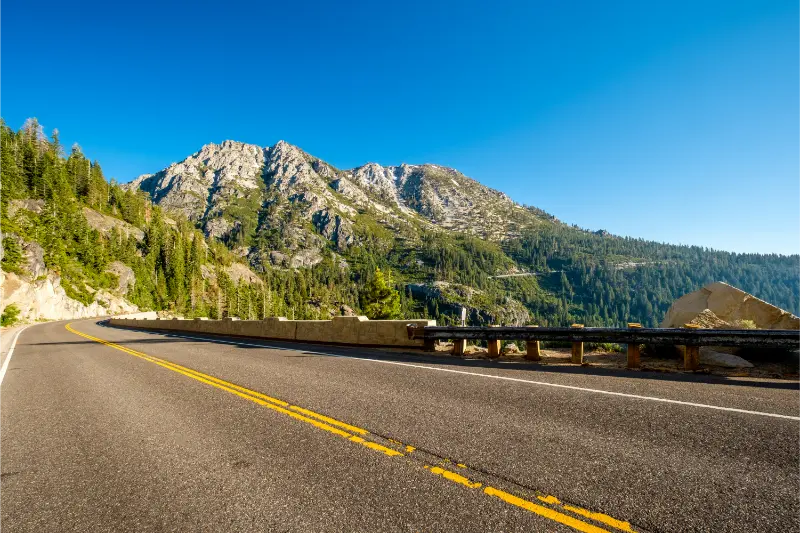
When combining destinations, count transition time as part of the experience rather than dead time. A scenic route, a picnic stop or an interesting small town can make the transfer worthwhile, but only if you are not racing an inflexible reservation at the other end. California trips work best when the route has a clear geographic logic and every overnight solves a practical problem.
A practical decision framework before you go
Before finalizing the day, answer four questions: what is the one experience you would be disappointed to miss, what condition could make that experience difficult, what is your easiest backup, and where will you stop if the group gets tired earlier than expected? This simple framework is more useful than a minute-by-minute schedule. It turns a fixed itinerary into a plan that can survive traffic, weather, closures and changing energy levels.
Also separate information that is stable from information that must be checked again. Geography, trail length and the general character of a place rarely change quickly; parking rules, shuttle schedules, road access, wildfire restrictions and seasonal services can. Save the official conditions page on your phone before leaving reliable service and check it again the morning of the visit.
Budget and comfort strategy
Spend money where it removes a real constraint. A better-located hotel can eliminate an hour of driving; a shuttle can remove parking stress; an early grocery stop can prevent an expensive and inconvenient food search later. At the same time, many of California’s strongest experiences are simply walking, viewpoints and scenery. A good budget allocates more to location and logistics than to filling every hour with paid attractions.
Carry water, a layer and simple food even on a short sightseeing day. California can change quickly between sun and shade, coast and inland valley, or low desert and mountain elevation. Comfort is not a luxury when it determines whether children, older travelers or tired drivers still enjoy the second half of the day.
How to use current conditions without overreacting to them
Current-condition reports are most useful when they change a decision. A closure may change the route, a weak bloom may change the destination, and a heat warning may change the time of day. They are less useful when they tempt you to redesign the entire trip around one photograph or one unusually good report. Compare at least two recent official updates when possible, note the date they were posted and ask whether the information affects access, safety or simply visual quality.
Have a nearby fallback that uses the same hotel and the same general driving direction. That way a windy day, temporary closure or disappointing seasonal condition does not force a cross-state detour. The strongest itineraries are not the ones that predict nature perfectly; they are the ones that still produce a good day when nature behaves differently.