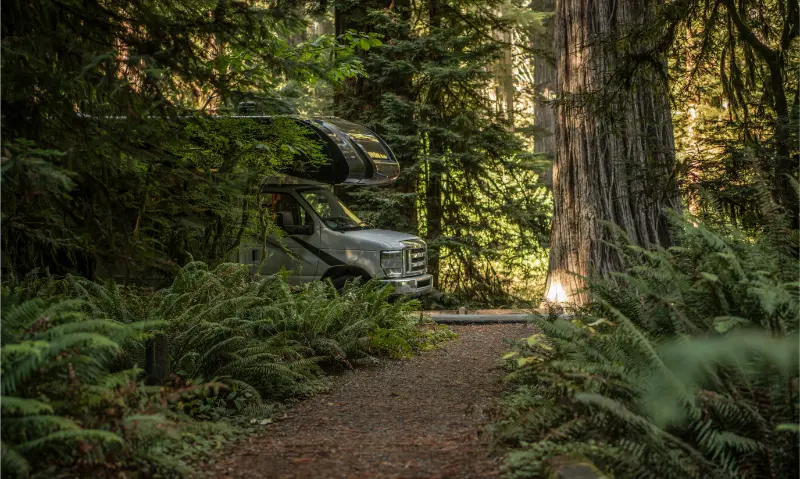
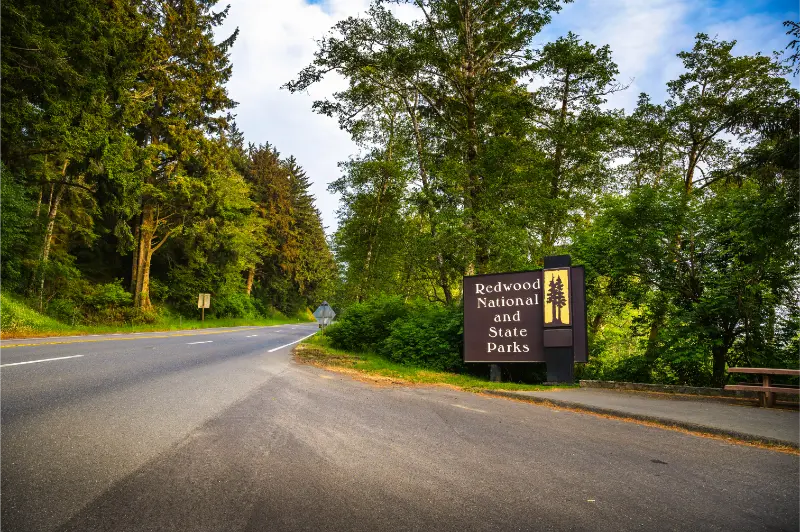
Redwood National and State Parks are unusually good for family travel because the trees create wonder immediately. Children do not need to understand tree height in feet to feel the scale, and many memorable experiences begin only a short walk from the car. The challenge is that “Redwood National Park” is not one compact park. The protected areas stretch along a long section of the North Coast, and families can lose hours by choosing stops without geographic order.
Start with our first-time redwoods guide for the park layout and three-day redwood itinerary if you have a longer stay. With children, cut one stop from the adult itinerary and use that time for an unhurried grove, beach or picnic.
Best easy redwood experiences with children
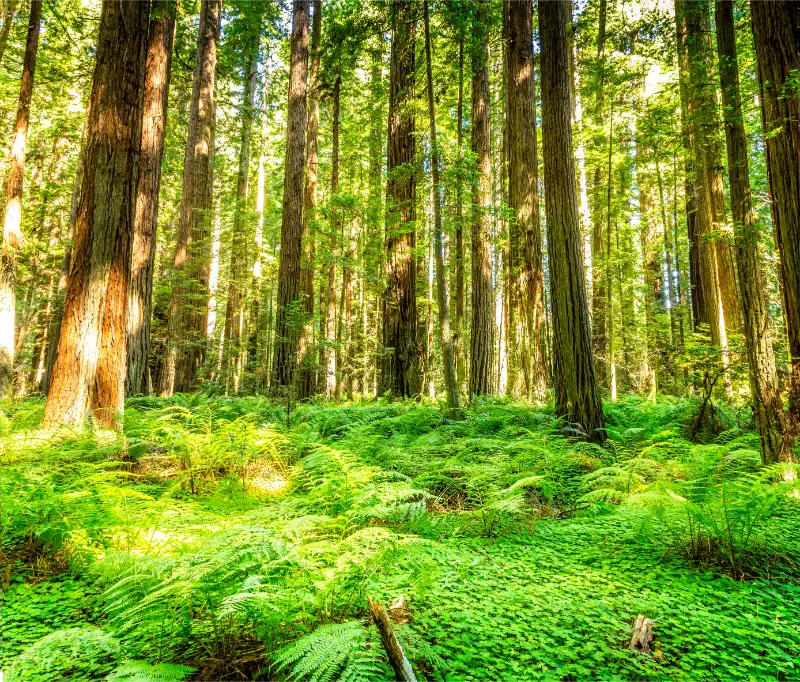
Prairie Creek Redwoods State Park is one of the strongest family bases because it combines old-growth forest, wildlife potential and access toward the coast. Short grove walks let children experience giant trees without a long approach. Lady Bird Johnson Grove is another classic option when trail conditions suit your group. Farther south, Avenue of the Giants offers frequent roadside access to redwood forest and works well on a travel day.
Fern Canyon: magical, but plan the permit and wet feet
Fern Canyon can feel like a movie set, but from May 15 through September 15, day-use access to Gold Bluffs Beach/Fern Canyon requires a free reservation permit. The road can be rough, creek crossings may be present and the canyon floor is often wet. Bring footwear that can get muddy and a change of socks for children. If the drive or permit does not work for your trip, do not treat the day as ruined; the surrounding redwood parks have many excellent alternatives.
Beaches: beautiful does not mean safe for swimming
North Coast beaches can have cold water, strong currents and sneaker waves. Families should enjoy tide lines, driftwood and views while keeping children well back from unexpected surf. A beach picnic is often better than “beach day” swimming. Check local warnings and never turn your back on the ocean.
Elk: watch from a distance
Roosevelt elk are a highlight around Prairie Creek and nearby meadows. They are wild animals, not a roadside petting experience. Stay far back, use zoom rather than walking closer and keep children beside an adult. Males can be especially unpredictable during rut, and females protect calves.
Weather and clothing
The redwood coast can be cool, foggy and damp even when inland California is hot. Dress children in layers and carry rain shells. Waterproof or quick-dry footwear is useful on muddy trails. Keep a dry set of clothes in the car; a child who steps into a creek at 10 a.m. should not spend the rest of the day wet.
Where to stay with a family
Eureka/Arcata offers the broadest selection of services and works well for southern sections; our Eureka and Humboldt Bay guide explains the area. Crescent City is better for the northern parks. Families should not automatically book the cheapest hotel halfway between everything: a 45-minute “savings” drive in each direction can erase the benefit after two days.
Strollers and carriers
Some developed paths and short grove trails can work with sturdy strollers, but roots, mud and uneven surfaces are common. A child carrier is more flexible. The best strategy is to choose one truly stroller-friendly or easy walk, then let older children walk a second short trail instead of expecting one piece of equipment to solve every route.
A realistic two-day family plan
Day 1: Prairie Creek area, one easy old-growth walk, elk viewing from a safe distance and a coastal stop. Day 2: Fern Canyon if you have the required seasonal permit and road conditions are suitable; otherwise choose another grove and a relaxed beach viewpoint. If continuing south, use Avenue of the Giants as part of the transfer rather than a separate long out-and-back.
How to pace the visit without turning it into a checklist
a long, distributed national-and-state-park landscape rather than one compact park rewards a slower plan than a map first suggests. The practical rule is to identify one anchor experience for the morning, one flexible stop for the middle of the day and one late-day option that can be skipped without ruining the trip. Geographic order matters: driving from one famous grove to another can consume the family’s best energy before the walk begins. Building slack into the schedule is especially useful in California, where mountain roads, coastal fog, desert heat, parking pressure and seasonal construction can change a day faster than the mileage implies.
Do not measure success by the number of named stops. A short walk enjoyed properly, time to use a visitor center and an unhurried meal often produce a better trip than driving from viewpoint to viewpoint. If you arrive later than planned, cut the least distinctive stop rather than shortening every stop. That single decision keeps the day enjoyable.
Where to stay and how to choose a base
Choose either a northern or southern base for most nights and accept that you will not see every grove. A split stay can help on a three- or four-night trip, but for two nights it often creates more packing than benefit.
For a one-night stop, convenience usually matters more than atmosphere. For two or more nights, the quality of the base becomes more important because unpacking once and having useful food options nearby can save hours across the trip. Always check the actual drive time to the first stop of the next morning rather than relying on a hotel description that says “near” the park, coast or attraction.
Families, seniors and travelers with limited mobility
Young children tend to love hollow logs, giant roots, ferns and beach driftwood. Active grandparents can share most of the same short walks. Build the day around one accessible or gentle grove, then let faster family members add a side trail while the rest of the group enjoys a picnic or visitor-center stop.
Accessibility can change with construction, snow, trail damage or temporary shuttle patterns. If step-free access is essential, confirm the official accessibility page shortly before travel and have one backup viewpoint or short walk. The goal is to keep the group together for the most memorable parts of the day instead of designing an itinerary that only works for the fastest hiker.
Common mistakes to avoid
- Treating the redwood parks as one entrance and underestimating north–south distance.
- Arriving at Fern Canyon in permit season without a reservation.
- Letting children approach elk or play close to dangerous surf.
- Packing only warm-weather California clothing.
- Changing hotels every night on a short family trip.
What to combine with this trip
Families continuing south can use Avenue of the Giants as a scenic travel day. For a broader family road trip, connect the coast to the ideas in California with kids rather than adding distant parks simply because they look close on a state map.
When combining destinations, count transition time as part of the experience rather than dead time. A scenic route, a picnic stop or an interesting small town can make the transfer worthwhile, but only if you are not racing an inflexible reservation at the other end. California trips work best when the route has a clear geographic logic and every overnight solves a practical problem.
A practical decision framework before you go
Before finalizing the day, answer four questions: what is the one experience you would be disappointed to miss, what condition could make that experience difficult, what is your easiest backup, and where will you stop if the group gets tired earlier than expected? This simple framework is more useful than a minute-by-minute schedule. It turns a fixed itinerary into a plan that can survive traffic, weather, closures and changing energy levels.
Also separate information that is stable from information that must be checked again. Geography, trail length and the general character of a place rarely change quickly; parking rules, shuttle schedules, road access, wildfire restrictions and seasonal services can. Save the official conditions page on your phone before leaving reliable service and check it again the morning of the visit.
Budget and comfort strategy
Spend money where it removes a real constraint. A better-located hotel can eliminate an hour of driving; a shuttle can remove parking stress; an early grocery stop can prevent an expensive and inconvenient food search later. At the same time, many of California’s strongest experiences are simply walking, viewpoints and scenery. A good budget allocates more to location and logistics than to filling every hour with paid attractions.
Carry water, a layer and simple food even on a short sightseeing day. California can change quickly between sun and shade, coast and inland valley, or low desert and mountain elevation. Comfort is not a luxury when it determines whether children, older travelers or tired drivers still enjoy the second half of the day.
How to use current conditions without overreacting to them
Current-condition reports are most useful when they change a decision. A closure may change the route, a weak bloom may change the destination, and a heat warning may change the time of day. They are less useful when they tempt you to redesign the entire trip around one photograph or one unusually good report. Compare at least two recent official updates when possible, note the date they were posted and ask whether the information affects access, safety or simply visual quality.
Have a nearby fallback that uses the same hotel and the same general driving direction. That way a windy day, temporary closure or disappointing seasonal condition does not force a cross-state detour. The strongest itineraries are not the ones that predict nature perfectly; they are the ones that still produce a good day when nature behaves differently.