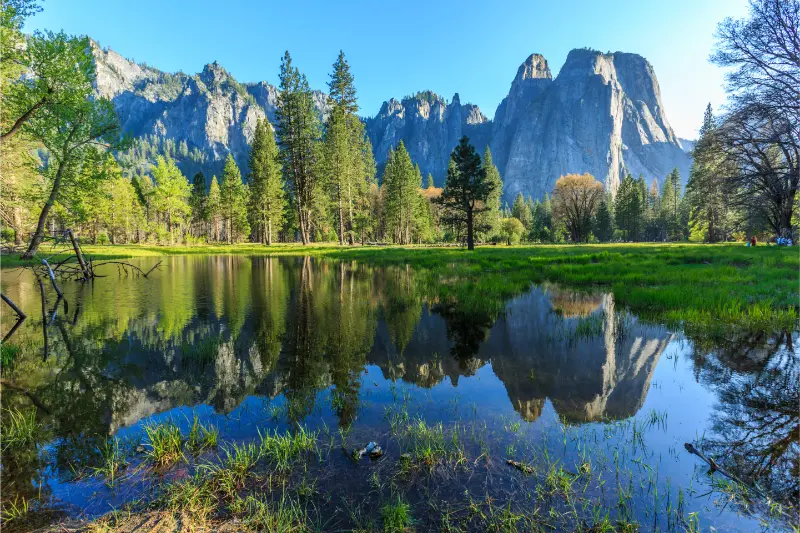
Where you sleep can change a Yosemite trip more than adding or removing an attraction. A room inside Yosemite Valley can put you near trailheads before day visitors arrive, while a less expensive hotel outside the park may add one or two hours of driving each day. Neither choice is automatically right. The best base depends on budget, season, which part of the park you want to see and how early you are willing to start.
Use our Yosemite first-time guide for the overall trip and our two-day Yosemite itinerary for daily structure. This article focuses only on the lodging decision.
How early should you book?
The National Park Service states that lodging reservations inside Yosemite are available 366 days in advance and are strongly recommended, especially from spring through fall and around holidays. Popular properties and dates can disappear quickly. If your plans are flexible, cancellations are worth checking repeatedly.
For 2026, Yosemite does not require a general entrance reservation, but overnight lodging and campground reservations remain separate issues. Always verify the current rules before travel.
Staying in Yosemite Valley: the convenience premium
Valley lodging gives you the strongest location for Yosemite Falls, shuttle access, many trailheads and the ability to walk or ride rather than drive first thing in the morning. It is especially valuable for a short first trip when every hour matters. The trade-offs are price, limited availability and a busy atmosphere in peak season.
If you can afford the location and only have one or two days, Valley lodging often provides more practical value than a larger room an hour away.
The Ahwahnee
The Ahwahnee is the historic luxury option inside Yosemite Valley. Choose it for location, architecture and atmosphere, not because you need luxury to experience the park. Rooms can be expensive and availability limited. Travelers spending most of the day hiking may get more value from a simpler property.
For a special occasion or multigenerational trip where some travelers want comfortable downtime, the property’s central setting can make more sense.
Yosemite Valley Lodge
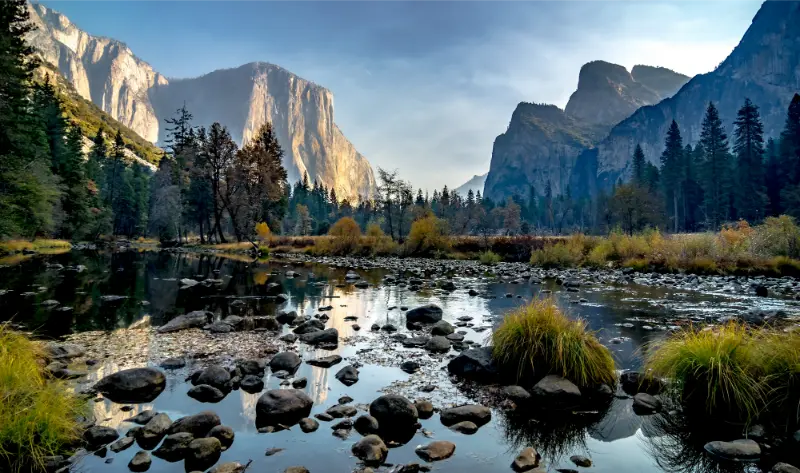
Yosemite Valley Lodge is one of the most practical choices for first-time visitors because it sits near Yosemite Falls and shuttle connections. It is not a secluded wilderness retreat; it is a functional park base. That can be exactly what you want when you are trying to avoid daily parking stress.
Book early and compare room configuration carefully if traveling with children or more than two adults.
Curry Village
Curry Village offers cabins and tent-cabin style accommodations that can make staying inside the Valley more affordable. The experience is rustic, and shared bathrooms or canvas walls may not suit everyone. Understand exactly what you are booking, including heating and bathroom arrangements, rather than assuming the word “cabin” means a conventional hotel room.
For adventurous families and hikers, the location can be excellent.
Wawona
Wawona is inside the park but south of Yosemite Valley, near the Mariposa Grove area. It can be a good choice if giant sequoias and the southern entrance matter, or if Valley lodging is unavailable. The trade-off is driving time to Yosemite Valley. Staying “inside the park” does not always mean staying close to your daily activities.
Wawona works better for a three- or four-day itinerary than for a one-day sprint focused entirely on Valley sights.
Yosemite West
Yosemite West consists of private lodging near the park’s western interior road network. It can reduce some drive time compared with gateway towns and often provides houses or condos useful for families. However, it is not a walkable Yosemite Valley base and you will still rely on a vehicle for many activities.
Winter access and driveway conditions deserve extra attention when snow is possible.
El Portal: the closest practical western gateway
El Portal sits along Highway 140 outside the park boundary and is one of the most convenient external bases for Yosemite Valley. It is not a large tourist town, but the location can save significant time compared with Mariposa. The Highway 140 approach also follows the Merced River corridor and generally reaches the Valley at lower elevation than some other entrances.
For visitors who cannot find or afford Valley lodging, El Portal is often my first external area to check.
Mariposa
Mariposa is farther from Yosemite Valley but has more restaurants, shops and lodging options than El Portal. It can provide better value and a pleasant small-town base. The cost is daily driving. For a three-night stay, that repeated round trip becomes a meaningful part of the trip.
Mariposa works well for budget-conscious travelers who do not mind early starts and who value evening dining choices.
Oakhurst
Oakhurst is south of Yosemite on Highway 41 and offers a broad range of chain hotels, restaurants and services. It is useful when your California route approaches from Fresno or Sequoia/Kings Canyon, or when you want to combine Yosemite with Mariposa Grove. The drive to Yosemite Valley is longer than many first-time visitors expect.
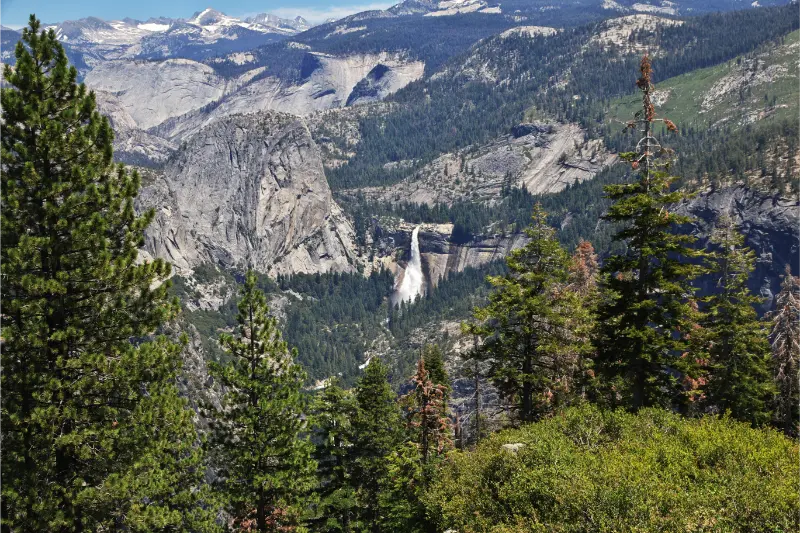
If your only Yosemite goal is two intensive Valley days, El Portal usually offers a more efficient external base.
Groveland
Groveland lies west of the Big Oak Flat entrance on Highway 120. It can be convenient for travelers arriving from the Bay Area and can position you well for Tioga Road when it is open, though actual drive times depend on your itinerary. It is a historic town with more character than a roadside hotel cluster.
In winter, Tioga Road is normally closed, so do not choose Groveland based on a summer map shortcut across the Sierra.
Fish Camp
Fish Camp is close to the southern entrance and can work for Mariposa Grove-focused trips. Like Oakhurst, it is less efficient for repeated Yosemite Valley mornings than lodging farther west or inside the park. It can still be attractive for travelers continuing toward Fresno or the southern Sierra.
Think of Fish Camp as a southern-gateway strategy rather than a generic “Yosemite hotel” label.
Families
Families benefit from reducing daily driving. If a toddler needs a nap or everyone wants a midday break, Valley lodging is valuable because returning to the room is realistic. Outside the park, you may need to commit to being away from the hotel for the entire day. A kitchen can help, but do not trade two extra hours of driving for a kitchen you use once.
Check bed configuration, refrigeration and air-conditioning details before booking; not every historic or rustic property has the same amenities as a modern chain hotel.
Older travelers and limited mobility
Location becomes especially important when long days are tiring. A centrally located room can turn a difficult day into an easy one because the group can split and rest. Ask about elevators, stairs, accessible rooms and distance from parking. “Accessible property” does not mean every room is equally convenient.
Do not assume a room outside the park is easier simply because the hotel itself is modern; the repeated drive may be the larger challenge.
How to choose in 60 seconds
Only 1–2 days: prioritize Yosemite Valley or El Portal. Family that needs a kitchen: compare Yosemite West with Valley options before moving farther away. Budget priority: Mariposa or Oakhurst may offer more inventory. Southbound route: Oakhurst/Fish Camp can fit. Bay Area approach: Groveland may make sense. Luxury/special occasion: consider The Ahwahnee if the rate is acceptable.
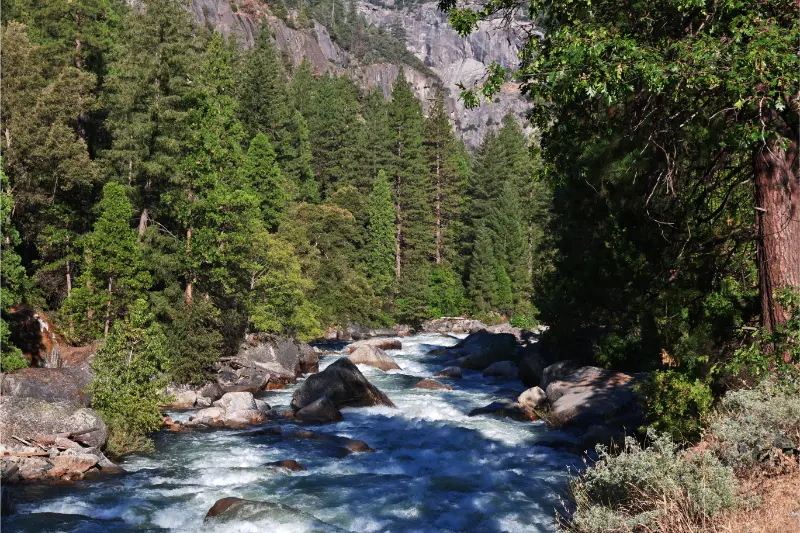
The right lodging is the one that reduces the friction in your specific itinerary—not the one with the most attractive photos.
Do not confuse hotel distance with park-entry distance
A property can advertise itself as “near Yosemite” while still requiring a substantial drive to Yosemite Valley. Always map the hotel to the specific trailhead or Valley destination you expect to use, not merely to the park boundary. This single check prevents many disappointing bookings.
Also review the route in winter. A hotel that looks closer by mileage may involve a higher pass or a route that is seasonal. Use official road-condition information before assuming the shortest map line is the best choice.
One final planning check
Before travel, reopen official pages for the places in this guide and verify hours, reservations, road conditions, weather and seasonal closures. California conditions change quickly, especially on mountain roads, coastal highways and at heavily visited attractions. Treat the itinerary as a framework, not a promise that every stop will operate exactly as it did when you first saved the article.
Keep one flexible block in the day and decide in advance which stop is optional. That small decision makes it much easier to adapt without turning a delay into a stressful family discussion.
Budget and timing buffer
Keep a buffer in both time and money for parking, food, entrance fees, fuel and last-minute transportation. California distances and queues can remove an hour from a plan very quickly. Download confirmations, key addresses and offline maps before leaving reliable Wi-Fi, and avoid storing visible luggage in a parked car.
The best travel days usually have one or two fixed anchors and several flexible pieces around them. A shorter plan that survives real conditions is more useful than a perfect timetable that collapses after the first delay.