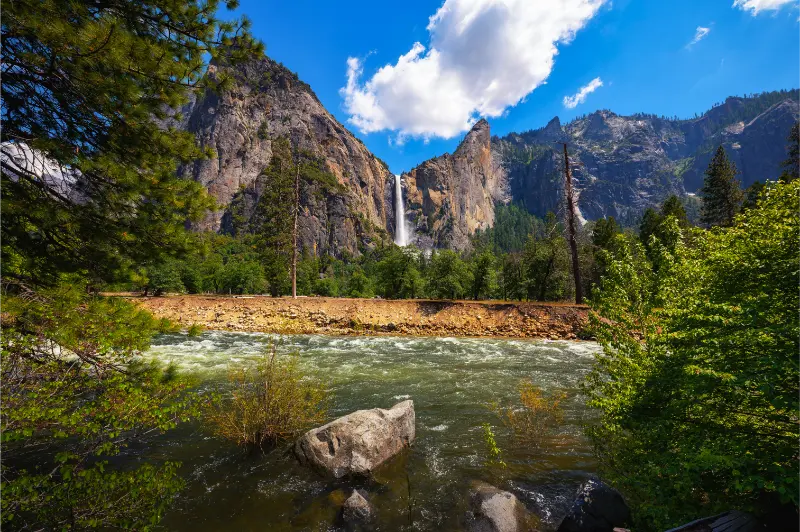
Yosemite in two days is not enough to “see Yosemite,” but it is enough for an excellent first visit. The park is nearly 1,200 square miles, and the famous valley is only one part of it. The mistake is trying to include Yosemite Valley, Glacier Point, Mariposa Grove, Tioga Road and a major hike in 48 hours. You spend the trip driving instead of experiencing the landscape.
A better two-day plan uses Yosemite Valley as the anchor and chooses one second-day direction based on season: Glacier Point when the road is open, Tioga Road in summer if high-country scenery is your priority, or Mariposa Grove if giant sequoias matter more. In winter, the itinerary changes completely because high-elevation roads close.
First decision: where will you sleep?
For a two-day visit, location matters enormously. Staying inside Yosemite Valley or elsewhere inside the park saves the most time. El Portal is one of the closest outside bases for the Arch Rock entrance. Mariposa and Oakhurst offer more services but add driving.
If you stay far away because the room is cheaper, calculate the cost in daylight and fuel. Two 75-minute drives each day can remove five hours from a 48-hour visit.
Do you need an entrance reservation in 2026?
The National Park Service states that an entrance reservation is not required to enter Yosemite in 2026, although normal entrance fees apply. Overnight lodging, campgrounds, wilderness permits and Half Dome can have their own reservation requirements. Check the official Yosemite permits and reservations page before travel because policies can change in future years.
Day 1: Yosemite Valley highlights
Enter early, especially on a summer weekend. Once you find a good parking place in the valley, avoid moving the car repeatedly. Use the free shuttle and walk. Traffic can become slow later in the day, and circling for a closer parking space wastes time.
Start with Tunnel View if you enter from the south or west and the route makes sense. The viewpoint gives a classic panorama of El Capitan, Half Dome and Bridalveil Fall. Then continue into the valley and park for the day.
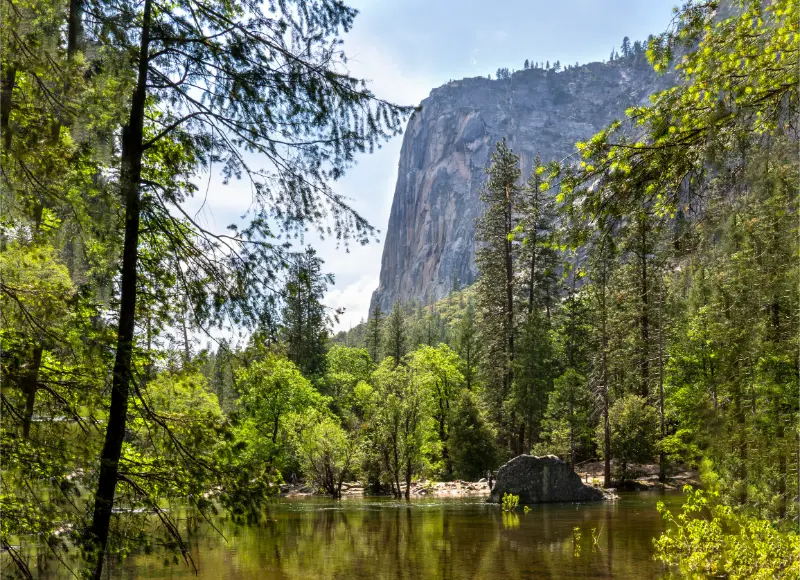
Morning walk: choose easy scenery or a real hike
For a relaxed first visit, walk part of the valley floor: Lower Yosemite Fall when flowing, Cook’s Meadow, the Merced River and views toward Half Dome. These areas provide high scenic value without turning the day into a strenuous hiking challenge.
If hiking is a major priority, choose one trail that fits your fitness and conditions. The Mist Trail area is famous but can be crowded, wet and strenuous. Do not start a major hike simply because you saw it on social media. Check trail conditions and carry enough water.
Lunch: picnic beats moving the car
Bring food or use valley services. A picnic lets you stay in the landscape and avoids a long detour. Store food correctly because bears and other wildlife are active throughout the park. Follow food-storage rules at your lodging or campground.
Afternoon: meadows, river and viewpoints
Use the afternoon for areas you skipped in the morning. Bridalveil Fall, Valley View, El Capitan Meadow and the river can be combined depending on parking and shuttle logistics. Do not try to stop at every pullout. Yosemite is more memorable when you sit in one place long enough to notice changing light.
Sunset
Choose a viewpoint that does not require a complicated drive back in darkness. Valley View and meadow areas can work. If you plan Glacier Point at sunset on the second day, keep the first evening simple and close to lodging.
Day 2 option A: Glacier Point and short high-country walks
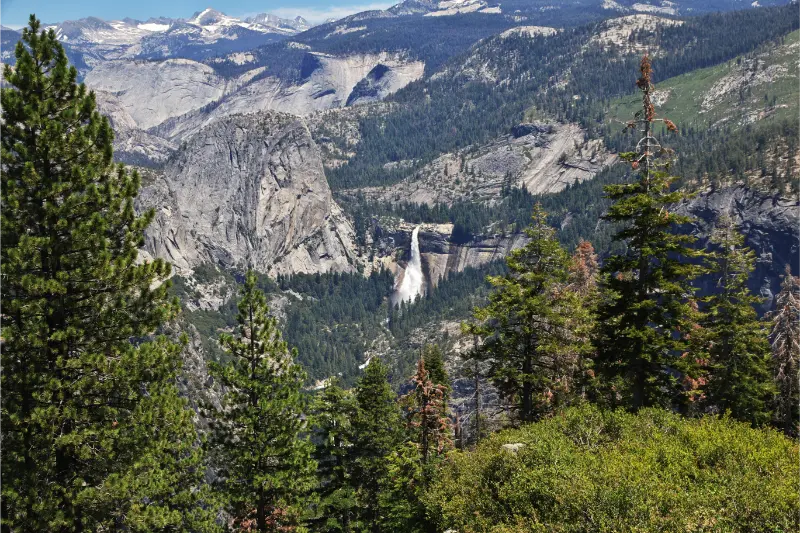
When Glacier Point Road is open, this is my preferred second day for first-time visitors. Drive early to avoid peak parking pressure. Glacier Point provides a dramatically different perspective over Yosemite Valley and Half Dome. Washburn Point adds another viewpoint with minimal extra effort.
Do not assume the road is open because it is June. Snowpack and maintenance determine opening dates. Check the official Yosemite current conditions shortly before travel.
Day 2 option B: Mariposa Grove
If giant sequoias are a priority, use day two for Mariposa Grove. Access often involves a shuttle from the welcome plaza during the operating season, and parking can fill. Start early and choose a walking route appropriate to your group.
If your wider California road trip also includes Sequoia National Park, you may prefer Glacier Point here and save giant trees for Sequoia & Kings Canyon.
Day 2 option C: Tioga Road
When Tioga Road is open, high-country scenery around Tuolumne Meadows, Tenaya Lake and Olmsted Point can fill a day. This option works best if your next destination is the Eastern Sierra, because you can continue east rather than backtracking.
Do not plan Tioga Road in winter or assume a fixed opening date. It closes seasonally due to snow and may not reopen until late spring or early summer.
Winter two-day plan
In winter, focus on Yosemite Valley for both days and perhaps Badger Pass-area activities when operating. Tioga Road is closed and Glacier Point Road is generally closed beyond the ski area. Snow and chain controls can affect access.
Use our Yosemite winter guide instead of copying this summer-oriented plan.
Parking strategy
The best parking strategy is often to park once. Yosemite Valley becomes congested when every visitor tries to move their car from attraction to attraction. The shuttle, walking paths and bicycles are more efficient for many sights.
Arrive early on busy days. If you enter late morning during peak season, you may spend valuable time searching for parking instead of seeing the park.
How strenuous should two days be?
Do not make both days major hiking days unless that is the purpose of your trip. One strenuous hike plus one scenic driving/walking day creates better balance for most first-time visitors. Families and seniors often enjoy Yosemite more with shorter walks and more time at viewpoints.
For children, see Yosemite with kids.
Food, water and services
Carry refillable water bottles and snacks. Services exist in the valley, but queues and opening hours can change. Bringing breakfast items is especially useful if you want an early start before restaurants open.
Cell coverage is unreliable in parts of the park. Download maps and reservation confirmations before arrival.
Driving from San Francisco or Los Angeles
From San Francisco, Yosemite is a substantial transfer, not a casual morning commute. From Los Angeles, it is longer. If possible, arrive near the park the night before your first full day and depart after the second day rather than counting transfer hours as sightseeing time.
Our 10-day California road-trip itinerary shows how Yosemite fits between major cities without creating an impossible schedule.
Two days versus three days
A third day adds disproportionate value because it lets you separate valley sightseeing from one high-country or sequoia day and still include a meaningful hike. If Yosemite is one of your top three priorities in California, stay three nights if your schedule allows.
A simple two-day schedule
| Day | Morning | Afternoon | Evening |
|---|---|---|---|
| 1 | Tunnel View + valley parking | Valley walks / waterfall / meadow | Valley sunset |
| 2 | Glacier Point, Mariposa Grove or Tioga | Continue chosen area | Depart or final viewpoint |
What I would skip
I would not attempt Half Dome unless you already have the required permit, appropriate fitness and a plan built around the hike. I would not combine Mariposa Grove, Glacier Point and Tioga Road in one day. I would not stay two hours outside the park to save a small amount on lodging if Yosemite is the reason for the trip.
Final advice
Two days in Yosemite works when you accept the size of the park and choose one central experience plus one seasonal second-day direction. Stay as close as possible, arrive early, park once in the valley and check road conditions before travel. Yosemite does not reward checklist tourism. Two unrushed days around granite walls, waterfalls, meadows and one high-country perspective will usually feel richer than 48 hours spent chasing every famous name on the map.
When to arrive the night before
For a two-day Yosemite trip, arriving near the park the previous evening is one of the highest-value decisions you can make. It converts the first day from a transfer day into a real park day. This is particularly important in summer, when parking pressure builds through the morning, and in winter, when daylight is short.
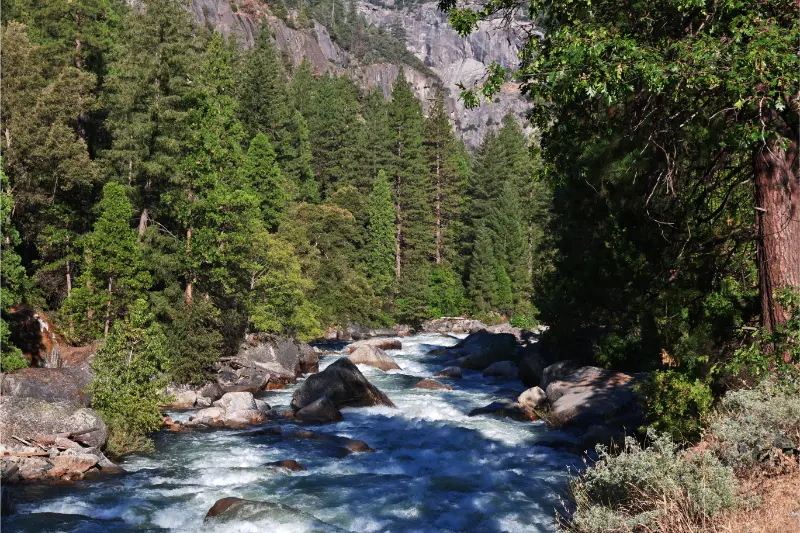
If you must drive from San Francisco on the first morning, leave very early and accept that your first Yosemite day will be shorter. Do not add a grocery stop, long breakfast and multiple foothill attractions on the way unless you are comfortable sacrificing valley time.
What if waterfalls are low?
Yosemite is still worthwhile outside peak waterfall season. Granite walls, meadows, giant sequoias and high-country landscapes do not depend on spring runoff. Late summer and fall visitors should shift expectations: emphasize viewpoints, valley walks and high-country access rather than judging the park by Yosemite Falls volume.
What if smoke or a storm changes the plan?
California mountain conditions can change quickly. Wildfire smoke may reduce visibility even when the park is open; a storm can close high roads or trigger chain controls. Check NPS conditions, Caltrans and air-quality information before committing to a long hike. If Glacier Point Road closes, stay in the valley or use Mariposa Grove rather than spending hours waiting for uncertain access.
Is two days enough for photographers?
It can be, but photography changes the schedule because light matters more than attraction opening times. Use one sunrise or early morning in the valley and one sunset at a viewpoint you can reach safely. Do not chase five classic compositions in one evening. Yosemite weather and light are variable; waiting 30 minutes at one strong location often produces better results than rushing between three famous pullouts.
If you gain a third morning
Use it for the experience you intentionally left out: a longer valley trail, Mariposa Grove, a high-country stop or a quiet meadow morning. A third half-day is more useful than it looks because it reduces pressure on the first two days. If Yosemite is one of your main reasons for visiting California, this is the first place I would add time before adding another city night.