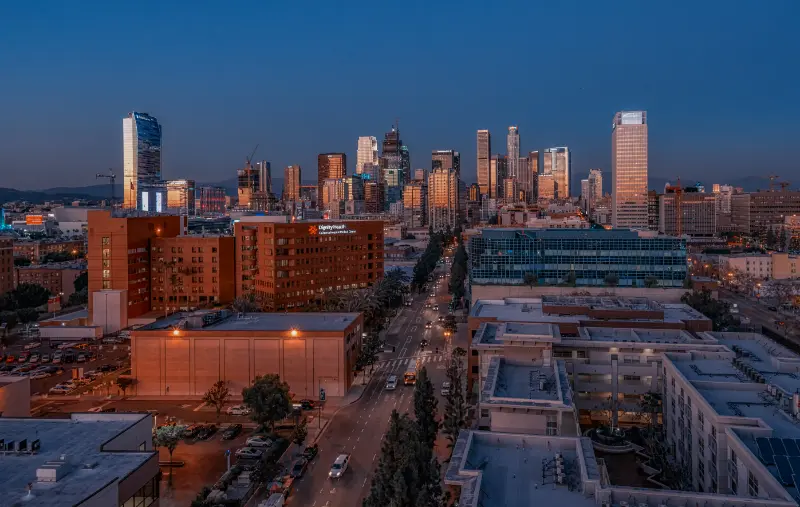
Downtown Los Angeles is one of the easiest parts of the city to misunderstand. Visitors sometimes expect a compact traditional downtown where every major sight is a few pleasant blocks apart. DTLA is more complicated: several interesting districts sit next to each other, the street atmosphere can change quickly, and the best day combines architecture, food, museums and transit rather than trying to “see all of downtown.”
If this is your first Los Angeles trip, use Downtown as one focused day within a wider itinerary. Our Los Angeles first-time guide explains how DTLA fits with Hollywood, the Westside and the beaches, while the plan below keeps your downtown day realistic on foot and by Metro.
Is Downtown Los Angeles worth visiting?
Yes, especially if you enjoy contemporary art, historic buildings, city photography, markets or architecture. The Broad, Walt Disney Concert Hall, Grand Central Market, Angels Flight, the Bradbury Building exterior/interior public areas, Little Tokyo and the Arts District can create a varied day without a long freeway drive between every stop.
DTLA is less ideal if your Los Angeles wish list is almost entirely beaches, movie studios and classic palm-tree neighborhoods. In that case, one half-day may be enough. The mistake is not skipping Downtown; it is allocating two or three days to it while leaving no time for the parts of Los Angeles you personally care about more.
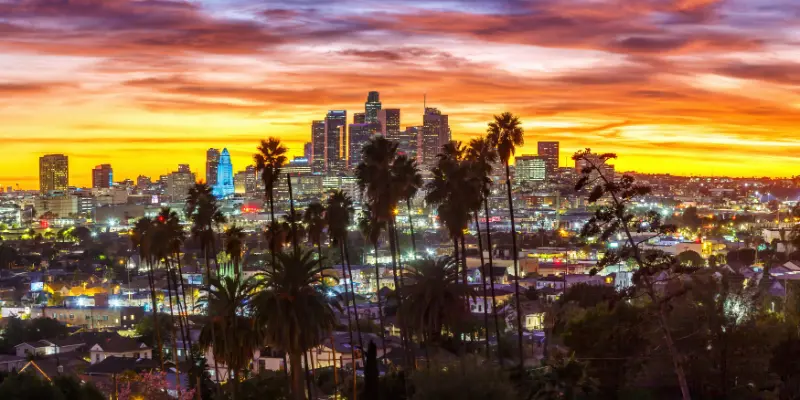
Where to start: Bunker Hill
Begin around Bunker Hill. The Broad and Walt Disney Concert Hall sit within a short walk of each other, and the elevated position gives you a useful sense of Downtown’s topography. General admission to The Broad is normally free, but timed entry is worth arranging in advance when available because it reduces uncertainty. Check the official Broad visitor information before your day because exhibitions, hours and ticket procedures can change.
Even if you are not entering Walt Disney Concert Hall for a performance, the building is worth seeing from the outside. Do not schedule both a long museum visit and an architectural deep dive if you only have one day; choose one main cultural anchor and keep moving.
Grand Central Market and Angels Flight
From Bunker Hill, descend toward Grand Central Market. This is a practical place for an early lunch because groups with different tastes can choose different counters without splitting up. Arriving before the busiest lunch period usually makes seating easier. Across the street, Angels Flight offers a very short historic funicular ride that is more about the experience than transportation efficiency.
The nearby Bradbury Building is one of Downtown’s most photographed historic interiors. Public access can be limited to designated areas, so treat it as a short architecture stop rather than a guaranteed full building tour. This cluster—market, funicular and historic architecture—is one of the reasons DTLA works better as a walk than as a series of car stops.
Historic Core or Little Tokyo?
After lunch, choose one direction instead of adding everything. The Historic Core provides old theaters, Broadway façades and dense city texture. Little Tokyo offers Japanese American history, food, shops and museums. Travelers interested in history may want to prioritize the Japanese American National Museum if its current exhibitions fit their interests; food-focused visitors may prefer a slower walk and snack stop.
Trying to combine the Historic Core, Little Tokyo and the Arts District in detail often turns the afternoon into clock-watching. For a first visit, Little Tokyo plus a short Arts District walk is usually the more varied pairing.
The Arts District: go for a specific reason
The Arts District is not a single monument. Its appeal comes from converted industrial buildings, murals, galleries, cafés and a different urban scale from Bunker Hill. Go if you enjoy wandering, design or photography. If you need a checklist of famous attractions, you may find the area less rewarding than expected.
Families with younger children may prefer to spend longer at a museum or Grand Park rather than extending the day through the Arts District. Teenagers often enjoy the visual change of scenery. Older travelers should remember that the total walking distance in Downtown accumulates quickly even when individual stops appear close on a map.
A realistic one-day DTLA itinerary
9:30–11:30: The Broad or a focused Bunker Hill architecture visit. 11:30–12:00: Walt Disney Concert Hall exterior and Grand Avenue. 12:00–13:15: Angels Flight and lunch at Grand Central Market. 13:15–14:00: Bradbury Building and Historic Core details. 14:15–16:00: Little Tokyo. 16:00–18:00: Arts District or, if energy is fading, finish earlier and return to your hotel.
This plan deliberately leaves space. Los Angeles days become unpleasant when every 20-minute transfer is treated as if it were instantaneous. If you are continuing to another neighborhood in the evening, stop Downtown before you are exhausted.
Metro, parking or rideshare?
If your hotel is near a useful Metro line, Downtown is one of the Los Angeles areas where public transportation can work particularly well. Several rail stations serve the district, although construction and service changes are possible. Check LA Metro on the day of travel rather than relying on an old route screenshot.
Driving is still practical if Downtown is only one part of a car-based trip. Choose one garage and leave the car there rather than paying and searching for parking at every stop. Never leave bags, electronics or luggage visible in a parked car. Rideshare is useful at night or when fatigue makes the final walk back to a garage unappealing.
What about safety?
Downtown contains busy tourist areas, office districts, residential blocks and areas where visible homelessness and street distress are common. A useful approach is neither panic nor denial. Stay aware of your surroundings, use active streets, avoid displaying valuables, and change direction if a block feels uncomfortable. At night, a short rideshare can be a better choice than forcing a long walk simply because the map says it is possible.
Skid Row is not a tourist attraction. Do not treat vulnerable people as scenery or photography subjects. If a route unexpectedly takes you into an area that feels unsuitable, choose another street without drama.
DTLA with children, teens and senior travelers
With children, shorten the day and build it around one museum, food and open space. The Broad offers family resources, while Grand Park can provide a break from interiors. Teenagers may enjoy contemporary art, the market and the Arts District more than a long architectural history walk.
Senior travelers and visitors with limited mobility should minimize repeated hill climbing between Bunker Hill and lower Downtown. Elevators, transit and short rideshares can transform the experience. If mobility is a priority, see our Accessible California guide for broader trip-planning ideas.
Where Downtown fits in a Los Angeles itinerary
Do not pair DTLA with Santa Monica or Malibu merely because you have empty evening space; cross-city traffic can erase the benefit. A better pairing is Downtown plus Hollywood on a separate day, or Downtown plus a nearby evening event. Our three-day Los Angeles itinerary groups neighborhoods more efficiently.
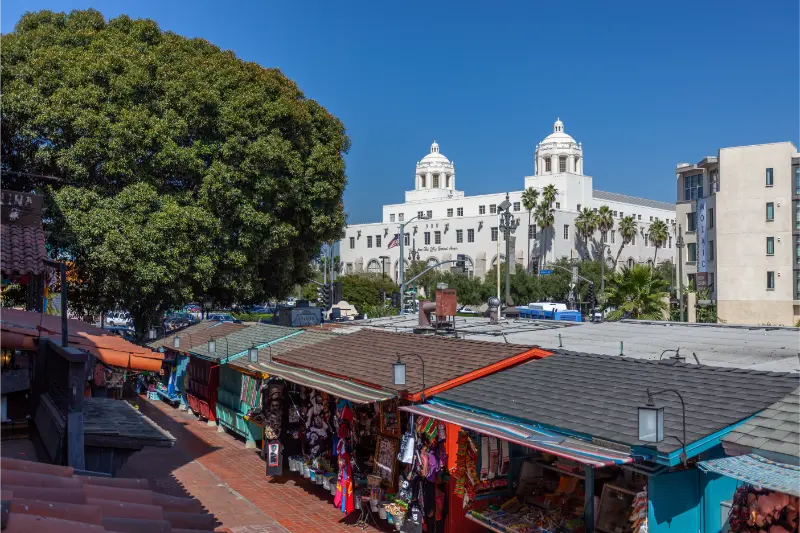
If you are staying on the Westside, Downtown can feel far away. If you are staying in Hollywood, Koreatown or Downtown itself, it becomes easier. This is why choosing a hotel base matters more in Los Angeles than in many compact cities.
Final advice
Downtown Los Angeles is best when you treat it as a collection of adjacent districts rather than a single attraction. Pick one cultural anchor, eat somewhere you are genuinely excited about, walk the historic core with your eyes up, and leave enough energy for Little Tokyo or the Arts District. The value of DTLA comes from contrast: old theaters beside new towers, a historic market below contemporary museums, and neighborhoods that reveal a version of Los Angeles very different from the beach-and-Hollywood stereotype.
Practical note for international visitors
If you are visiting from outside the United States, Downtown is one of the easier places to experiment with Los Angeles public transport before deciding whether to use it elsewhere. Load your payment method or transit app before the morning rush, keep mobile data available for service updates, and remember that US street numbering and block lengths can make a “short” walk feel longer than expected. Tipping customs also differ from many countries; table-service restaurants generally expect a gratuity, while counter service is more discretionary.
DTLA is also a good place to avoid using your rental car for a day. That can save parking fees and reduce the stress of freeway navigation while jet-lagged. If you do drive, photograph the garage level and entrance because large structures can have multiple pedestrian exits.
One last planning check
Before traveling, reopen the official pages for the places in this guide and verify hours, reservations, road conditions and weather. California conditions change by season, construction and natural events, and a saved itinerary should be treated as a framework rather than a contract. Build at least one flexible block into the day so a closure or delayed meal does not force you to abandon the rest of the plan.
Also confirm where you will park or how you will return to your hotel after dark. Small logistical decisions often determine whether Downtown Los Angeles for First-Time Visitors feels easy or stressful, especially for families, older travelers and anyone visiting California for the first time.
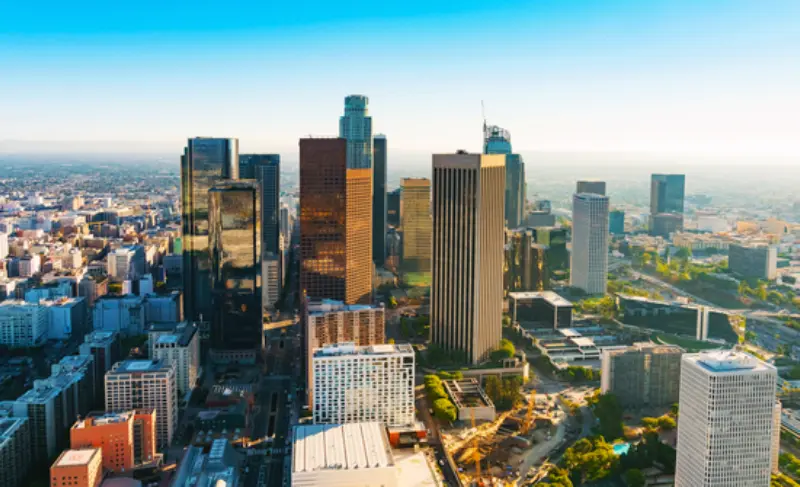
How to make the day easier
Start with the one experience you would be most disappointed to miss and place it in the best part of the day for weather, crowds or reservations. Treat everything else as adjustable. Keep water, a light layer, a portable battery and an offline map available, and avoid storing luggage in a visible part of a parked car. If you are traveling with children or older relatives, schedule a real seated break before anyone asks for one; waiting until the group is tired usually turns a small delay into a difficult afternoon.
Finally, resist the urge to add a distant attraction simply because the map shows it within driving range. California traffic, parking and scenic-road delays make geographic distance a poor measure of effort. A shorter day with time to look around, eat properly and adapt to conditions usually produces a better trip than collecting one more stop.