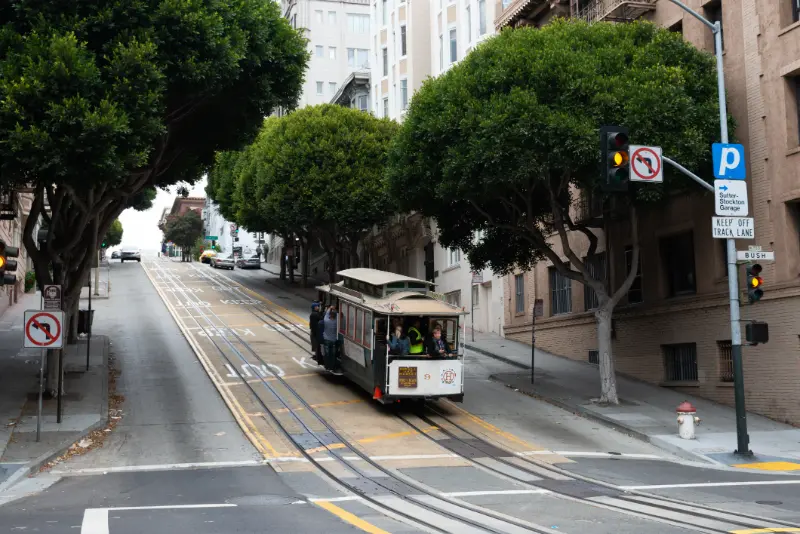
San Francisco’s cable cars are public transportation, moving historic machinery and one of the city’s most recognizable attractions at the same time. That combination creates confusion. Visitors often join the longest terminal queue, buy the wrong fare product, ride one stop or discover that the system is not accessible in the same way as a modern bus or streetcar.
A cable car ride is absolutely worth doing on a first trip if the experience interests you. The goal is to choose the right route and boarding point rather than letting a queue consume your morning. Pair this guide with our three-day San Francisco itinerary for a wider plan.
How the cable car system works
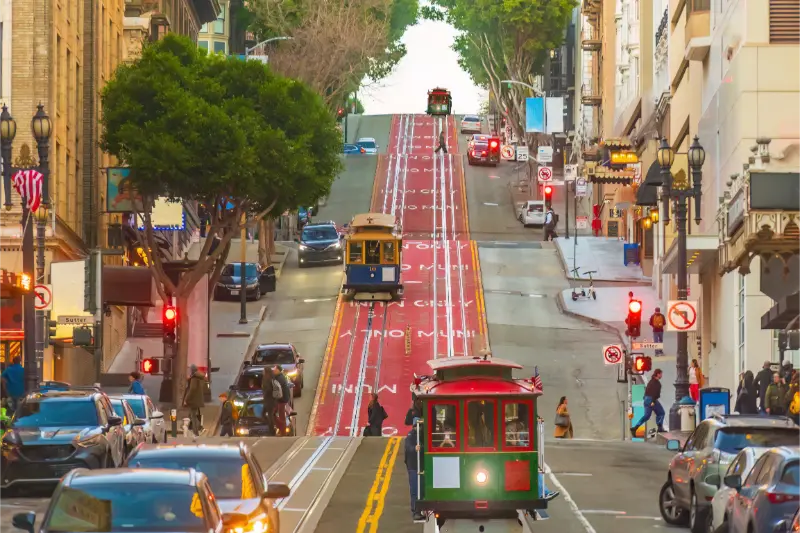
San Francisco has three cable car lines: Powell–Hyde, Powell–Mason and California Street. The Powell lines connect the Union Square/Market Street area with the northern waterfront. The California line runs east–west along California Street between the Financial District/Embarcadero side and Van Ness area.
The famous open-sided cars grip a moving underground cable. That is why the ride feels mechanically different from a streetcar. It is also why service can be affected by maintenance, special events and street work.
Which route is best for a first ride?
Powell–Hyde is usually the most scenic first choice because it climbs and descends steep streets and finishes near Aquatic Park/Fisherman’s Wharf. It is also often the busiest. Powell–Mason reaches the Wharf area by a different route and can be a useful alternative. California Street is less famous with tourists but can provide a more relaxed historic ride with views of downtown and Nob Hill.
If you care more about riding a cable car than taking one specific line, choose the line with the most reasonable queue.
Current fare logic
A cable car single ride is priced separately from a normal Muni bus/metro ride and does not include transfers. Visitor Passports can be useful if you plan several cable car rides plus other Muni trips. Fares and payment systems can change, so check the official SFMTA cable car fare page shortly before travel.
Do the math before buying a multi-day product. A visitor who rides one cable car and then mostly walks may spend less with individual fares. A family using cable cars repeatedly can reach the value of a pass much faster.
Where to board without the worst queue
The terminal at Powell and Market is convenient and famous, which is exactly why lines can become long. Hyde and Beach can also be busy. Boarding at an intermediate stop may save time, but there is no guarantee a full car will have space. If a cable car arrives full, you may watch several pass before boarding.
Early morning is often easier. Another strategy is to ride the California line first for the experience, then use buses or streetcars for efficient transportation later.
Can you stand on the running board?
The open running board is part of the classic image, but space is limited and safety comes first. Follow the grip operator and conductor’s instructions. Keep bags compact, stay inside the permitted area and do not lean outward for a photo. If you are uncomfortable standing, wait for an interior or seated space.
With children, seated positions are usually the calmer choice. A moving historic vehicle is not the place to prioritize a photograph over stability.
Cable cars vs historic streetcars
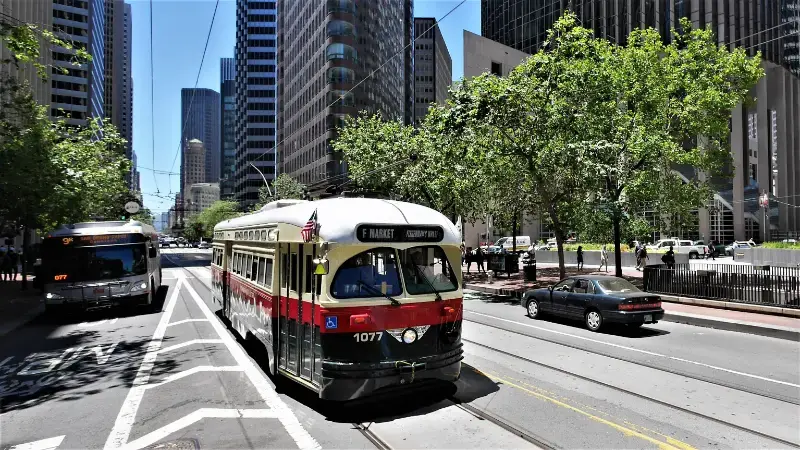
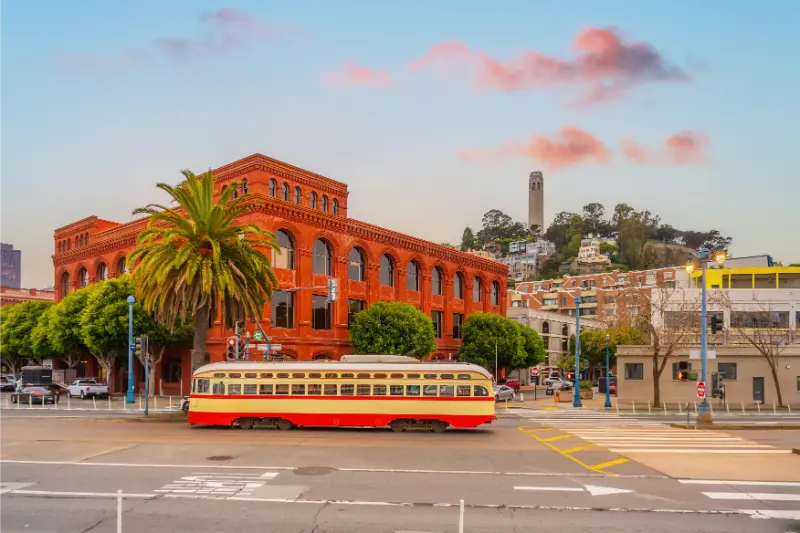
Visitors often confuse cable cars with the colorful historic streetcars that run along Market Street and the Embarcadero. Streetcars use electric power and operate like a conventional rail transit service. Cable cars use the underground cable system and operate on the three historic lines described above.
Both can be fun. The historic streetcar can be the more useful ride for Fisherman’s Wharf, Ferry Building and Embarcadero travel, while the cable car is a destination experience in itself.
A good first-time cable car plan
Start near Union Square in the morning. Check queue conditions at Powell. If manageable, take Powell–Hyde toward the waterfront. Get off near the top of Lombard Street only if you actually want to visit it; otherwise continue to Aquatic Park and explore the waterfront. Use our Fisherman’s Wharf guide for the next part of the day.
If the Powell queue is excessive, walk or take transit to the California line and ride that instead. You will still experience the cable mechanism and classic hills without sacrificing an hour or more.
Families and strollers
Cable cars can be exciting for children, but boarding requires attention and space for large strollers is limited. A compact folding stroller is much easier than a large travel system. At busy times, splitting a family across different parts of the car can create stress, so wait for a boarding situation that works for the whole group.
For broader family logistics, see our San Francisco with kids guide.
Accessibility and limited mobility
Historic cable cars have substantial accessibility limitations compared with modern Muni buses and light rail. Boarding can require steps, narrow spaces and quick movements. Travelers who cannot safely board should not plan the cable car as essential transportation. Modern Muni options can get you to many of the same districts.
Check current SFMTA accessibility information if you have specific needs. The experience is optional; San Francisco remains enjoyable without riding one.
Common mistakes
The first mistake is waiting far too long at Powell because a guidebook says that is where you “must” start. The second is buying a day pass without comparing its price to your actual number of rides. The third is using cable cars for every transfer even when a bus is faster. The fourth is underestimating cold wind on the open side of the car.
Another mistake is treating the ride as a private photo set. These are working vehicles with other passengers. Be ready to board, move where instructed and keep the aisle clear.
Best combinations
Powell–Hyde pairs naturally with Fisherman’s Wharf, Aquatic Park and a walk toward Ghirardelli Square. The California line pairs with Chinatown, Nob Hill and the Financial District. Use cable cars to connect experiences that already belong in the same part of the city rather than riding back and forth for no reason.
For a fuller city structure, our San Francisco first-time guide gives a practical three-day plan.
Final advice
Ride a San Francisco cable car for the history, sound, hills and movement—not because it is the fastest transportation. Check the official fare and service information, avoid the longest queues when possible, choose a route that fits the rest of your day and keep expectations flexible. One well-planned ride is usually more memorable than spending half a vacation trying to collect every line.
When the cable car is not worth waiting for
If the posted or visible line is so long that it threatens a museum reservation, dinner booking or limited daylight, use Muni and try again later. The system is most fun when it feels spontaneous, not when everyone is irritated before boarding. A historic streetcar along the Embarcadero can provide a different heritage-transit experience with less queueing.
Visitors who have already ridden cable cars in poor weather may also prefer to spend a second transit experience on ferries, historic streetcars or neighborhood buses. San Francisco’s transportation variety is part of the city; you do not need to repeat the same icon.
One last planning check
Before traveling, reopen the official pages for the places in this guide and verify hours, reservations, road conditions and weather. California conditions change by season, construction and natural events, and a saved itinerary should be treated as a framework rather than a contract. Build at least one flexible block into the day so a closure or delayed meal does not force you to abandon the rest of the plan.
Also confirm where you will park or how you will return to your hotel after dark. Small logistical decisions often determine whether San Francisco Cable Cars for First-Time Riders feels easy or stressful, especially for families, older travelers and anyone visiting California for the first time.
How to make the day easier
Start with the one experience you would be most disappointed to miss and place it in the best part of the day for weather, crowds or reservations. Treat everything else as adjustable. Keep water, a light layer, a portable battery and an offline map available, and avoid storing luggage in a visible part of a parked car. If you are traveling with children or older relatives, schedule a real seated break before anyone asks for one; waiting until the group is tired usually turns a small delay into a difficult afternoon.
Finally, resist the urge to add a distant attraction simply because the map shows it within driving range. California traffic, parking and scenic-road delays make geographic distance a poor measure of effort. A shorter day with time to look around, eat properly and adapt to conditions usually produces a better trip than collecting one more stop.