Fisherman’s Wharf is one of San Francisco’s most visited areas and one of the easiest to dismiss as “too touristy.” Both descriptions are true. The waterfront has souvenir shops, themed attractions and crowds, but it also has sea lions, historic ships, bay views, ferry connections, easy family logistics and a walkable route toward North Beach, Fort Mason and the Embarcadero.
The key is to visit with a plan. You do not need to love every attraction, eat at the first restaurant you see or spend an entire day here. For most first-time visitors, three to five hours is enough. Our San Francisco first-time guide shows where the Wharf fits in a broader city itinerary.
What is Fisherman’s Wharf?
The name describes a waterfront district rather than one pier. Pier 39 is the most commercial and family-oriented section. Farther west you find the historic fishing harbor, seafood restaurants, Musée Mécanique, Hyde Street Pier area and views toward the Golden Gate Bridge. Eastward, the waterfront leads toward the Embarcadero and Ferry Building.
This matters because visitors often “do Pier 39” and assume they have seen the entire Wharf. A better visit uses Pier 39 as one stop in a waterfront walk.
Start with the sea lions
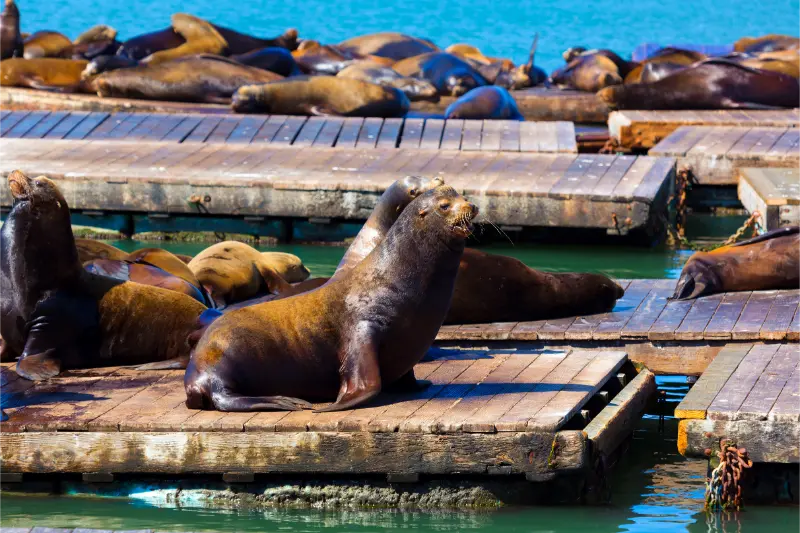
The California sea lions at Pier 39 are one of the few famous Wharf experiences that feel genuinely tied to the bay rather than built for tourists. Numbers vary by season and natural behavior, so never assume a specific count. Go to the viewing area, give yourself time to watch the animals interact, and avoid turning the stop into a five-minute photo.
Children usually enjoy this more than adults expect. For families, it can justify Pier 39 even if you skip most shops and paid attractions.
What is actually worth doing at Pier 39?
Use Pier 39 for the sea lions, bay views, a snack and a short wander. Paid attractions can be fun, especially with children, but they should fit your interests rather than a checklist. The pier becomes expensive quickly if every family member chooses a separate attraction, snack and souvenir.
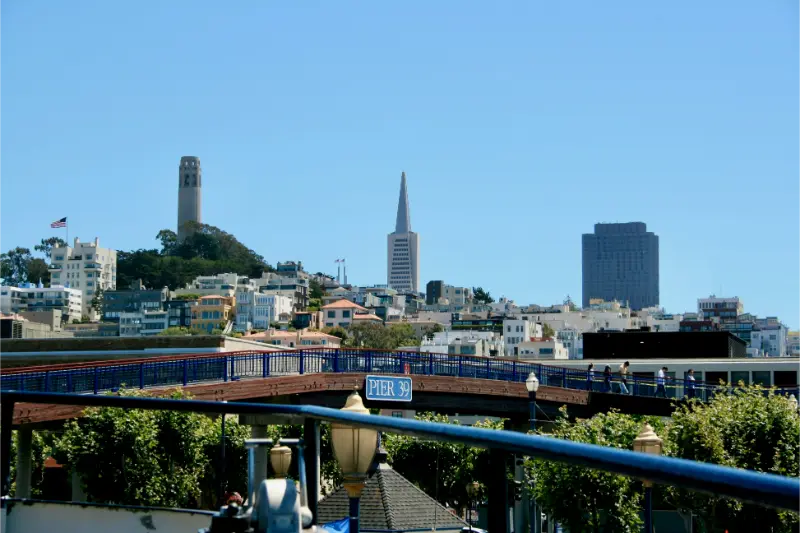
Look back toward the city as well as across the water. On clear days you can see Alcatraz and parts of the Golden Gate area. If Alcatraz is a major goal, book the official ferry well in advance rather than assuming Wharf ticket sellers can solve a sold-out date.
Walk west: the more interesting half of the Wharf
Leaving Pier 39 toward the west changes the atmosphere. You reach fishing boats, seafood counters, historic vessels and eventually the Hyde Street side of the district. Musée Mécanique, with its collection of mechanical games and amusements, can be an unusual low-key stop for mixed-age groups.
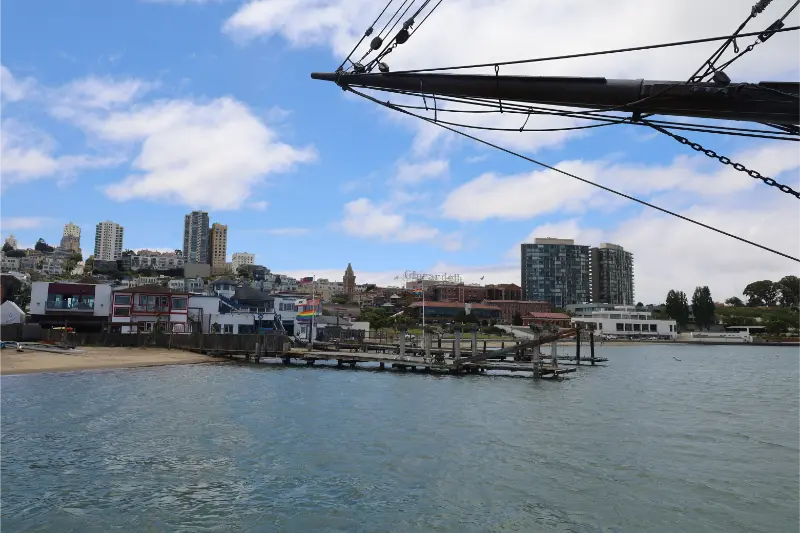
Continue toward Aquatic Park if the weather is pleasant. The open waterfront gives you space after the density of Pier 39 and can produce better bridge views than the center of the commercial pier.
Food: lower your expectations, then choose carefully
Fisherman’s Wharf has famous sourdough, crab and seafood traditions, but it is also a major tourist zone. Do not assume the busiest restaurant is automatically the best. Decide whether you want a quick classic experience or a serious meal. For a quick visit, a clam chowder in sourdough or simple seafood can be enough; for dinner, consider eating in North Beach or another neighborhood if food quality matters more than waterfront location.
Families benefit from the abundance of casual options. Travelers with dietary restrictions should check menus beforehand because spontaneous choice becomes harder at peak times.
How to get there
Public transportation is usually easier than driving. Historic streetcars serve the waterfront, buses connect multiple neighborhoods, and cable cars terminate near the Wharf. Parking garages exist but can be expensive, and driving adds the problem of leaving nothing visible in the car.
If you want to ride a cable car, do not treat it simply as transportation. It is an attraction with lines and limited capacity. Our dedicated San Francisco cable car guide explains how to use it without wasting half the day.
A realistic half-day itinerary
Morning: arrive at Pier 39 before the busiest period, see the sea lions and walk the pier. Continue west through the fishing harbor, stop at Musée Mécanique if it interests you, and reach Aquatic Park. From there, either ride transit toward another neighborhood or walk uphill toward Russian Hill if your legs and schedule allow.
Alternative afternoon: visit the Wharf after an Alcatraz trip, but keep expectations realistic. Ferry timing and security/boarding procedures can make the day longer than it appears on paper.
Fisherman’s Wharf with kids
This is one of the easiest San Francisco districts for families because the terrain is relatively flat, food is easy to find, toilets and attractions are concentrated, and the sea lions provide a natural highlight. The danger is overstimulation and overspending. Pick one paid attraction at most, then use the waterfront itself.
For a complete family plan, our San Francisco with kids itinerary balances the Wharf with parks, transport rides and less commercial neighborhoods.
Fisherman’s Wharf for senior travelers
The flat waterfront is easier than many hilly parts of San Francisco, but distances still add up. Benches and indoor breaks are useful when wind is strong. A short visit to Pier 39 plus the fishing harbor may be enough; there is no requirement to walk all the way to Fort Mason.
Use public transportation to avoid long uphill returns. Weather can change quickly near the water, so carry a light layer even when your hotel area feels warm.
Should you stay near Fisherman’s Wharf?
It can be a practical base for families and first-time visitors who value easy waterfront access, but it is less atmospheric at night than neighborhoods such as North Beach, and it can feel removed from everyday city life. Our where to stay in San Francisco guide compares the trade-offs.
What to skip
Skip anything that does not interest you simply because it appears on a “top ten Wharf attractions” list. Do not spend an hour waiting for a mediocre meal when you have only one day in the city. Avoid carrying shopping bags and valuables around unnecessarily. Most importantly, do not let the Wharf consume the time you wanted for neighborhoods such as Chinatown, North Beach, the Presidio or Golden Gate Park.
Final advice
Fisherman’s Wharf is worth visiting when you use it as a waterfront experience rather than a compulsory entertainment zone. See the sea lions, walk beyond Pier 39, enjoy the bay, choose food deliberately and leave before the crowds turn the area into a chore. San Francisco has many more layers, but for a first trip the Wharf can still be a fun, easy and visually memorable introduction to the city’s relationship with the water.
How the Wharf fits with Alcatraz
Many Alcatraz ferries depart from Pier 33, adjacent to the broader Wharf zone. This makes it tempting to combine everything in one day. It can work if the island tour is your morning anchor and the Wharf is a flexible afternoon, but do not book a tight sequence of timed attractions. Ferry boarding, security procedures and the pace of the island visit can vary.
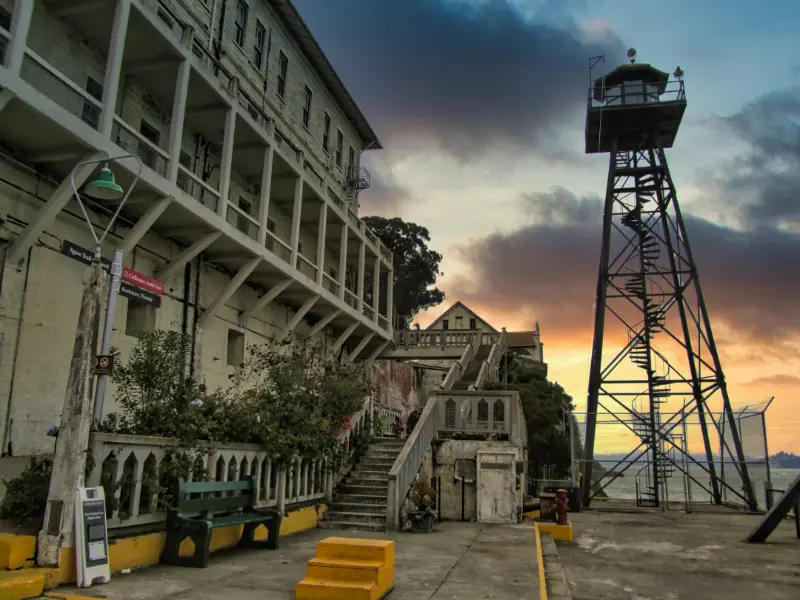
If Alcatraz is sold out, do not buy an unofficial substitute that does not actually land on the island unless you understand what you are purchasing. Bay cruises can still be enjoyable, but they are a different experience.
One last planning check
Before traveling, reopen the official pages for the places in this guide and verify hours, reservations, road conditions and weather. California conditions change by season, construction and natural events, and a saved itinerary should be treated as a framework rather than a contract. Build at least one flexible block into the day so a closure or delayed meal does not force you to abandon the rest of the plan.
Also confirm where you will park or how you will return to your hotel after dark. Small logistical decisions often determine whether Fisherman’s Wharf and Pier 39 feels easy or stressful, especially for families, older travelers and anyone visiting California for the first time.
How to make the day easier
Start with the one experience you would be most disappointed to miss and place it in the best part of the day for weather, crowds or reservations. Treat everything else as adjustable. Keep water, a light layer, a portable battery and an offline map available, and avoid storing luggage in a visible part of a parked car. If you are traveling with children or older relatives, schedule a real seated break before anyone asks for one; waiting until the group is tired usually turns a small delay into a difficult afternoon.
Finally, resist the urge to add a distant attraction simply because the map shows it within driving range. California traffic, parking and scenic-road delays make geographic distance a poor measure of effort. A shorter day with time to look around, eat properly and adapt to conditions usually produces a better trip than collecting one more stop.