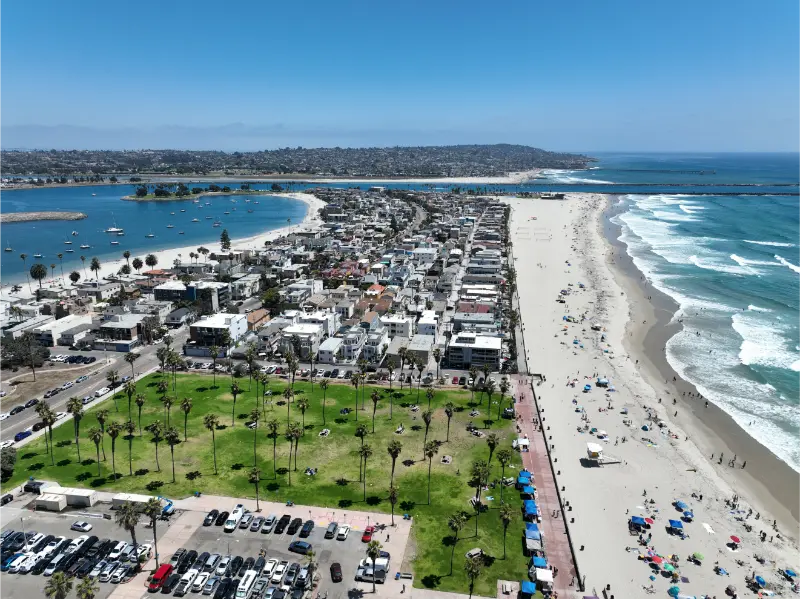
Mission Beach and Pacific Beach sit next to each other on San Diego’s oceanfront, but they do not feel identical. Mission Beach is narrower, more boardwalk-centered and closely associated with Belmont Park. Pacific Beach extends north with a larger neighborhood, a busy restaurant/bar scene and easier access to longer coastal walks toward Law Street and beyond.
For a first San Diego trip, you do not need separate full days for both. Treat them as one coastal zone and decide which atmosphere fits you. Our San Diego first-time guide explains how the beaches fit with La Jolla, Balboa Park and downtown.
Mission Beach vs Pacific Beach: quick choice
Choose Mission Beach if you want the classic boardwalk, amusement-park energy, families, bikes and a compact beach scene. Choose Pacific Beach if you want a broader neighborhood with restaurants, bars, surf culture and a longer evening scene. Choose neither for quiet luxury; La Jolla or Coronado may suit that better.
Families with young children often like Mission Bay’s calmer water better than the open ocean. The bay side is only a short distance from parts of Mission Beach, which makes the area unusually flexible.
The boardwalk
The paved oceanfront path links Mission Beach and Pacific Beach and is one of the best ways to understand the area. Walk, cycle or simply sit and watch the mix of runners, skaters, surfers and beachgoers. Stay aware because users move at very different speeds.
Morning is calmer. By afternoon, especially on sunny weekends, the path can feel crowded. If you are cycling with children or are uncomfortable around fast bikes and scooters, choose an early start.
Belmont Park: worth it?
Belmont Park adds rides, games and food directly beside Mission Beach. You do not need to make it the purpose of your day, but it can be useful with children or teenagers who want more than sand. Decide in advance whether your family wants rides; otherwise the area can become an expensive spontaneous detour.
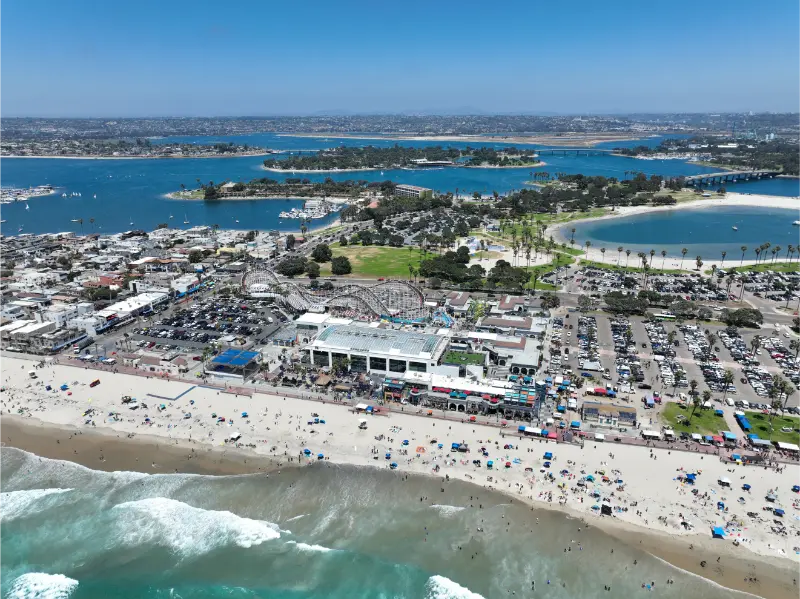
Travelers without children can simply walk through, see the historic Giant Dipper coaster and continue along the boardwalk.
Swimming and ocean conditions
The Pacific Ocean here can have waves, currents and cold water even on warm days. Swim near lifeguarded areas and pay attention to posted warnings. San Diego sunshine does not mean the ocean behaves like a calm resort pool.
For younger children, weak swimmers or travelers who simply want calmer water, Mission Bay can be a better choice. Check current water-quality advisories after storms, particularly when runoff affects coastal areas.
Where to park
Parking is one of the least relaxing parts of a summer beach day. Free public lots and street spaces fill early. Circling at midday can waste the time you hoped to spend on the sand. Arrive early, use a legal paid option if needed, or use rideshare/transit when staying within San Diego.
Never leave luggage or visible bags in the car. If this is a road-trip transfer day, check into your accommodation or store luggage before parking at the beach whenever possible.
A realistic beach-day itinerary
Morning: arrive in Mission Beach, walk the boardwalk while it is calmer and spend time on the sand. Lunch: eat around Mission Beach or continue north to Pacific Beach. Afternoon: walk or bike toward Crystal Pier and Law Street, stopping for coffee or ice cream. Sunset: choose a beach viewpoint, then stay in Pacific Beach for dinner if you enjoy a lively atmosphere.
With small children, shorten the afternoon and add Mission Bay instead of pushing north. With teenagers, Belmont Park can fill the late afternoon.
Pacific Beach at night
Pacific Beach has a stronger nightlife identity than Mission Beach. That can be a reason to stay there or a reason not to. Couples and younger travelers who want bars within walking distance may appreciate it; families seeking early quiet should check hotel location carefully and avoid assuming every “beach hotel” has the same atmosphere.
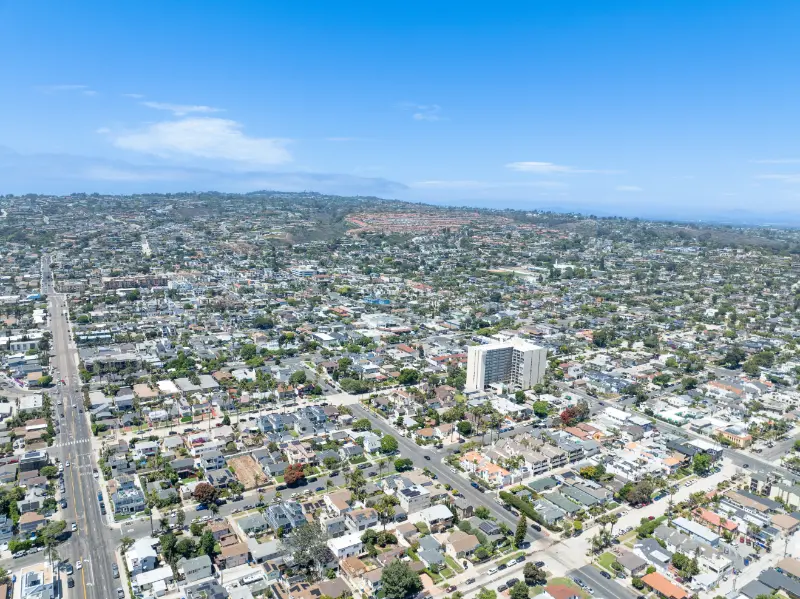
For accommodation trade-offs across the city, see our where to stay in San Diego guide.
Mission Beach and Pacific Beach with kids
Bring sun protection, water and a simple change of clothes. Sand plus rides plus food can create a surprisingly long day. Establish a meeting point if older children are moving independently. For toddlers, the bay side can be easier than open-ocean waves, and a stroller works better on paved paths than deep sand.
Our San Diego with kids itinerary places beach time around the zoo and other family attractions without overloading each day.
For senior travelers and limited mobility
The flat boardwalk is easier than many California coastal trails, but beach access itself may involve soft sand. Choose viewpoints, piers and paved promenade sections if sand is difficult. Benches and restaurants provide frequent breaks. Wind can cool the shoreline quickly after sunset.
Travelers using mobility equipment should review current beach-accessibility resources from the City of San Diego because equipment programs and access mats can change by season and location.
What to combine with the beaches
La Jolla is the natural next coastal stop, but avoid driving there at the same time everyone else leaves the beach. Old Town can work in the evening. Coronado is better treated as a separate half-day because crossing the city adds time. Our Coronado guide explains that alternative beach experience.
Do not combine Mission/Pacific Beach with a full zoo day unless your goal is only a short sunset stop. The zoo deserves its own substantial block of time.
Best time to visit
Summer offers the warmest beach atmosphere but also the largest crowds and hardest parking. Late spring and early fall can be excellent, with less pressure on public spaces. Coastal mornings may be gray even when inland San Diego is sunny. Winter can still produce beautiful beach walks, but swimming conditions and daylight are different.
Final advice
Mission Beach and Pacific Beach are best enjoyed as one flexible coastal day. Start early, use the boardwalk, choose ocean or bay water based on your group’s confidence, and decide whether Belmont Park or Pacific Beach nightlife genuinely fits your trip. San Diego’s beach culture is not one single experience; these neighboring areas let you choose between family amusement, active boardwalk life and a more social neighborhood scene without driving across the city.
Surf lessons and water activities
Both Mission Beach and Pacific Beach have surf-school and rental businesses. Beginners should choose instruction from an established operator and ask where the lesson takes place, what equipment is included and how water conditions affect cancellation. A calm-looking shoreline can still have rip currents.
Do not rent a board simply because everyone else appears comfortable in the water. For non-swimmers or nervous first-timers, a bay-side paddle activity may be a better introduction to San Diego water time.
One last planning check
Before traveling, reopen the official pages for the places in this guide and verify hours, reservations, road conditions and weather. California conditions change by season, construction and natural events, and a saved itinerary should be treated as a framework rather than a contract. Build at least one flexible block into the day so a closure or delayed meal does not force you to abandon the rest of the plan.
Also confirm where you will park or how you will return to your hotel after dark. Small logistical decisions often determine whether Mission Beach and Pacific Beach feels easy or stressful, especially for families, older travelers and anyone visiting California for the first time.
How to make the day easier
Start with the one experience you would be most disappointed to miss and place it in the best part of the day for weather, crowds or reservations. Treat everything else as adjustable. Keep water, a light layer, a portable battery and an offline map available, and avoid storing luggage in a visible part of a parked car. If you are traveling with children or older relatives, schedule a real seated break before anyone asks for one; waiting until the group is tired usually turns a small delay into a difficult afternoon.
Finally, resist the urge to add a distant attraction simply because the map shows it within driving range. California traffic, parking and scenic-road delays make geographic distance a poor measure of effort. A shorter day with time to look around, eat properly and adapt to conditions usually produces a better trip than collecting one more stop.
Budget and timing buffer
Keep a modest buffer in both time and money. Parking, food, entrance charges, fuel and last-minute transport can cost more than expected, while a busy queue or road delay can remove an hour from the plan. Decide in advance which stop is optional so you know what to drop without debate. This is especially useful on weekends, holidays and school-break periods when visitor patterns can change quickly.
Download reservation confirmations and key addresses before leaving reliable Wi-Fi. If your day depends on a timed entry, ferry, tour or sunset arrival, work backward from that commitment and keep the previous part of the itinerary nearby. The most comfortable California travel days usually have one fixed anchor and several flexible pieces around it.