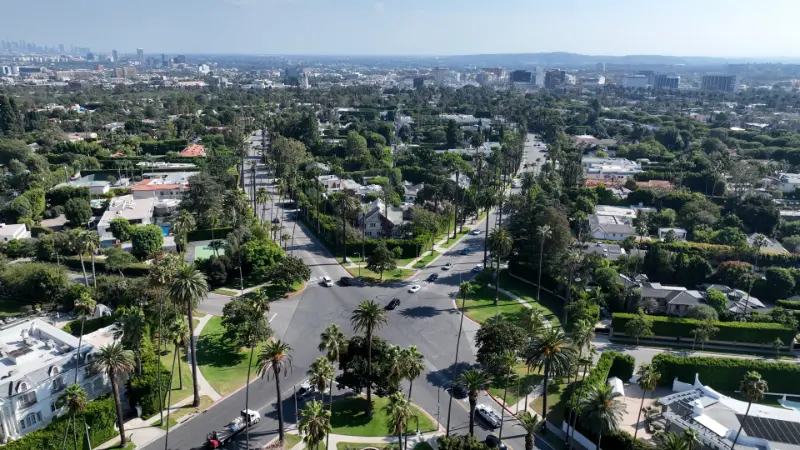
Beverly Hills and West Hollywood are often treated as one celebrity-sightseeing zone, but they are separate cities with different rhythms. Beverly Hills is compact, polished and easy to explore on foot around the Golden Triangle; West Hollywood stretches along major boulevards and is better understood as a series of districts. Trying to drive every famous street is less satisfying than choosing two or three walkable clusters.
A useful first day focuses on architecture, streetscapes, people-watching and food rather than celebrity homes. Privacy, traffic and gated properties make residential ‘star hunting’ a poor use of limited time. The public city is more interesting than the private one.
Quick planning snapshot
| Decision | Practical answer |
|---|---|
| How much time? | A full day for Beverly Hills plus West Hollywood; half a day for Beverly Hills alone. |
| Best for | Architecture, shopping streets, dining, pop-culture context and travelers who enjoy urban neighborhoods. |
| Parking advantage | Beverly Hills has municipal structures, including options with limited complimentary parking; verify current rules. |
| Biggest mistake | Spending the day driving past private homes instead of exploring walkable public districts. |
What is genuinely worth seeing
Rodeo Drive matters as urban theater even if you have no intention of shopping. The storefronts, public art, hotels and pedestrian scale make it easy to understand why Beverly Hills became an international luxury symbol. Two or three blocks are enough for many visitors; there is no need to turn the street into a shopping obligation.
West Hollywood adds a different layer: the Sunset Strip, design district, nightlife history and LGBTQ+ cultural importance around Santa Monica Boulevard. A good itinerary acknowledges these histories instead of reducing the area to expensive cars and celebrity gossip.
A realistic one-day route
Morning: Beverly Hills Golden Triangle
Park once in a municipal structure and begin around Rodeo Drive, Beverly Gardens Park and nearby streets. Walk rather than moving the car every few blocks. The area is compact enough that driving between individual landmarks usually wastes time.
Late morning: architecture and residential edge
If architecture interests you, add a short route past civic buildings, hotels or a carefully chosen residential street. Do not build an itinerary around private celebrity addresses. Many are hidden, outdated or disruptive to residents.
Afternoon: move once to West Hollywood
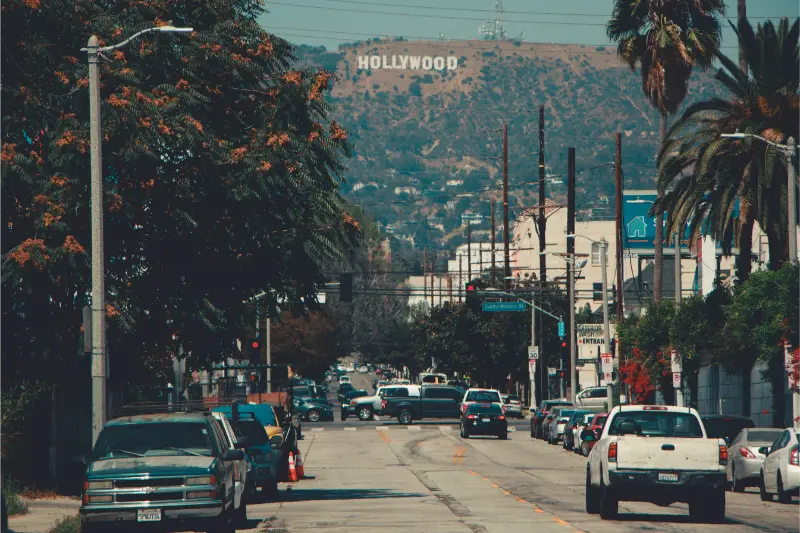
Choose one West Hollywood cluster based on your interests: Sunset Strip for music and nightlife history, Design District for interiors and fashion, or Santa Monica Boulevard for LGBTQ+ landmarks and restaurants. Do not try to walk the entire city east to west.
Evening: stay local for dinner
The area makes more sense when dinner is part of the day. Reserve only if the restaurant is a real priority; otherwise choose something near your final district and avoid a cross-city drive simply for a fashionable address.
What is actually worth prioritizing
Rodeo Drive and the Golden Triangle
Spend enough time to notice the streetscape and architecture, then move on. Window-shopping is a complete experience even with zero purchases.
Beverly Gardens Park
This gives the day some open space and includes one of the city’s classic photo locations. It also provides a useful walking transition rather than another car transfer.
Sunset Strip
The Strip is more interesting when you know its music, nightlife and entertainment history. Current businesses change; the corridor’s role in LA culture is the enduring reason to visit.
Santa Monica Boulevard in West Hollywood
This corridor carries important LGBTQ+ community history and remains central to the city’s social identity. Check current events if your visit coincides with Pride or a major festival because road closures and crowds can transform the area.
Getting there, parking and moving around
Beverly Hills is one of the easier places in central Los Angeles to park strategically because the city operates public structures. The official visitor center currently highlights structures with limited complimentary parking periods. Always verify the specific garage rules and validation rather than assuming every lot works the same way.
West Hollywood is more linear, and moving between Sunset and Santa Monica boulevards can involve hills and longer walks. Rideshare or one deliberate parking move is often more efficient than repeatedly circling for street spaces.
Families, older travelers and accessibility
The Golden Triangle is relatively compact and sidewalk-oriented, which is helpful for older travelers, but midday heat and crossing major boulevards still matter. Use benches and indoor breaks rather than treating the day as continuous pavement walking.
Families can enjoy the architecture and public spaces, but the shopping focus may not hold younger children for long. Pair the day with a park, casual meal or short stop that gives children something active to do.
Best time, weather and pacing
This is primarily an urban walking day, so heat is more relevant than rain for much of the year. Start earlier during hot periods and use shops, cafés or museums as cooling breaks. Evening temperatures can drop quickly after sunset, especially if you continue toward the hills.
Major events in West Hollywood can change traffic and parking dramatically. If an event is part of the reason you are going, use transit or rideshare and accept road closures. If it is not, consider another date or start time.
Food, budget and practical trade-offs
A Beverly Hills day does not require luxury spending. Public streets, parks and window-shopping are free. The main costs are parking, food and whatever shopping you choose to do. Set expectations before entering high-end stores so the day stays comfortable for everyone.
West Hollywood has everything from casual food to destination restaurants and nightlife. Do not let social-media popularity determine the budget; a well-located casual meal can preserve both time and money.
Common mistakes to avoid
- Building the day around celebrity home addresses.
- Moving the car between every Beverly Hills landmark.
- Assuming every public garage has the same free-parking period.
- Trying to walk all of West Hollywood as one compact district.
- Ignoring event-related road closures.
- Booking a restaurant far from your final sightseeing area during peak traffic.
How to combine this with a wider California trip
This day fits naturally into a central/western Los Angeles first-time guide itinerary. Combine with nearby neighborhoods, not with the coast and a major theme park on the same schedule. Use Santa Monica guide or Malibu guide for separate coastal days and Universal Studios Hollywood guide for a dedicated attraction day.
Useful California for You guides
Read Los Angeles first-time guide, Santa Monica guide, Malibu guide and Universal Studios Hollywood guide.
Official planning resources
Check the official sources close to your travel date because hours, access, parking, programs and temporary restrictions can change.
Final advice
Beverly Hills and West Hollywood are better on foot and in small geographic clusters than through a car window. The public streets, architecture and cultural corridors are more rewarding than chasing private celebrity addresses.
Plan one parking decision in each city, choose the district that matches your interests and let dinner be the final part of the itinerary rather than another cross-town mission.
How to make the plan work in real life
Before visiting Beverly Hills and West Hollywood, create a three-level priority list: one experience that would make the day worthwhile, two experiences you strongly prefer, and several optional items. This keeps an ordinary delay from turning into a cascade of rushed decisions. California travel time is often hidden in parking searches, security, walks from garages, traffic, restroom stops and the simple fact that people move more slowly on vacation than a map suggests.
Save the essential information offline: the official reservation or ticket, the exact first parking or transit stop, the address of the next destination and any current closure notice. Families can add a meeting point and one contact number in case the group separates. This takes a few minutes and is more useful than carrying dozens of recommendations you cannot locate when everyone is tired.
What to reserve and what to leave flexible
Reserve only what can sell out or determines the rest of the day: timed admission, limited tours, ferries, a genuinely important restaurant or a scarce parking product. Leave ordinary meals, viewpoints, shopping and minor stops flexible. Too many reservations convert a vacation into a chain of deadlines and make normal traffic feel like failure.
When choosing accommodation, compare the total cost of location. A cheaper room can become more expensive after parking, rideshares, fuel and an extra hour of commuting. A well-located hotel can also create a quieter morning, which is often more valuable than one additional attraction squeezed into the schedule.
Comfort and safety checklist
- Check official hours, parking and temporary restrictions the evening before and again on the morning of travel.
- Carry water and sun protection even when much of the plan is indoors.
- Keep a light layer available for coastal wind, air-conditioning or evening temperature drops.
- Do not leave visible luggage, cameras or electronics in a parked vehicle.
- Decide which optional stop will be dropped first if the day runs late.
- Give children and older travelers a seated break before fatigue becomes the main event.
These details are not glamorous, but they are the difference between an itinerary that looks efficient on a screen and one that works for real people. The goal is not maximum attraction density. It is a day that remains enjoyable when parking takes longer, weather changes or someone wants to stay somewhere for an extra half hour.