
La Jolla is one of the most recognizable coastal parts of San Diego, but a good visit is more than walking to a viewpoint, photographing sea lions and leaving. The village, rocky shoreline, coves, beaches and nearby Torrey Pines area create several distinct experiences that need to be paced around parking, marine conditions and how much walking your group actually enjoys.
Two days let you separate the compact Cove area from La Jolla Shores and the wider coast. That distinction matters because moving the car repeatedly between every overlook can be frustrating. I would rather park once, walk a coherent coastal section, take a long lunch and then change areas only when the second half of the day genuinely requires it.
Quick planning snapshot
| Decision | Practical answer |
|---|---|
| Ideal first stay | 2 days if La Jolla is a destination; 1 full day works within a longer San Diego stay. |
| Car needed? | Helpful, but parking is the challenge. Rideshare can be easier for the village and Cove on busy days. |
| Best base | La Jolla Village for walking; La Jolla Shores for easier beach-focused mornings. |
| Big planning risk | Building the whole day around wildlife and parking instead of treating both as variable conditions. |
How to divide La Jolla into manageable areas
Think of La Jolla as at least two clusters. The Cove and village area is best for cliffs, coastal paths, restaurants and wildlife viewing. La Jolla Shores is a broader beach environment with a different parking and family rhythm. Trying to bounce between the two every hour wastes time and makes parking the dominant memory of the visit.
Wildlife should be observed as wildlife, not as a guaranteed performance. Sea lions and seals move, rest and use different sections of coast. Temporary closures or access rules can protect animals and visitors, so signs and city guidance matter more than an old social-media location pin. Keep distance, use a zoom lens and let the shoreline itself remain part of the experience.
A realistic 2-day La Jolla itinerary
Day 1: Cove, village and coastal walk
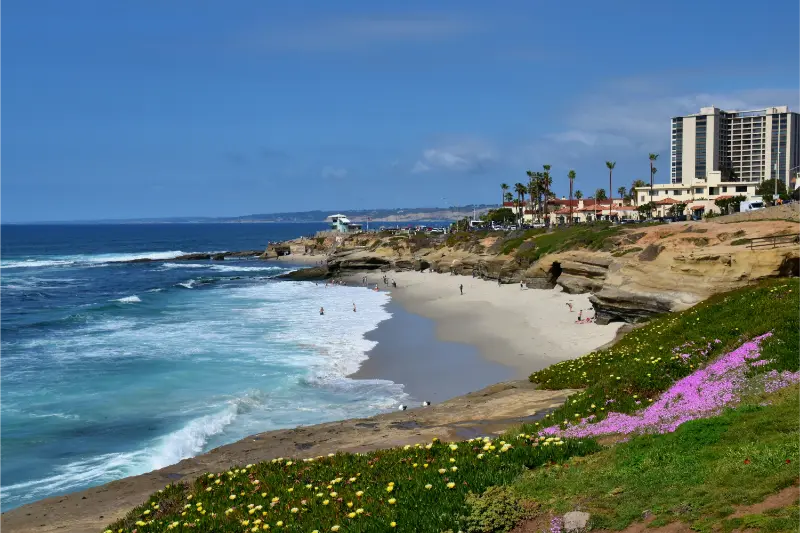
Arrive early enough that parking does not dictate the entire morning. Start around La Jolla Cove, then continue on foot along the coastal edge toward the nearby viewpoints and parks that suit your mobility level. Do not rush from animal group to animal group; the rocky coast, surf and changing light are part of the visit.
Use the middle of the day for the village, lunch and an indoor break if the sun is strong. In the afternoon, continue a shorter coastal walk or choose a museum/gallery stop rather than moving the car several times. Sunset can be beautiful, but allow extra time for the return because traffic leaving popular coastal areas can build quickly.
Day 2: La Jolla Shores and Torrey Pines choice
Make the second morning a beach morning at La Jolla Shores. Families generally find the broader sandy setting easier than the rocky Cove area, while active visitors may be interested in kayaking or other guided water activities when conditions are appropriate. Ocean activities depend on swell, wind and individual ability, so use professional guidance rather than assuming calm water from shore appearance.
For the afternoon, either stay with the beach or move north toward Torrey Pines for scenery and hiking. Do not automatically schedule a demanding trail after several hours in the sun. A shorter overlook or scenic stop may be the better choice for families and older travelers. If Torrey Pines is already a separate San Diego day, keep La Jolla relaxed instead.
What is actually worth prioritizing
La Jolla Cove
The Cove is compact, scenic and usually busy. It is strongest as the starting point for a coastal walk rather than a standalone five-minute photo stop. Morning can reduce parking pressure and gives you more flexibility if fog or wildlife activity changes later.
Coastal wildlife viewing
Seals and sea lions are a major draw, but responsible viewing improves the visit. Stay behind barriers, follow current signs and avoid approaching animals for photographs. Pupping seasons and temporary closures can change access to specific areas, so current city guidance is more reliable than old travel posts.
La Jolla Shores
The Shores offers a different kind of day: broader sand, longer beach time and easier integration with family swimming or guided water activities. Parking can still fill, so early arrival remains useful. Conditions in the water change, and lifeguard advice should override assumptions based on a calm-looking surface.
Torrey Pines connection
Torrey Pines sits close enough to combine with La Jolla, but it deserves a deliberate time block. The reserve is not a quick roadside overlook if you plan to hike. On hot or crowded days, choose between a substantial Torrey Pines visit and a full La Jolla Shores afternoon instead of forcing both.
Where to stay
Staying in La Jolla Village is most useful for travelers who value evening restaurants and the ability to walk to the Cove. It can cost more than other San Diego bases, but the reduction in daily parking moves may justify part of the premium. Check whether hotel parking is included.
La Jolla Shores is appealing for families and travelers who want the beach to be the first activity of the day. If the broader trip includes downtown San Diego, Balboa Park and Coronado, one central San Diego hotel may be more efficient than changing hotels just for La Jolla. Decide based on how many mornings you genuinely want to spend here.

Getting there and getting around
A car is convenient for reaching La Jolla from many parts of San Diego, yet parking is the main friction point. Arrive early, use one parking space for a walking cluster and consider rideshare when staying elsewhere in the city. Circling for a curb space for forty minutes is not a good use of vacation time.
Public transit can work but is slower depending on your origin and exact beach destination. If you are visiting without a car, map the final connection rather than assuming a transit stop is beside the Cove. For a broader car-light San Diego trip, combine transit with selective rideshare rather than expecting one mode to solve every coastal segment.
Best time to go
La Jolla is visitable year-round. Late spring and early summer can bring marine-layer mornings, while summer and early fall produce classic beach demand. Winter can be excellent for coastal walking when the weather cooperates, even if swimming is not the goal.
Wildlife and ocean conditions are seasonal in ways that do not match a simple “best month” chart. If tide pools, kayaking or a specific wildlife experience matter, check tides, surf and current access shortly before the visit. A flexible two-day plan lets you move the water-dependent activity to the better window.
Families, older travelers and accessibility
Families often do best by separating rocky wildlife-viewing areas from a true beach session at La Jolla Shores. Strollers are easier on paved village and park paths than on sand or uneven shoreline. Older travelers can enjoy excellent views without long hikes, but cliff paths and stairs vary. For wheelchair planning, identify paved overlooks, accessible parking and restroom locations in advance rather than assuming every coastal viewpoint has step-free access.
Budget and booking strategy
The coast itself can be low-cost, but parking, water activities and La Jolla lodging can raise the daily total. Decide whether your splurge is a guided kayak experience, a waterfront meal or a premium hotel. Free coastal walking plus one paid activity usually creates a better balance than booking multiple water experiences in one day.
Common mistakes to avoid
- Approaching seals or sea lions for close photographs instead of following current wildlife barriers.
- Moving the car between every small coastal viewpoint.
- Assuming La Jolla Cove and La Jolla Shores are the same beach experience.
- Scheduling Torrey Pines as a quick add-on after a physically demanding beach morning.
- Choosing a sunset plan without allowing time for parking and the post-sunset traffic exit.
How to combine this stop with the rest of California
La Jolla fits naturally inside a longer San Diego stay. Use San Diego first-time guide to place Balboa Park, downtown and other neighborhoods on separate days. Northbound travelers can continue toward Carlsbad and Orange County; southbound visitors should resist crossing the entire county for a second beach simply to collect another name.
Useful California for You guides
Read San Diego first-time guide, California with kids, best California beaches for families, and California airport guide.
Official planning resources
Wildlife access, beach conditions and coastal closures can change. Use official city and lifeguard information close to your visit.
- City of San Diego beaches and lifeguards
- San Diego shoreline parks
- Torrey Pines State Natural Reserve information
Final advice
La Jolla rewards a slower plan. One morning around the Cove and village plus one separate beach-focused period at the Shores is more satisfying than repeatedly fighting for parking at every famous viewpoint.
Treat wildlife and ocean activities as conditions-dependent rather than guaranteed. If the animals are resting farther away, the surf is rough or parking is full, the day can still succeed because La Jolla offers coastal walks, restaurants and scenery beyond a single photograph.
Small planning details that make the trip easier
Before leaving for La Jolla, save the exact address of your first stop, download an offline map and check the official conditions page rather than relying only on a navigation app. California destinations that look compact on a map can behave very differently when parking fills, coastal fog arrives, a mountain road changes status or an event changes local traffic. I also like to identify one easy backup activity before the day begins, so a weather or access problem does not force an improvised long drive.
Build margin into the day instead of treating every stop as an appointment. Families usually need extra time for food and restrooms, older travelers may prefer fewer transfers between car and attraction, and photographers often want to stay longer when the light improves. In La Jolla, the best itinerary is rarely the one with the most pins on a map; it is the one that preserves enough time to enjoy the strongest places without turning the final hours into a rushed return.