
Avenue of the Giants is only about 32 miles long, which is exactly why people plan it badly. Navigation apps make the route look like a short detour from Highway 101, but the real experience is measured in groves, pullouts, river bends and short walks. If you allow only the raw driving time, you will spend the whole route deciding what you do not have time to see.
The road passes through Humboldt Redwoods State Park, home to an extraordinary concentration of old-growth coast redwoods. My recommendation is to reserve most of a day, choose two or three grove walks and stop treating every giant tree as a separate attraction. The forest becomes more impressive when you slow down enough to hear it and notice how the light, understory and river change along the route.
Quick planning snapshot
| Decision | What I would do |
|---|---|
| Route length | About 32 miles through Humboldt Redwoods State Park. |
| Time I would allow | 4–6 hours for a satisfying first visit; longer with picnics, swimming or several walks. |
| Best direction | Either works. Choose based on where you sleep, not a supposed mandatory direction. |
| Main trap | Stopping at every roadside attraction and having no time left for the actual state park groves. |
What makes Avenue of the Giants different from simply driving Highway 101
Highway 101 is efficient; the Avenue is intimate. The older road runs directly beneath towering redwoods and through small communities, so even the drive itself feels like part of the forest. But the strongest moments still happen when you get out of the car. A five-minute walk away from traffic can change the sound, temperature and scale completely.
Humboldt Redwoods State Park also gives the route ecological depth. The old-growth forest is not a theme-park corridor of individual famous trees. Fallen giants, ferns, creeks and younger forest all matter. That is why I would prioritize park groves such as Founders Grove over a long sequence of commercial drive-through-tree stops.
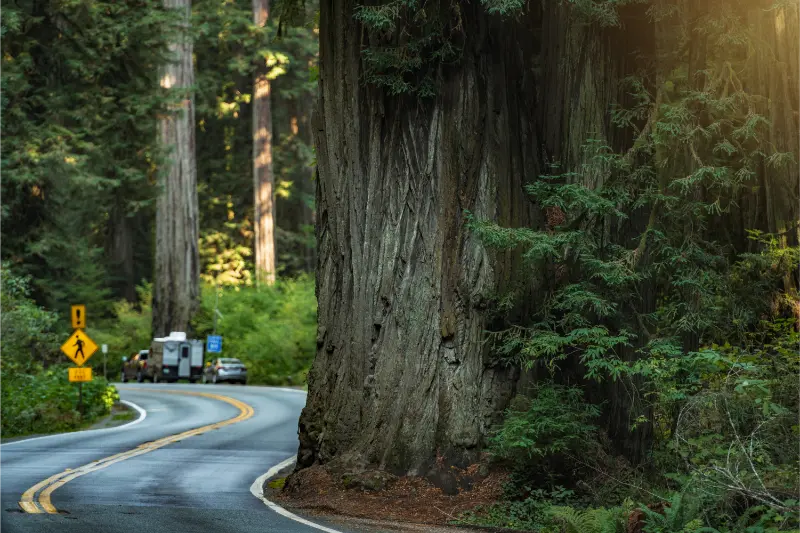
A one-day Avenue of the Giants road trip that does not feel rushed
Morning: enter the Avenue and stop before the day gets busy
Start at whichever end matches your overnight base and make the visitor center or a major grove your first anchor. If you begin early, you gain quieter trails and easier parking. Founders Grove is a classic first walk because it delivers old-growth scale without demanding a long hike, but check current access before the trip.
Spend enough time on one trail to move beyond the parking-lot atmosphere. The temptation is to stop every ten minutes for another photograph. Resist it. Choose a few meaningful places, then let other pullouts remain optional.
Midday: picnic, river and a second grove
By midday, use one of the picnic or river areas to slow the rhythm. In warm weather, the Eel River can become part of the visit, but water conditions change and swimming is never something to assume is safe. Ask locally and assess the river that day rather than relying on a photo taken in another month.
Add one more grove walk that differs from the first. A route with more open river scenery can be a useful contrast to dense forest. If a road or trail is temporarily closed, substitute another park stop rather than trying to bypass barriers on minor roads.
Afternoon: finish with the forest, not souvenir stops
Leave the last part of the day deliberately loose. Good light under the redwoods can arrive late, and the route is more enjoyable when you are not racing to a fixed final attraction. Small towns along the Avenue can provide fuel, snacks or coffee, but check opening hours if you are depending on a specific business.
If you are continuing to Eureka, arrive with enough daylight to check in comfortably. If you are driving south toward Mendocino, remember that the road beyond Humboldt Redwoods becomes slower and more winding; do not assume your scenic day is finished when you rejoin Highway 101.
Where to stay: choose convenience before scenery
You can base in Eureka for the widest services, in Garberville for a more southern position, or in/near the park when forest access is the priority. The right answer depends on the following day. If your next goal is Redwood National and State Parks, Eureka or farther north is logical. If you are heading to Mendocino, a southern base reduces backtracking.
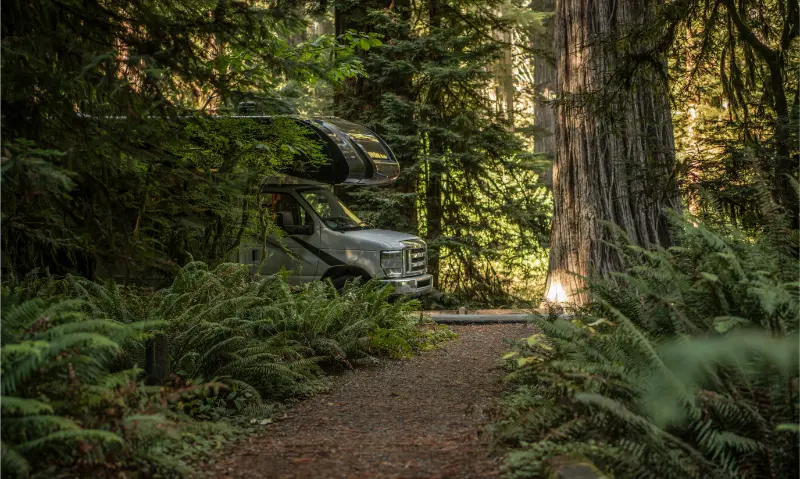
Forest lodging can be atmospheric, but compare dining options, check-in times and fuel availability. A beautiful remote property can create unnecessary night driving if you arrive late after a full day of stops.
Getting there and getting around
This is a driving route, but the car should function as a connector between walks rather than the attraction itself. Keep speeds modest, watch for cyclists and pedestrians, and use designated pullouts instead of stopping unpredictably for photographs. Large RVs should review current road and campground guidance before committing to smaller side roads.
Download a park map. Cellular coverage is inconsistent, and a paper or offline map makes it easier to choose groves without repeatedly searching for a signal.
Best time to go
The Avenue is open year-round, but conditions vary. Winter is wet and dramatic, spring is lush, summer is popular and can bring swimming weather inland, and autumn may offer a calmer atmosphere. Storms can down trees or affect roads, while prescribed fire operations may influence specific areas. Check the state park’s current notices before leaving your hotel.
The redwood forest is cooler than many inland California destinations. Even on a warm day, carry a layer for shaded trails and a waterproof option when rain is possible.
Traveling with children
Families do not need long hikes to make this day memorable. Short grove walks, giant fallen trunks, picnic areas and river scenery provide enough variety for children. Build bathroom and snack stops into the plan because the scenic route encourages frequent stopping but services are not available at every turnout. Let children explore at walking pace; the forest is more engaging when adults are not constantly saying it is time to get back in the car.
Older travelers and limited mobility
Travelers with limited mobility can experience much of the scale from the scenic road, visitor facilities and selected short paths, but surfaces in natural groves can be uneven and roots can create obstacles. Check the official accessibility information for the exact grove you want to visit. A drive with two well-chosen accessible stops is better than selecting a famous trail that does not match your mobility needs.
Budget: where the money actually goes
The route itself is a low-cost experience. Budget for fuel, any applicable state-park day-use fee, meals and lodging. Bring a picnic so you are not forced to leave the route at an inconvenient time. Avoid turning the day into a sequence of paid roadside novelties; the most valuable parts of Humboldt Redwoods are the forest, river and walks.
Mistakes that make this trip harder than it needs to be
- Allowing only the 32-mile driving time.
- Stopping at every commercial tree attraction while skipping state-park groves.
- Driving too fast under the redwoods or stopping outside safe pullouts.
- Assuming cell service will be reliable.
- Continuing to Mendocino late in the day without allowing for slower roads.
The Avenue rewards selectivity. Two excellent grove walks and an unhurried picnic will usually produce stronger memories than ten rushed pullouts.
How to combine this stop with a longer California trip
Pair the Avenue with Eureka and the northern redwood parks on a multi-day Redwood Coast itinerary. Southbound travelers can continue toward Mendocino, but should treat that next section as a separate scenic drive. Northbound travelers can use Eureka as a comfortable reset before Trinidad and Prairie Creek.
Useful California for You guides
For a wider route, I would pair this guide with our Redwood National and State Parks guide, our Mendocino Coast guide, our California planning guide.
Official information to check before you go
Use Humboldt Redwoods State Park for current closures, hours, events and campground information.
Questions first-time visitors usually ask
How long is Avenue of the Giants?
The scenic road is about 32 miles long, but allow several hours because the point is to stop and walk, not simply complete the mileage.
Can I drive the Avenue in an RV?
Many travelers do, but vehicle size and side-road limitations matter. Check current park guidance and campground access before relying on minor roads.
Which grove should I prioritize?
Founders Grove is a strong first choice for many visitors because it offers an impressive old-growth experience without requiring a long hike.
Is Avenue of the Giants the same as Redwood National Park?
No. It runs through Humboldt Redwoods State Park farther south. It complements, rather than replaces, Redwood National and State Parks.
Can I swim in the Eel River?
Conditions vary with flow, season and location. Never assume a swimming area is safe based on previous reports; assess current conditions locally.
Do I need a full day?
Not absolutely, but four to six hours gives a first visit enough time for multiple walks and stops without turning the road into a race.
Final advice
Avenue of the Giants is not a road to finish. It is a road that gives you repeated reasons to stop. Plan the day around a few grove walks, leave space for the river and let the old-growth forest be the main event rather than the backdrop to your windshield.