
Redwood National and State Parks are not one park with one gate and one obvious visitor center. They are a collection of national and California state park lands spread along a long stretch of the far northern coast. That geography is the key to planning them well.
If you arrive expecting to park once and walk into “the redwoods,” you may spend much of the day driving between places without understanding which grove belongs to which part of the park system. A better plan divides the trip into north, central and south zones and chooses accommodation accordingly.
How many days do you need?
Two full days can cover major groves and a taste of the coast. Three days is ideal for a first visit because it allows one northern day around Crescent City and Jedediah Smith, one central day around Prairie Creek and Fern Canyon, and one flexible day for coastal viewpoints, a longer trail or the southern redwood areas.
One day is possible, but only if you choose one zone. Driving the full park corridor and stopping briefly everywhere is a poor substitute for actually walking under the trees.
Where to stay
Crescent City is the strongest base for Jedediah Smith Redwoods State Park and the northern section. Trinidad offers a beautiful coastal setting and is useful for the southern and central areas. Arcata/Eureka has more urban services but adds driving to the northern groves. Orick is geographically convenient for Prairie Creek but has fewer lodging and dining choices.
For a three-day visit, splitting the stay between Crescent City and Trinidad or Arcata can reduce backtracking. For two days, choose the zone that matters most and accept that you will not see every famous grove.
Understand the park system before you arrive
Redwood National and State Parks combines Redwood National Park with several California state parks, including Jedediah Smith, Del Norte Coast and Prairie Creek Redwoods. Some areas are free to enter while specific state park day-use areas, campgrounds or roads can have fees and reservation systems.
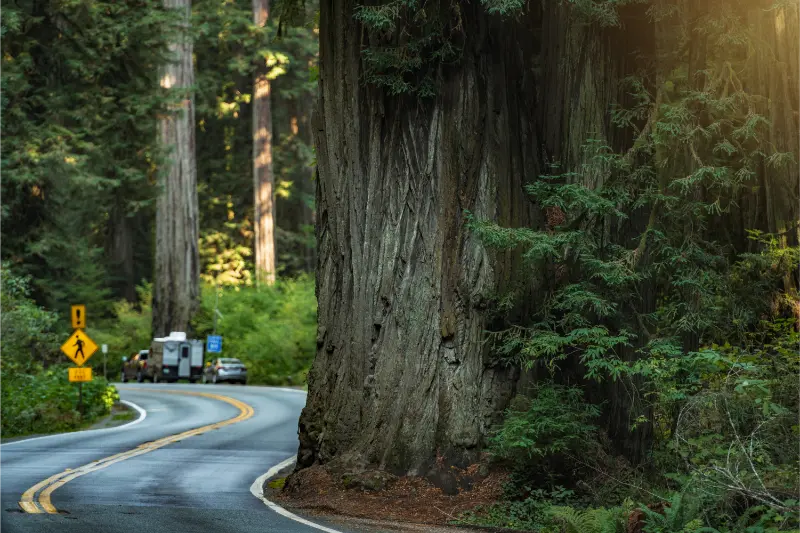
This is why a single statement such as “the redwoods are free” is incomplete. Check the exact destination you plan to visit rather than assuming one rule covers the entire system.
Day 1: Jedediah Smith and the northern groves
Use Crescent City as your base and focus on Jedediah Smith Redwoods State Park. Stout Grove is one of the classic short walks and works well as an introduction because the trail quickly places you among enormous trees without requiring a full-day hike.
Howland Hill Road offers access to additional groves and a memorable forest drive, but road surface and vehicle suitability matter. If conditions are poor or your rental agreement makes you uncomfortable, skip it. The redwood experience does not depend on one particular road.
Add a coastal stop around Crescent City or the Klamath area so the day shows both sides of the region: ancient forest and rugged Pacific coastline.
Day 2: Prairie Creek, Roosevelt elk and Fern Canyon
Prairie Creek Redwoods State Park deserves a full day. The Newton B. Drury Scenic Parkway is a good backbone for the area, with access to trails and forest stops. Wildlife sightings, especially Roosevelt elk, are possible in open meadow areas; observe from a safe distance and never block traffic to photograph animals.
Fern Canyon is one of the most distinctive short adventures in the park system, but it requires more planning than a normal roadside trail. The National Park Service currently requires a vehicle reservation for Gold Bluffs Beach and the Fern Canyon trailhead from May 15 through September 15. Reservations are not available simply by arriving at the gate, and the access road includes gravel and stream crossings.
Check the current official Fern Canyon reservation information before building the day around it. If you cannot obtain a vehicle reservation, Fern Canyon can still be reached on a much longer hike from the Prairie Creek area, but that is a different level of commitment.
Day 3: coast, quieter trails and the southern section
Use the third day as a flexible day rather than another list of headline stops. Explore a coastal overlook, a beach walk, Lady Bird Johnson Grove or another trail that fits current conditions and your energy level. If fog covers the coast in the morning, walk in the forest first and return to the ocean later.
The redwood region rewards flexibility because weather can be very local. It can be cool and misty beneath the trees while a nearby beach is bright, or the reverse.
What is the best time to visit?
Summer has the driest weather and longest days but also the highest demand for lodging and permit-controlled areas. Spring is lush and often quieter. Autumn can be beautiful with fewer visitors. Winter brings heavy rain, storm impacts and shorter daylight but also a dramatic, atmospheric forest.
This is coastal northern California, not sunny Southern California. Bring rain protection and warm layers in every season. A July morning can feel cool and damp.
Do not underestimate driving time
Highway 101 moves efficiently in some sections, but park roads, scenic detours and trailhead access slow the trip. A destination that looks only thirty miles away may take much longer when you add viewpoints, elk, road works and narrow forest roads.
Plan one geographic zone per half-day. This simple rule prevents the common mistake of zigzagging between Crescent City, Prairie Creek and Trinidad repeatedly.
The best redwood walk is not necessarily the longest
Visitors sometimes assume they must hike ten miles to have an authentic redwood experience. You do not. Short grove trails can be extraordinary because the environment is the attraction. Longer hikes are worthwhile if you enjoy hiking, but they are not a requirement for appreciating the trees.
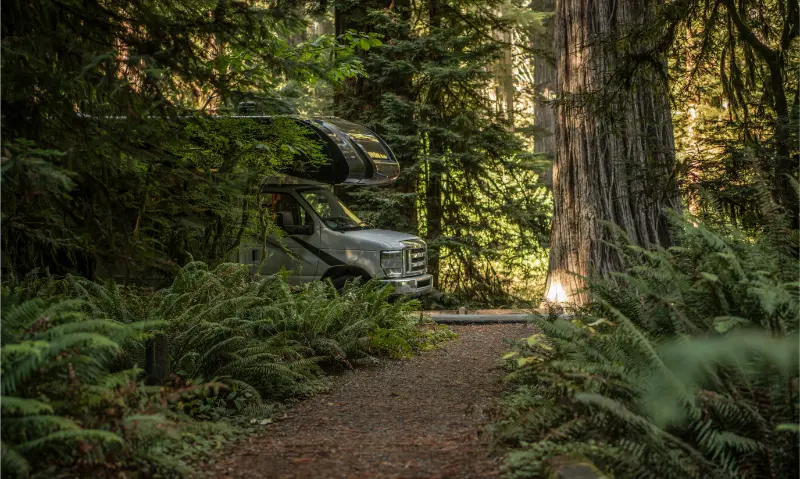
Choose trails based on surface, elevation and time rather than reputation alone. After heavy rain, roots and bridges can be slippery or damaged, so current conditions matter.
Redwoods with children
The parks are excellent for families because many forest experiences begin close to the road. Children can explore fallen logs, ferns and enormous trunks without a difficult climb. The main family challenges are wet clothing, muddy shoes, long car transfers and limited services near some trailheads.
Carry spare socks and a change of clothes if Fern Canyon is part of the plan. The trail often involves walking through or beside water. Families who want a simpler day can choose a dry grove walk and a beach instead.
See our California with kids guide for ways to combine the redwoods with the rest of the state.
Older travelers and limited mobility
You do not need a strenuous hike to stand among giant redwoods. Several areas have short approaches and scenic roads, although surfaces can be uneven and damp. Travelers with mobility limitations should check the current accessibility information for the specific grove they plan to visit because trail conditions and parking arrangements vary.
Build in warm indoor breaks, especially on wet days. A slower itinerary often makes the forest more enjoyable because you can spend time in one grove instead of repeatedly getting in and out of the car.
Photography and fog
Fog is not automatically bad weather in the redwoods. Soft, diffused light can make the forest beautiful and reduce harsh contrast. Coastal viewpoints are more dependent on visibility, so use clear periods for the ocean and cloudy periods for the trees.
Protect cameras and phones from moisture. Fine mist beneath the canopy can soak equipment gradually even when it never feels like heavy rain.
How to combine the redwoods with a California road trip
The redwoods work naturally with the Oregon coast, southern Oregon or a dedicated Northern California itinerary. They are much farther from San Francisco than many first-time visitors expect, so a same-day out-and-back from the city is not a sensible plan.
If your main trip is the classic San Francisco–Yosemite–Los Angeles route, the far north should usually be a separate extension. Compare distances using our California travel guide for first-time visitors.
What to check before departure
Review current road and trail conditions, Fern Canyon requirements if relevant, weather, campground status and the operating hours of visitor centers. The park publishes a current visitor guide and alerts at the official Redwood conditions page.
Download maps because service can be inconsistent. Bring water, snacks, rain layers and footwear that can handle mud.
Fern Canyon or Tall Trees Grove?
Both are famous, but they solve different travel goals. Fern Canyon is a short, visually dramatic walk through fern-covered walls and shallow water, with a seasonal vehicle-reservation system for its road access. Tall Trees Grove is a more committing hike and requires a free reservation for the limited trailhead parking area.
For a first two-day visit, do not assume you need both. Families or travelers who want a shorter novelty experience may prefer Fern Canyon. Strong hikers who want a longer forest-focused outing may prefer Tall Trees. Choosing one protects enough time for Stout Grove, Prairie Creek and the coast.
Final advice
The redwoods are not a place to rush. Choose fewer groves, walk slowly and let the forest repeat itself. After an hour beneath trees that have been standing for centuries, the exact number of trail names you collected stops mattering. That is the experience worth planning for.