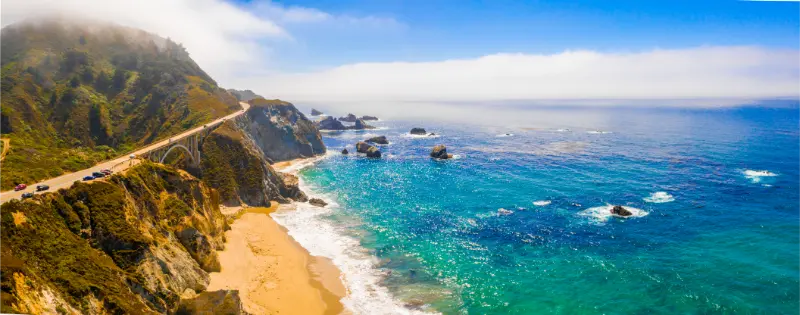
Highway 1 is one of the most famous drives in California, but it is also one of the easiest to plan badly. The problem is not finding beautiful stops. The problem is choosing too many of them, underestimating slow coastal roads and building a schedule that collapses when traffic, fog, road works or a closure appears.
The best Highway 1 trip is not measured by how many viewpoints you photograph. It is measured by whether you still have time to walk on a beach, sit over lunch, explore a town and arrive before dark without feeling that the next hotel is chasing you.
First: Highway 1 is not a single fixed experience
California State Route 1 runs through very different landscapes, from Southern California beach communities to Big Sur and the northern coast. Many travelers use “Highway 1 road trip” to mean the Central Coast section between the Los Angeles area and Monterey/San Francisco. That is the focus here.
Road conditions can change. Big Sur has a history of landslides, repairs, wildfire impacts and temporary traffic controls. Before and during the trip, check Caltrans QuickMap and the California Highway Information page. Build your hotel plan so an inland detour does not destroy the entire holiday.
How many days do you need?
| Time available | What works well | What feels rushed |
|---|---|---|
| 1 day | One regional section such as Monterey–Big Sur–Monterey or Santa Barbara–Malibu | San Francisco to Los Angeles with many scenic stops |
| 2 days | Monterey/Carmel to Santa Barbara with one overnight, if the route is open | Trying to add Hearst Castle, long hikes and beach time |
| 3 days | Comfortable Central Coast route with two overnight bases | Stopping at every viewpoint |
| 4–5 days | A genuinely relaxed coast trip with towns, walks and weather flexibility | Very little—this is the sweet spot for slow travel |
For most first-time visitors, three nights between the Bay Area and Los Angeles is a much better experience than one. Monterey/Carmel, Cambria/San Simeon and Santa Barbara are natural anchor points, though the exact choices depend on road status and interests.
Northbound or southbound?
Both directions are beautiful. Southbound has the practical advantage that many ocean viewpoints are on the right-hand side of the road, which can make some pullouts easier to use. Northbound may fit flights and the rest of your itinerary better. Do not redesign an entire California trip only for the side of the road; overall routing matters more.
A comfortable 3-day Central Coast plan
Day 1: Monterey and Carmel, then Big Sur
Begin early on the Monterey Peninsula. Choose either a morning in Monterey or Carmel-by-the-Sea rather than trying to “finish” both before breakfast. Continue south toward Big Sur with a short list of priority stops.
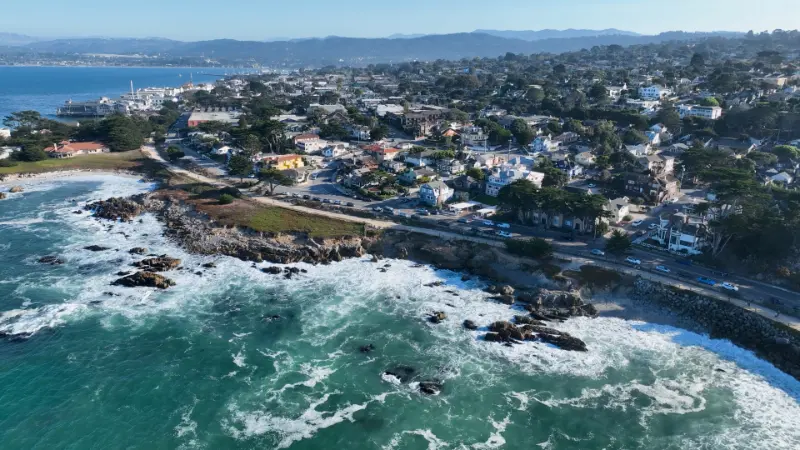
Bixby Creek Bridge is iconic, but the road itself provides many scenic moments. Pick one state-park walk that matches your group’s ability and one or two major viewpoints. Big Sur rewards time away from the car, yet parking at popular places can be limited.
If your overnight is around Big Sur, Cambria or San Simeon, aim to arrive before dark. Coastal roads are far more enjoyable when you are not watching the clock.
Day 2: San Simeon/Cambria to Santa Barbara
Use the morning for the San Simeon and Cambria area. Depending on interests, that may mean a beach walk, elephant-seal viewing from designated public areas, Hearst Castle with a reserved tour, or a quiet breakfast followed by an early start south.
Continue through the Central Coast with a stop around Morro Bay, San Luis Obispo or another town that fits your pace. One substantial stop is better than four drive-through stops. Sleep in Santa Barbara or nearby.
Day 3: Santa Barbara to Los Angeles
Spend the morning in Santa Barbara, then drive toward Los Angeles. Malibu can be a natural coastal transition, but urban traffic can turn the final stretch into a slow journey. Do not schedule a fixed-time attraction in central Los Angeles immediately after a coastal drive.
The Big Sur section: what deserves time
Big Sur is a landscape, not a single attraction. The best day combines viewpoints with one experience at walking speed. Depending on conditions and access, that could be a redwood walk, a coastal trail, a state park, a beach viewpoint or simply a long meal with an ocean view.
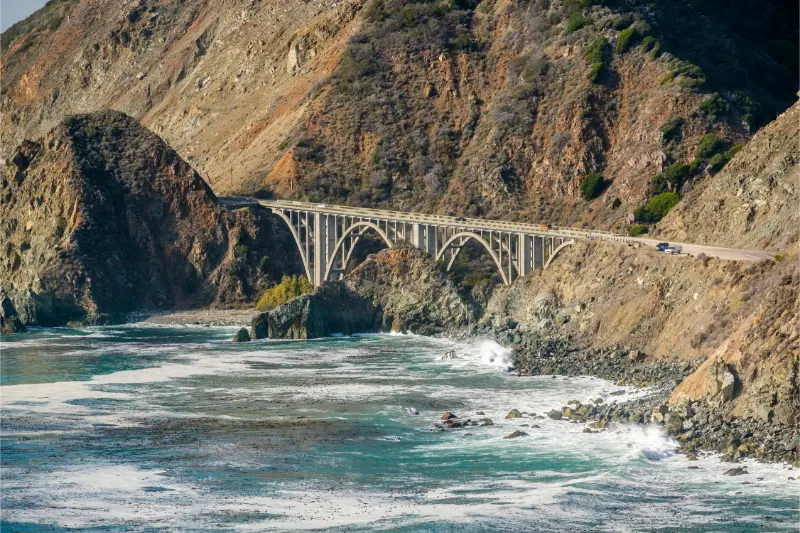
- Bixby Creek Bridge: famous and worth seeing, but usually a short stop rather than a half-day destination.
- Point Sur area: dramatic coastal scenery and historic interest; tours and access can be schedule-dependent.
- Pfeiffer Big Sur State Park: useful for redwood and river scenery in addition to the coastline.
- Julia Pfeiffer Burns State Park area: known for iconic coastal scenery, but trails and access can change; check park information before arrival.
- Ragged Point / southern Big Sur: a practical pause as the landscape begins to change toward San Simeon.
The point is not to include every name. Choose two or three priorities after checking what is actually open on the day.
Why you should never rely on an old Highway 1 itinerary
A blog post written two years earlier may describe a road section that is under repair today. A map app may reroute you without explaining whether a scenic section is accessible as an out-and-back. Seasonal fires, storms and construction can create short-term restrictions.
Use live official information. In 2026, Caltrans has continued to publish construction controls and temporary closures on sections of Highway 1. That is normal planning information, not a reason to abandon the trip. The smart response is to know the inland alternative—usually U.S. 101 for the Central Coast—and decide which coastal sections can still be visited separately.
Where to sleep
Monterey or Carmel
Monterey is practical for the aquarium, waterfront and a broader range of accommodation. Carmel feels more village-like and is convenient for a slower, romantic coastal stay. Either works as a northern base.
Big Sur
Staying in Big Sur can be special because you experience the coast after day visitors leave, but lodging is limited and often expensive. Book early and understand exactly where the property sits along the highway.
Cambria or San Simeon
These are practical halfway points that keep the scenic drive from becoming a marathon. Cambria offers a walkable small-town atmosphere; San Simeon is convenient for Hearst Castle and nearby coast.
Santa Barbara
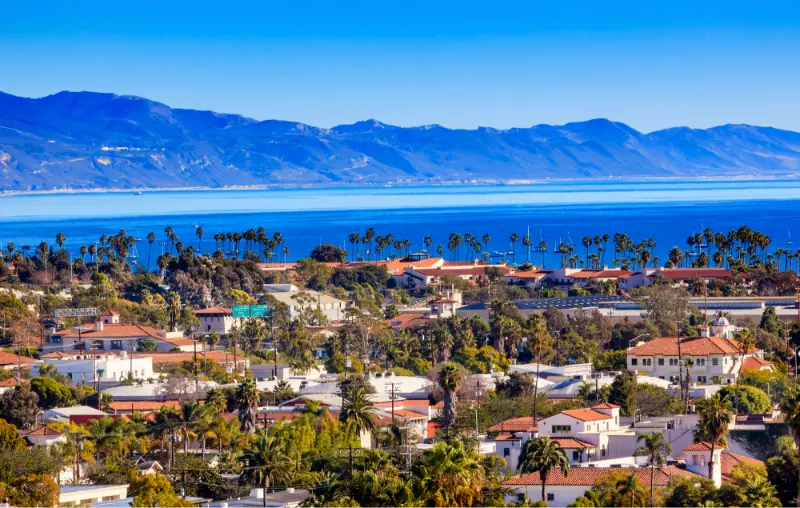
Santa Barbara is worth more than a bed between drives. It has a pleasant waterfront, walkable central area, Spanish-influenced architecture and enough restaurants to justify a full evening and morning.
Driving and parking: the practical details
- Fill the tank before long rural sections rather than waiting for the warning light.
- Download offline maps because mobile coverage can be weak.
- Use official pullouts and parking areas; do not stop where the shoulder is unsafe.
- Never leave luggage visible in a parked vehicle.
- Allow more time than your navigation app predicts if you intend to stop for photos.
- Avoid driving unfamiliar cliffside sections after dark when possible.
Highway 1 with children
Children often enjoy this road trip more when the day has a rhythm: viewpoint, short walk, snack, beach, lunch, then one longer drive. A five-hour sequence of scenic pullouts can feel repetitive from the back seat. Build in places where children can move safely rather than expecting the scenery alone to entertain them.
If motion sickness is an issue, winding sections around Big Sur require extra breaks. Keep meals light before the curviest stretches and do not pack the schedule so tightly that stopping becomes stressful.
Highway 1 for older travelers or limited mobility
The coast can be enjoyed with very little strenuous walking. Many major viewpoints are close to parking, and towns such as Monterey, Carmel and Santa Barbara offer lower-intensity experiences. However, cliffs, uneven surfaces and beach access vary dramatically.
California State Parks publishes accessible-feature information for many parks, including accessible trails and beach/shore access in selected locations. Check the exact park page rather than assuming every overlook is step-free.
What to do if Highway 1 is closed
A closure does not mean the entire California coast is closed. Think in sections. You may still be able to drive Monterey to northern Big Sur and return, then use U.S. 101 to travel south. Or you may enjoy the Santa Barbara–Malibu coast separately. The inland route is faster and opens different stops such as wine-country towns and inland missions.
This is why non-refundable same-day plans on both sides of Big Sur are risky. Give yourself one overnight buffer or choose bookings that can handle a route change.
Common mistakes
- Driving San Francisco to Los Angeles in one scenic day. It is technically possible via faster inland roads, but it defeats the purpose of Highway 1.
- Stopping at every viewpoint. After the sixth stop, the experience starts to blur. Choose quality over quantity.
- Booking a night too far away. “Only 80 miles” can be a long distance on winding coastal roads.
- Ignoring fog and daylight. Coastal views can disappear in fog; darkness can make the road tiring.
- Not checking Caltrans on the morning of travel. Conditions can change after you made the itinerary.
A better way to think about the road
Highway 1 is not a checklist of famous photographs. It is a sequence of changing landscapes—harbor towns, cliffs, redwoods, beaches, ranchland and Spanish-influenced cities. Give the route enough time to change character. If you arrive in Los Angeles with hundreds of photos but no memory of where you actually stopped, you drove too fast.
For a larger first trip, combine this route with the 10-day California itinerary. If the coast is your main reason for visiting, do the opposite: cut one inland destination and give Highway 1 four or five days. The road deserves it.