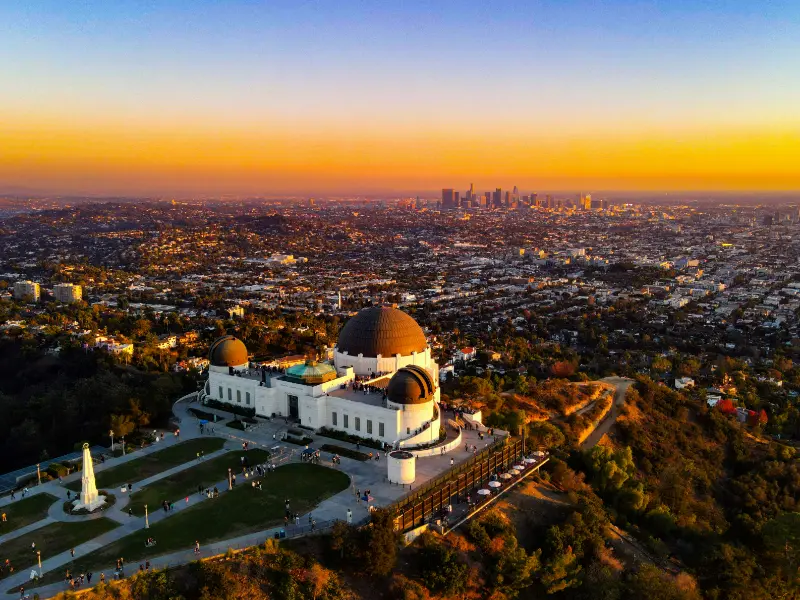
Griffith Observatory is one of Los Angeles’ most famous viewpoints, but the building is only one piece of the experience. The real decision is how you want to use Griffith Park: an observatory visit, a hike, sunset views, astronomy programs, or a combination. Trying to do all of them at the most popular time—late afternoon into sunset—creates the parking and traffic frustration that gives the area a difficult reputation.
A better first visit starts by choosing whether the observatory interior or the outdoor park is your main priority. If the building matters most, arrive with enough time to see exhibits before sunset. If views and hiking matter most, build the route around daylight and treat the observatory as one stop rather than the entire plan.
Quick planning snapshot
| Decision | Practical answer |
|---|---|
| How much time? | 3–4 hours for observatory plus viewpoints; half a day if you add a meaningful hike. |
| Best for | First-time Los Angeles visitors, families, city views, astronomy and sunset. |
| Biggest challenge | Parking and traffic around sunset and popular weekend evenings. |
| Best strategy | Use transit/shuttle options or arrive well before the peak if sunset is important. |
Why Griffith works even if you are not an astronomy fan
The observatory offers one of the clearest geographic introductions to Los Angeles. From the terraces you can understand how the city spreads across basins and hills, see downtown in one direction and the Hollywood Sign in another, and appreciate why travel times across LA are so unpredictable.
Inside, the exhibits make science approachable without requiring a full museum day. Families can spend more time with interactive displays, while adults can focus on the architecture, historic instruments and planetarium if tickets and timing fit. The combination of free public space and ticketed programming lets you control the budget.
A realistic first-visit strategy
Option 1: afternoon exhibits, then sunset
Arrive several hours before sunset, solve parking or transit early and see the interior while daylight is still strong outside. About an hour before sunset, move to the terraces or a nearby viewpoint. This avoids spending the prime light standing in a gallery queue.
Option 2: morning or midday for a calmer visit
If sunset is not essential, visiting earlier can be dramatically easier. You may get clearer movement through exhibits and less pressure to hold a viewpoint. The light can still be excellent, especially after morning haze clears.
Add a hike only if your group wants the exercise
Griffith Park has many trails, but a hike should be planned for distance, heat and daylight. Do not choose a route solely because it appears close to the Hollywood Sign on a map. Bring water and avoid turning a sightseeing stop into an unplanned strenuous outing.
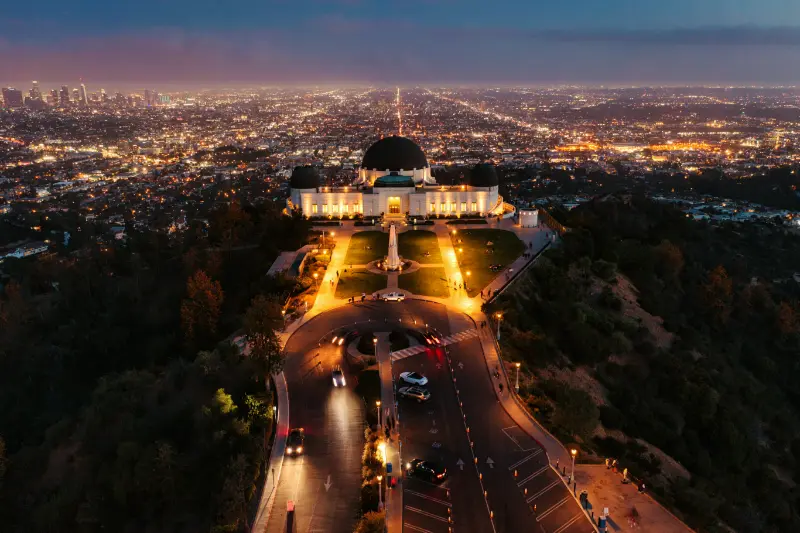
Night viewing: check current program details
Evening astronomy can be memorable, but telescopes, weather, lines and special programs vary. Treat public telescope viewing as weather-dependent and verify current hours before arranging the rest of the day around it.
What is actually worth prioritizing
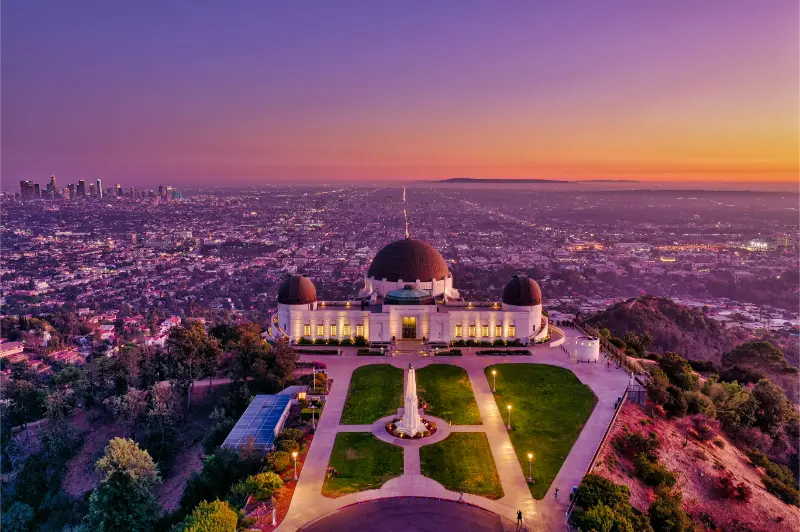
The terraces and city geography
Spend enough time outside to orient yourself. The view is not only scenic; it helps make later drives across Los Angeles more understandable.
The core observatory exhibits
You do not need to read every panel. Focus on the major halls and the pieces that interest your group, then move back outside before museum fatigue sets in.
Planetarium only when the schedule fits
The Samuel Oschin Planetarium can add depth, but showtimes are fixed. Buy or plan according to current procedures rather than allowing one show to fragment the entire visit.
A short walk instead of an ambitious hike for mixed groups
If your party includes young children, older travelers or anyone not prepared for heat and elevation, a short viewpoint walk often delivers the same sense of place with far less fatigue.
Getting there, parking and moving around
Driving to the observatory is possible, but parking availability and pricing depend on location and time, and peak evening demand can be intense. Do not expect to arrive shortly before sunset and find a convenient space. If you drive, build in walking time from the parking area.
Public transit and the DASH Observatory route can be much easier on crowded days. Check the current schedule because service hours can change. Rideshare is also possible, but congestion near closing or after sunset can make pickup slower than expected.
Families, older travelers and accessibility
The observatory itself is designed for broad public access, but the hills around it are a separate challenge. Visitors with limited mobility should prioritize direct access to the building rather than assuming nearby scenic walks are easy because they are short.
Families should resist the temptation to combine a long hike, museum exhibits, planetarium and late sunset in one continuous block. Younger children usually enjoy the experience more when one element is intentionally omitted.
Best time, weather and pacing
Heat is the main outdoor planning issue. Los Angeles can be much hotter on exposed trails than at the coast, and shade is limited in many parts of Griffith Park. Hike earlier in the day during warm periods and carry more water than a city outing normally requires.
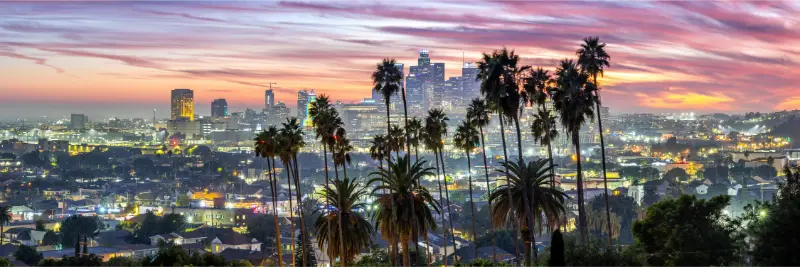
Visibility varies with marine layer, haze and weather. A hazy day can still be enjoyable, but if skyline photography is your main purpose, check conditions before committing to a long cross-city drive.
Food, budget and practical trade-offs
General admission to the observatory building has traditionally been free, while certain shows and parking can cost money. Verify the current structure before the visit. This makes Griffith one of the better-value major Los Angeles experiences if you plan transportation well.
Do not pay a premium for convenience you do not need. If your schedule is flexible, an off-peak visit can reduce both parking stress and the temptation to buy an expensive last-minute transport solution.
Common mistakes to avoid
- Arriving minutes before sunset and expecting easy parking.
- Adding a long hike without checking heat, distance and daylight.
- Spending the whole visit indoors and missing the geographic value of the terraces.
- Assuming telescope viewing is guaranteed regardless of weather.
- Planning a planetarium show without checking current ticket procedures.
- Trying to combine Griffith with distant LA attractions at fixed times.
How to combine this with a wider California trip
Griffith fits best into a geographically sensible Los Angeles first-time guide day. It can pair with Hollywood or Los Feliz more naturally than with the coast. Use Santa Monica guide or Malibu guide on a separate day, and plan Universal Studios Hollywood guide separately if you want a full theme-park day.
Useful California for You guides
Read Los Angeles first-time guide, Universal Studios Hollywood guide, Santa Monica guide and Malibu guide.
Official planning resources
Check the official sources close to your travel date because hours, access, parking, programs and temporary restrictions can change.
Final advice
Griffith Observatory is easiest to love when you do not make sunset the only measure of success. A calmer daytime visit with space to explore can be more satisfying than fighting traffic for one crowded photo.
Choose one indoor priority, one outdoor priority and a transportation plan that matches the time of day. Los Angeles feels much simpler from there.
How to make the plan work in real life
Before visiting Griffith Observatory and Griffith Park, create a three-level priority list: one experience that would make the day worthwhile, two experiences you strongly prefer, and several optional items. This keeps an ordinary delay from turning into a cascade of rushed decisions. California travel time is often hidden in parking searches, security, walks from garages, traffic, restroom stops and the simple fact that people move more slowly on vacation than a map suggests.
Save the essential information offline: the official reservation or ticket, the exact first parking or transit stop, the address of the next destination and any current closure notice. Families can add a meeting point and one contact number in case the group separates. This takes a few minutes and is more useful than carrying dozens of recommendations you cannot locate when everyone is tired.
What to reserve and what to leave flexible
Reserve only what can sell out or determines the rest of the day: timed admission, limited tours, ferries, a genuinely important restaurant or a scarce parking product. Leave ordinary meals, viewpoints, shopping and minor stops flexible. Too many reservations convert a vacation into a chain of deadlines and make normal traffic feel like failure.
When choosing accommodation, compare the total cost of location. A cheaper room can become more expensive after parking, rideshares, fuel and an extra hour of commuting. A well-located hotel can also create a quieter morning, which is often more valuable than one additional attraction squeezed into the schedule.
Comfort and safety checklist
- Check official hours, parking and temporary restrictions the evening before and again on the morning of travel.
- Carry water and sun protection even when much of the plan is indoors.
- Keep a light layer available for coastal wind, air-conditioning or evening temperature drops.
- Do not leave visible luggage, cameras or electronics in a parked vehicle.
- Decide which optional stop will be dropped first if the day runs late.
- Give children and older travelers a seated break before fatigue becomes the main event.
These details are not glamorous, but they are the difference between an itinerary that looks efficient on a screen and one that works for real people. The goal is not maximum attraction density. It is a day that remains enjoyable when parking takes longer, weather changes or someone wants to stay somewhere for an extra half hour.