
Los Angeles can be brilliant with children, but it punishes families who plan it like a compact European city. The attractions are spread across a huge metropolitan area, traffic can change the length of a day and the beach, Hollywood and theme parks are not all in the same neighborhood. The solution is simple: build each day around one geographic cluster and stop treating every famous place as mandatory.
This four-day plan is designed for a first family visit. It balances outdoor time, one major attraction, beach time and flexible activities that work across different ages. You can adapt it for toddlers, school-age children or teenagers by changing the intensity rather than rebuilding the whole route.
Before booking accommodation, read our where to stay in Los Angeles guide. With children, hotel location matters even more because every unnecessary hour in traffic is an hour that could have been a swim, nap or relaxed meal.
Where should families stay?
Santa Monica is one of the easiest family bases if the beach is important. You can walk to food, the pier and the ocean, and the first or last day can stay low-stress. The compromise is longer trips to Universal, Hollywood and eastern parts of the city.
West Hollywood or Beverly Grove can be more balanced for families dividing time between museums, Hollywood, Griffith and the west side. Universal City is logical if Universal Studios is the main reason for the trip. There is no universally best base—only the base that removes the hardest journeys from your own schedule.
Day 1: Santa Monica and an easy beach afternoon
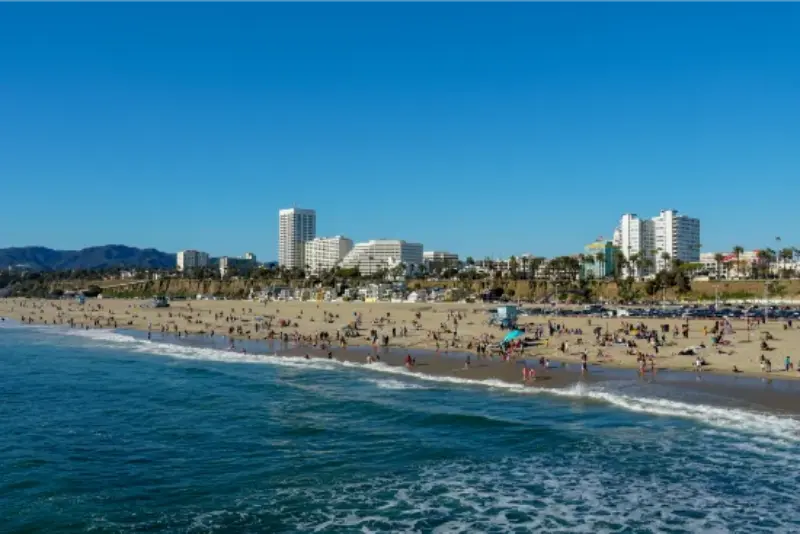
Use the first day to recover from travel rather than starting with a complicated attraction. Santa Monica works because the family can walk, snack, sit on the beach and change plans easily. Visit the pier if the children are interested, but do not assume you need several hours there. The ocean and beach path are often the bigger attraction.
If energy remains, continue toward Venice Beach in daylight and walk a limited section of the boardwalk, then Abbot Kinney for food. Families with younger children may prefer to stay entirely in Santa Monica and protect bedtime. Our Santa Monica guide explains the area in more detail.
Day 2: Griffith Park plus one central Los Angeles activity
Griffith Park gives children space after a city day. Depending on age and interest, combine a short walk, viewpoints and Griffith Observatory. Do not attempt a long hike simply because the Hollywood Sign looks close on a map. Heat, elevation and parking can make an apparently simple route much harder than expected.
The observatory itself can interest school-age children and teenagers, while the setting works for the whole family. Check the official schedule before the visit because building hours, programs and parking arrangements can vary. Our Griffith Observatory guide covers arrival strategy and realistic timing.
Afterward, choose one additional activity rather than crossing the city twice. Families interested in movies may explore a manageable part of Hollywood. Art-focused families can choose a museum, but remember that a museum adults love is not automatically a full-day children’s activity.
Day 3: Universal Studios Hollywood or a museum-and-neighborhood day
Universal Studios Hollywood is a strong full-day choice for families with children who enjoy films, characters and rides. Height requirements matter, so check the current official attraction information before promising a specific ride. The Studio Tour is included with admission and is one of the experiences that separates Universal from a conventional amusement park.
Use our Universal Studios Hollywood guide to decide whether the park matches your children’s ages. For preschoolers, Disneyland may offer more ride options; for some older children and teenagers, Universal can be the stronger fit.
If your family is not interested in a theme park, make this a flexible culture day. The Getty Center is free to enter, though parking requires planning, and the architecture, gardens and views can be as engaging as the galleries. Keep the visit short enough that children leave before they are exhausted.
Day 4: choose a west-side or beach day, not a city-wide finale
On the final day, resist the temptation to catch everything you missed. Return to the coast, visit a museum that genuinely interests the family or choose a neighborhood near your hotel. A relaxed final day produces a much better departure than a cross-city dash followed by airport traffic.
Malibu can work for families with a car, but beaches differ in access, surf and facilities. Our Malibu guide helps you choose stops instead of driving aimlessly along PCH. For younger children, a familiar Santa Monica return may be easier.
Disneyland: should you include it in a Los Angeles family trip?
Disneyland Resort is in Anaheim, not central Los Angeles. It can absolutely be part of the same vacation, but families should treat it as a separate geographic cluster. If you plan two Disney days, moving to an Anaheim hotel is often more comfortable than driving back to Los Angeles late at night and returning early the next morning.

See the Disneyland first-time guide and the Disneyland vs Universal comparison before buying tickets to both. The best family trip does not need every theme park.
Los Angeles with toddlers
For toddlers, the schedule should include a reliable midday reset. That may be a hotel nap, stroller nap or quiet lunch depending on the child. Avoid a plan that requires a 45-minute drive every time someone needs rest.
Choose one “adult priority” and one “child priority” per day. A garden, beach or playground can be more valuable than another landmark. If renting a car, follow current California child-seat law and use a seat appropriate to the child’s age, height, weight and manufacturer limits. The California Highway Patrol’s child safety seat page is the right source for current rules.
Los Angeles with school-age children
This is often the easiest age because children can walk farther but still enjoy interactive attractions. Let them choose one attraction from a short list. The science, natural-history and automotive museums around Exposition Park can work well if the family is genuinely interested, but do not stack several large museums into one day.
School-age children also benefit from context. Explain what they are about to see: a working studio, a famous observatory, a Pacific beach or the location of a movie scene. Places become more memorable when they are connected to a story.
Los Angeles with teenagers
Teenagers usually appreciate more independence and fewer forced photo stops. Give them some control over food, shopping or an afternoon activity. Venice, Hollywood, Universal, sports and music-related stops may appeal more than traditional sightseeing depending on interests.
Do not confuse being older with unlimited energy. A teenager who stayed up late and walked 20,000 steps at a theme park may not be excited about a sunrise hike the next morning.

Do families need a car?
A car is useful for many family itineraries, especially when carrying child gear or combining beaches with inland attractions. But it is not automatically required every day. In a well-chosen neighborhood, walking plus Metro and rideshare can work for specific days.
Parking costs should be included in the accommodation budget. A cheaper hotel with expensive parking and long daily drives may cost more overall than a better-located property.
Traffic strategy that actually works
Do not build the day around an optimistic drive-time estimate viewed late at night. Check travel times for the hour you expect to move, leave buffers for parking and group attractions geographically. If the family is staying in Santa Monica, a Hollywood morning followed by a downtown afternoon and Malibu sunset is not an efficient “loop.” It is three different directions.
When a reservation has a fixed entry time, make it the first priority of that half-day. Everything else should be flexible around it.
Food, restrooms and small emergencies
Carry water and a simple snack even in the city. Children become less flexible when hungry, and Los Angeles traffic can turn a 15-minute plan into an hour. Keep sunscreen, hats and a light layer in the day bag; the coast can feel cool even when inland temperatures are warm.
Know where the next restroom is before a long drive. Large museums, shopping centers and theme parks are easier than scenic roadside stops, which is another reason not to overpack a coastal driving day.
A simple daily rhythm
| Time | Family strategy |
|---|---|
| Morning | Main attraction while energy and attention are highest |
| Lunch | Real meal and reset, not food eaten in the car |
| Afternoon | Beach, park, pool or flexible neighborhood activity |
| Evening | Easy dinner near hotel or one planned show/event |
Final advice
Los Angeles with kids becomes much easier when you stop asking how many sights fit into four days and start asking how many good family days you can create. One major attraction, one flexible activity and enough margin for traffic is usually a winning formula.
Choose the right neighborhood, group destinations geographically and keep the beach or a park available as a pressure-release valve. Children do not remember whether you completed a checklist. They remember the day that felt fun.