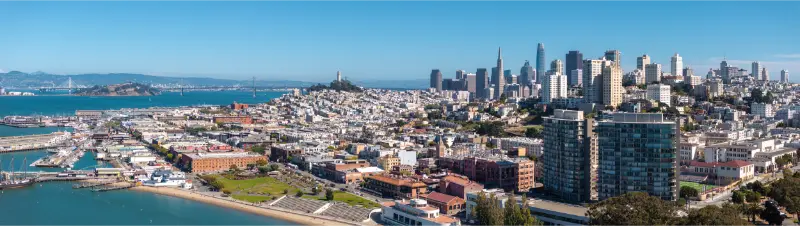
The Mission District is one of the best San Francisco neighborhoods for travelers who want the city to feel lived-in rather than staged around a landmark. It combines Latino heritage, murals, old Mission history, bakeries, taquerias, independent shops and one of the city’s most popular parks. The challenge is that the neighborhood is large enough to feel scattered if you arrive without a route.
A good first visit is a half-day walk connecting the historic Mission area, mural alleys, a food stop and Dolores Park. For current neighborhood inspiration, San Francisco Travel’s Mission District overview is a useful starting point.
Where to start
Start near Mission Dolores or around 16th Street depending on transit and your interests. Beginning near the historic mission gives the day a clear chronological anchor; beginning near 16th Street puts you quickly into the neighborhood’s food and street-life rhythm.
BART is usually the easiest public-transport approach from Downtown or the East Bay. The 16th Street and 24th Street stations make it possible to walk through the district in one direction rather than repeatedly backtracking.
Mission Dolores and early California history
Mission San Francisco de Asís, commonly called Mission Dolores, predates much of modern San Francisco. Even travelers who are not visiting all the California missions can benefit from a short stop because it explains the neighborhood name and the layered Indigenous, Spanish, Mexican and American history behind the city.
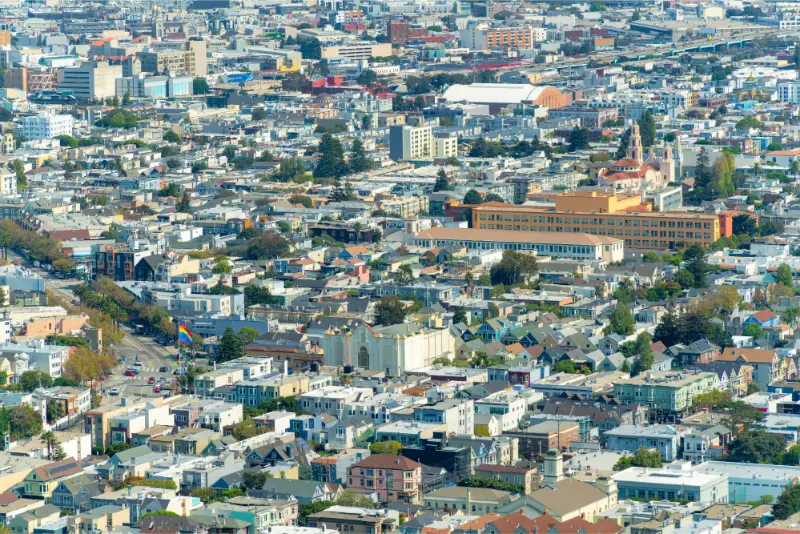
Approach mission history with context rather than romance. California’s mission system is tied to coercion, disease and the disruption of Native communities as well as architecture and settlement history. A thoughtful visit recognizes those realities.
Murals: Balmy Alley and beyond
The Mission’s murals are not a single “museum.” They appear on alleys, businesses and walls throughout the neighborhood, often reflecting immigration, politics, community identity and local history. Balmy Alley is one of the most concentrated places to begin.
Treat murals as community art, not a private photo set. Do not block residents’ doors, driveways or sidewalks, and remember that works can change over time. The evolving nature of the neighborhood is part of what makes repeat visits worthwhile.
Food is part of the itinerary
Plan to eat here. The neighborhood is famous for Mission-style burritos, but reducing the area to one dish misses bakeries, Salvadoran food, regional Mexican cooking, coffee, ice cream and newer restaurants. Choose one proper meal and one small snack rather than attempting a “food crawl” that leaves you too full to enjoy the walk.
Dolores Park
Dolores Park offers one of the easiest ways to pause after walking. On a clear day, upper sections provide city views while the open lawns make the neighborhood feel spacious. Weekends can be busy and social; weekday mornings feel completely different.
If your group includes children, a park break can reset the day before continuing. Older travelers may prefer sitting on a bench or café rather than climbing to the steepest viewpoints.
How long should you allow?
Three to four hours is ideal for a first visit with one meal. Two hours is enough for a focused walk from a BART station to murals and Dolores Park. A full day only makes sense if you enjoy slow neighborhood travel, shopping and multiple food stops.
Safety and comfort
The Mission is an active urban neighborhood, not a theme-park district. Conditions can vary block by block and over time. Use ordinary city awareness, keep phones and bags secure, avoid leaving valuables visible in a parked car and follow current local advice if arriving late at night.
Daytime walking around the main commercial corridors and popular visitor areas is common. If anyone in your group feels uncomfortable, use transit or rideshare rather than forcing a long walk for the sake of an itinerary.
Families
Families can focus on murals, a casual meal and Dolores Park rather than a long history-heavy sequence. Give children a simple scavenger hunt—animals in murals, colors, symbols—without turning local art into a game that ignores its meaning.
Older travelers and mobility
The neighborhood includes flatter corridors but also slopes toward Dolores Park. Use BART or buses to reduce distance and choose a café break. San Francisco’s hills are an energy-management issue as much as a mobility issue, and a shorter route can make the visit far more enjoyable.
How to combine it with other San Francisco areas
The Mission pairs naturally with the Castro or Noe Valley because the distances are manageable. It does not need to be combined with Fisherman’s Wharf and the Golden Gate Bridge in the same half-day. Our San Francisco first-time guide explains how to group neighborhoods geographically.
For a contrasting neighborhood day, use our Chinatown guide and North Beach guide on another day.
A realistic half-day route
Start: Mission Dolores and the historic core. Then: walk toward mural areas. Lunch: choose one place you actually want to eat, not simply the longest queue. After lunch: continue toward 24th Street or return toward Dolores Park depending on your direction. Finish: BART or rideshare from the nearest convenient station.
Common mistakes
- Treating the Mission only as a burrito stop.
- Driving and searching for parking between attractions that are easier on foot.
- Ignoring the history and meaning of community murals.
- Walking farther than your group enjoys simply to complete a route.
- Trying to combine the Mission with every major waterfront attraction in one day.
Who will enjoy the Mission most?
Travelers interested in neighborhoods, food, culture and urban walking should make time for it. Visitors with only one day in San Francisco may reasonably prioritize the Golden Gate Bridge and waterfront instead. The Mission becomes especially valuable on a second or third day, when you are ready to experience the city beyond its most famous postcard views.
A few final planning notes
California trips are easier when you leave a little slack in the day. Traffic, parking, weather, timed-entry systems and simple travel fatigue can all change the pace. Build the day around one or two priorities, keep a backup option nearby and check the official site again shortly before you go. That approach is especially useful for families, older travelers and anyone who prefers a calmer itinerary rather than a checklist.
For accommodation, favor the base that reduces your hardest travel day rather than the one that looks best on a map. For transportation, compare the cost of parking and rideshare with the value of having a car available. If you are combining this stop with a longer California road trip, avoid changing hotels for a single attraction unless the transfer clearly saves time the following morning.
Finally, keep seasonal conditions in mind. Coastal fog, desert heat, mountain snow and wildfire smoke can affect completely different parts of the state on the same day. A good California itinerary is flexible enough to absorb those differences without ruining the trip. The articles linked above can help you build alternatives around the same region.
How to fit this stop into a larger California trip
The most efficient way to use this experience is to group it with places in the same part of the state. California distances are deceptive: two attractions can both be described as being in Los Angeles, San Francisco or a national park region and still require a meaningful transfer. Before adding another stop, compare real drive or transit time at the hour you expect to travel, not only straight-line distance. A good day normally has one major anchor, one secondary activity and enough unstructured time for meals, parking and delays.
If this is your first California trip, protect the places you care about most by putting them earlier in the day or earlier in the itinerary. Weather, wildfire smoke, road work, timed-entry systems and sold-out parking can all force changes. A flexible backup nearby is more useful than an ambitious list on the opposite side of the city or region. Families and multigenerational groups should also plan around the slowest realistic pace in the group, not the fastest person.
Budget and booking strategy
The headline ticket price is only one part of the cost. Parking, fuel, rideshare, food, special exhibits, lockers and reservation fees can matter just as much. Before booking, compare the total day cost and decide which extras genuinely improve the visit. Free attractions can become expensive when reached by repeated rideshare trips, while a paid attraction near your hotel may be the better value because it saves time and transportation.
Book only the elements that are capacity-limited or difficult to replace, and keep the rest of the day flexible. If a ticket has a fixed entry time, schedule a generous arrival buffer. If no reservation is required, early morning is often the easiest option for parking and crowds. Always use the official website for the final check because operating calendars, temporary closures and special-event rules can change after an article is published.
A slower alternative
Not every traveler wants a full sightseeing schedule. A slower version can be better: choose the single experience that matters most, add a relaxed meal nearby and leave the rest of the day open. This works especially well for older travelers, parents with small children and anyone recovering from a long flight or several road-trip days. California rewards repeat visits, so there is no advantage in exhausting yourself simply to say you saw one more attraction.