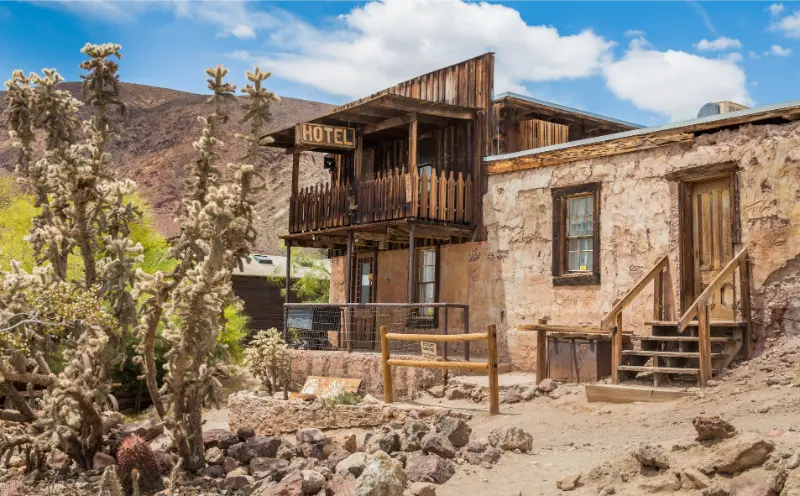
Calico is one of those California stops that can be either delightful or disappointing depending on expectation. The settlement began as an 1880s silver-mining town, declined after silver prices fell, and was later restored by Walter Knott. San Bernardino County now operates it as a regional park. That means you are visiting a mixture of historic setting, reconstructed Old West atmosphere, shops and paid attractions.
The official San Bernardino County Parks page currently lists regular hours of 9 a.m. to 5 p.m. and notes that only a handful of original structures remain. I think that transparency is important: Calico is worth visiting when you enjoy living-history-style places, children’s activities or Route 66/Mojave road trips. It is not the best choice if you want an abandoned town left exactly as miners knew it.
Its location near I-15 makes it easy to use as a structured break on a desert drive. The strongest visit combines one history-focused stop, one paid attraction if it interests you, and time to simply walk the hillside streets before heat or crowds build.
Quick planning summary
| Best for | Families, Route 66 road trips, Old West atmosphere and short desert stops |
|---|---|
| Time needed | 2–4 hours for most first visits |
| Current regular hours | Typically 9 a.m.–5 p.m.; verify event days before travel |
| Best season | October–April |
| Key planning rule | Treat Calico as a restored attraction with genuine mining history, not an untouched ghost town |
Who this trip is really for
This guide is designed for first-time visitors who want a practical version of Calico Ghost Town, not an itinerary that assumes unlimited time, perfect weather or endless energy. The strongest plan is the one that gives you a clear priority each day and leaves enough margin for parking, meals, road conditions and the unexpected. If your group includes children, older travelers or different interests, use the itinerary as a framework rather than a schedule you must obey minute by minute.
I also recommend deciding in advance what would make the trip feel successful. For some travelers that is one iconic view; for others it is history, food, a boat day, an accessible experience or simply a relaxed overnight. That decision prevents the common California mistake of driving farther just because another pin appears on the map.
A realistic itinerary
First hour — walk before you buy tickets to extras
Start with Main Street and the cemetery/history context. Read enough interpretation to understand the silver boom and decline. This gives the recreated storefronts meaning and helps children see more than costumes and souvenir shops.
Second hour — choose one attraction
Maggie Mine is the mine tour officially identified by the county as open for touring; other mine areas should not be approached. Train rides, gold panning and similar attractions are operated separately and can cost extra. Pick what fits your group instead of purchasing everything automatically.
Final hour — viewpoints, food and a slow exit
The hillside position gives good desert views. Allow time for photos and a snack, then leave before fatigue turns the visit into souvenir-store wandering. If you are traveling farther through the Mojave, save energy for the road.
Getting there and getting around
Calico is beside I-15 near Yermo, northeast of Barstow, so the drive is straightforward compared with remote desert ruins. It is especially easy to add to Las Vegas–Los Angeles travel or a California Route 66 segment.
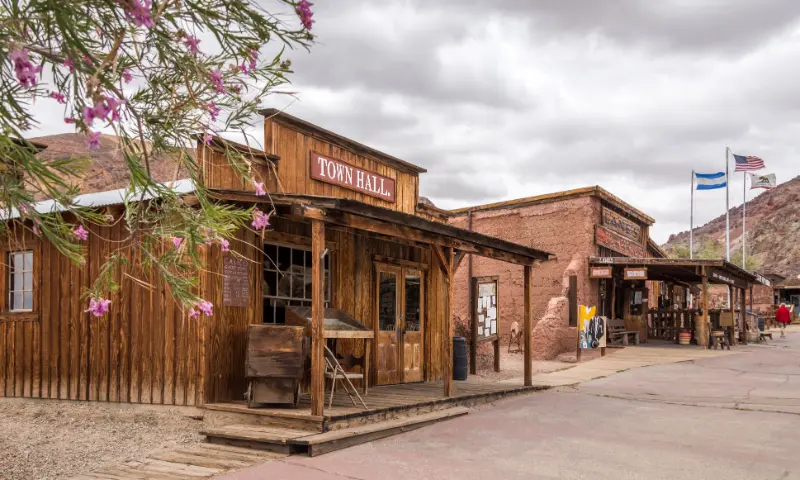
Because the park is compact, you do not need a complicated vehicle plan once parked. The bigger issue is weekend and event traffic. Special-event days can have different prices and longer hours, so confirm the calendar if your priority is a quiet historical visit.
Best time to visit
October through April is the comfortable window. Summer temperatures can turn exposed walking into the main challenge, and the historic-style streets offer less shade than a modern theme park. If visiting in hot weather, go at opening and leave before the hottest part of the day.
Calico’s Halloween and festival events can be fun, but they are a different product from a normal daytime visit. Decide whether you want the event atmosphere before you choose your date.
Where to stay
You do not need to stay overnight for Calico alone. Barstow is the practical hotel base; some visitors camp or use cabins at Calico itself. For a larger Mojave trip, lodging closer to Mojave National Preserve may make more sense.
If your route continues to Joshua Tree or Death Valley, do not choose accommodation based solely on map distance. Desert roads, park entrances and evening driving can make “nearby” destinations much farther in practice.
Families, seniors and accessibility
Calico is family-friendly because the story is visual and the optional train/mine/gold-panning attractions break up the walking. Young children may enjoy it more than a traditional history museum. Keep hands away from closed mine openings and follow barriers.
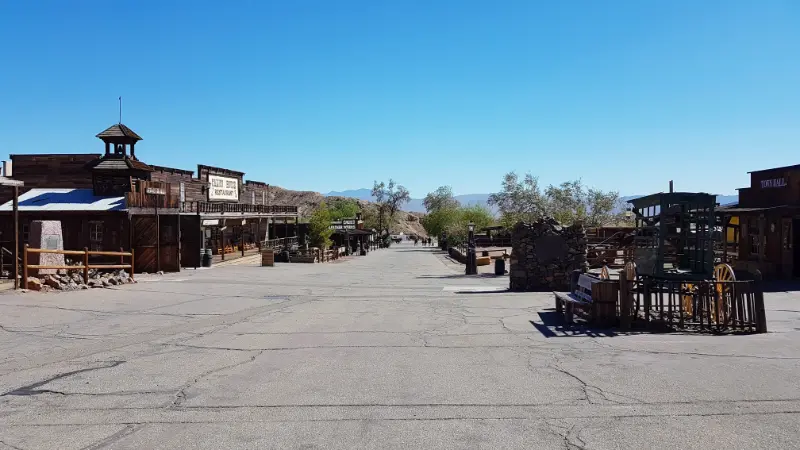
For older adults or travelers with limited mobility, expect slopes, uneven surfaces and outdoor exposure. The county park can advise on accessible facilities, but not every historic-feeling corner will be effortless. A shorter visit focused on Main Street can still work well.
How to think about the budget
Regular admission is modest compared with major California attractions, but add-ons can change the total. County Parks currently publishes separate prices for admission and notes that concession attractions cost extra. Check current admission prices rather than relying on an old blog.
If the goal is simply a road-trip break, set a fixed attraction budget in advance. Families often spend more on snacks, souvenirs and add-ons than on entry.
Mistakes I would avoid
- Expecting a perfectly preserved abandoned ghost town. Much of Calico was restored.
- Visiting at midday in extreme heat. Morning is far more comfortable.
- Entering closed mine areas. The county specifically warns that other mines are hazardous.
- Buying every add-on. One or two are enough for most groups.
- Skipping the history. Without context the town can feel like a themed shopping street.
- Forgetting special-event pricing. Festival weekends can operate differently from regular days.
One additional mistake is planning the day around the most optimistic drive time shown by a mapping app. California trips often involve parking searches, short walks, restroom stops, weather checks and slower scenic roads. A 30-minute buffer can be more valuable than another attraction on the list, especially when your next stop has fixed opening hours or when you are driving after sunset.
How to combine this with a larger California trip
Calico fits naturally into a California Route 66 road trip and can be paired with Mojave National Preserve on a longer desert itinerary. If your ultimate destination is Joshua Tree or Death Valley, keep Calico to a half day so it does not steal the best cooler hours from the national parks.
For families driving between Los Angeles and Las Vegas, it is one of the easiest “real stop” alternatives to another fuel-station break.
Practical planning notes before you leave
Check the official source for this trip shortly before departure: current visitor information. Opening hours, road access, parking, fire restrictions, shuttle schedules or facility conditions can change after an article is published. I prefer to keep the route flexible enough that one closure does not ruin the entire day.
Download the map or key directions before you leave reliable service, carry more water than you expect to need, and keep a light layer in the car even when the forecast looks warm. California’s coastal, desert, valley and mountain microclimates can make the temperature at your destination very different from the city where you started.
For a road trip, refuel before entering a sparsely serviced area and avoid arriving at an unfamiliar trailhead or rural lodging after dark. These are small decisions, but they are usually what separates a calm itinerary from one that feels rushed and fragile.
Frequently asked questions
Is Calico a real ghost town?
It began as a real 1880s mining town, but much of what visitors see was restored or reconstructed later. A small number of original buildings remain.
How long should I spend there?
Two to four hours is enough for most first-time visitors.
Is Calico good with children?
Yes, especially if your children enjoy trains, mines, gold panning and Old West settings.
Can I tour the mines?
County Parks identifies Maggie Mine as the mine available for touring. Closed mine areas are hazardous and should not be entered.
My final planning rule
Calico is worth the stop when you understand what it is: a restored historic attraction in the desert, not a frozen archaeological site. Go early, choose your extras selectively and use it as part of a larger Mojave story.
A simple decision framework for this trip
Before locking the itinerary, rank four things from most to least important: scenery, history or culture, food and comfort, and active outdoor time. Then protect the top two priorities. If scenery is first, schedule viewpoints for the best daylight and let a museum become optional. If comfort is first, choose the closest practical lodging and cut a long detour. If family time is first, reduce the number of transitions between car, parking area and attraction. This sounds simple, but it prevents a destination from becoming a collection of errands.
I would also create one Plan B that uses the same overnight base. Weather, smoke, road work, crowds or a closed facility should change the day, not force you to rebuild the entire trip. A good Plan B usually swaps an outdoor block for a town, museum, meal or shorter scenic drive. Keeping the same hotel avoids cancellation stress and lets you decide the night before or even that morning.
Finally, separate the things that require reservations from the things that do not. Reserve lodging, timed tours and limited-capacity transport first. Leave viewpoints, casual meals and flexible walks unbooked when possible. The resulting day has structure where you need it and freedom where you benefit from it.