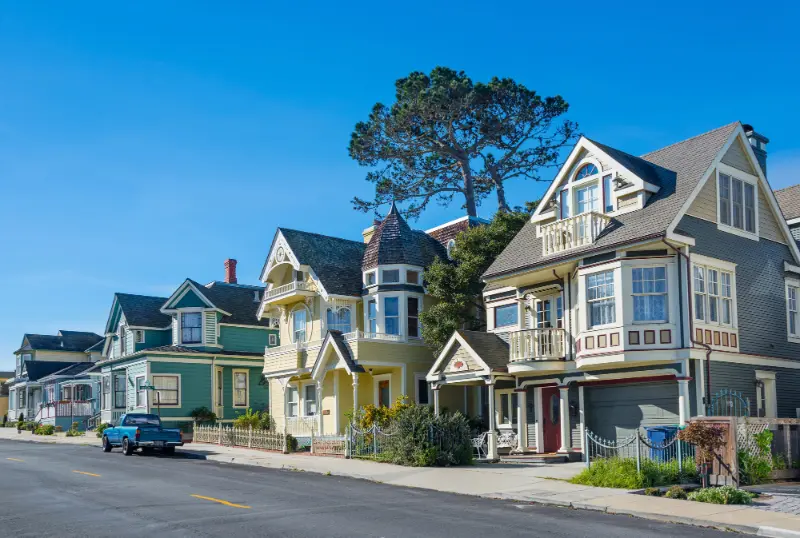
San Francisco to Monterey is short enough to drive in a morning and interesting enough to turn into a three-day coastal trip. The problem is that travelers often confuse those two facts. They leave San Francisco late, add Half Moon Bay, Santa Cruz, Monterey, 17-Mile Drive and Carmel to the same day, then arrive at dinner feeling that the California coast is mostly parking lots.
A better plan gives the road itself one day and Monterey/Carmel two days. Start with the San Francisco first-time guide if you still need city planning, then use the Monterey, Carmel and Big Sur guide to decide how far south the trip should continue after these three days.
Quick planning summary
| Best duration | 3 days / 2–3 nights |
|---|---|
| Fast route | US-101 / CA-17 toward Santa Cruz |
| Scenic route | CA-1 via Half Moon Bay, when conditions allow |
| Best family stop | Santa Cruz |
| Best Monterey anchor | Aquarium or waterfront |
| Best final half day | Carmel and Point Lobos |
The route choice that changes the trip
The fastest useful route is usually not the one hugging the ocean from San Francisco. Using US-101 and CA-17 gets you to Santa Cruz more directly, which is valuable when Monterey is the true destination. The full coast via Half Moon Bay is prettier but can add time through curves, towns and traffic.
Choose the coastal route only if the drive itself is one of the trip’s top priorities. Before departure, check Caltrans conditions and local weather. Fog can reduce scenic value, and road work can change travel time. A flexible route is smarter than loyalty to Highway 1 as a brand.
Day 1 — San Francisco to Santa Cruz, then Monterey
Leave San Francisco after the morning commute begins to ease or early enough to get ahead of it. If using the coastal route, choose one major stop such as Half Moon Bay rather than stopping at every beach. If using the faster route, make Santa Cruz the intentional lunch-and-walk stop.
From Santa Cruz, continue to Monterey and check in. End with Cannery Row, the waterfront or an early dinner. Do not add the aquarium late in the afternoon unless you specifically want a short visit; the aquarium guide explains why it deserves its own main block.
Day 2 — Monterey
Give Monterey the full morning. The aquarium can easily use four to six hours for families, while adults without children may combine a shorter visit with the waterfront or Pacific Grove.
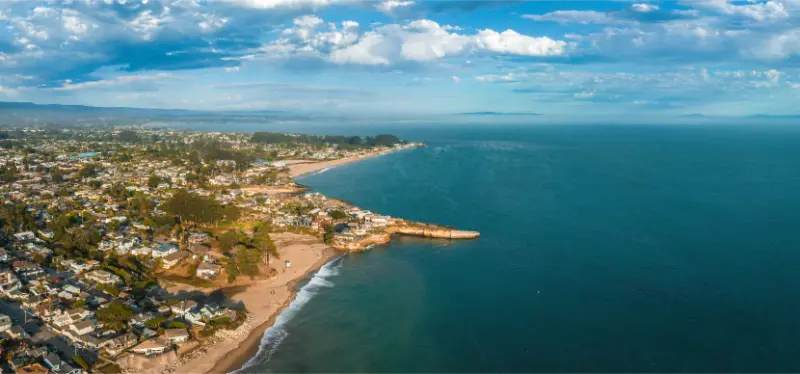
Use late afternoon for Cannery Row, Lovers Point/Pacific Grove or simply rest. The goal is to avoid driving while the entire region is at its busiest and to let the hotel location earn its value.
Day 3 — Carmel and Point Lobos
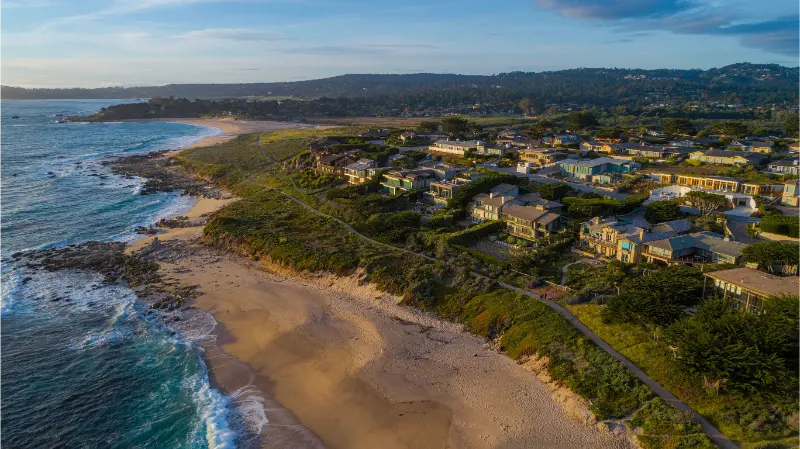
Start in Carmel-by-the-Sea before the village becomes crowded, walk the compact center and beach, then move to Point Lobos if hiking and coastal scenery are priorities. Parking can be limited, so arrive with a fallback rather than circling indefinitely.
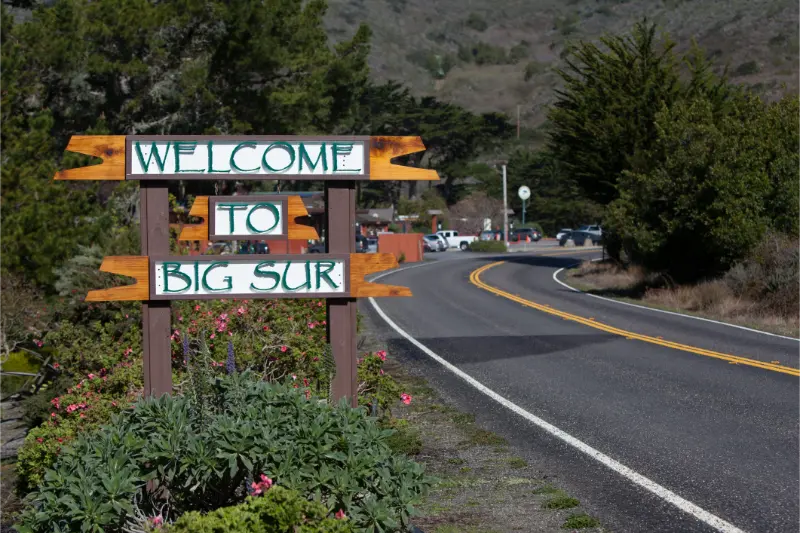
If continuing toward Big Sur, use the afternoon only for a few well-chosen viewpoints and sleep farther south. If returning north, finish Carmel early enough that the drive does not become a tired evening commute.
Driving time: what the map does not show
Map apps show distance, not the number of times a family stops for restrooms, snacks, photographs and traffic. The coast route can turn a two-hour movement into a full-day experience, which is excellent when planned and frustrating when accidental.
Also remember that San Francisco departure, Santa Cruz congestion and Monterey weekend traffic can stack. Build at least one hour of unassigned margin into Day 1. That margin is not wasted time; it is what keeps a scenic road trip from becoming a series of apologies for being late.
Where to stay
Monterey is the practical base if the aquarium is important. You can walk to waterfront attractions from many hotels and avoid moving the car at peak times.
Carmel is the romantic and quieter base, especially for couples, but it adds a morning drive to the aquarium. Families often prefer Monterey convenience and then visit Carmel when everyone is already awake and fed.
Families, seniors and travelers who dislike long driving days
With children, use Santa Cruz as the active break and protect the aquarium as the main Day 2 event. With seniors, reduce bluff trails and prioritize scenic pullouts and Carmel’s compact center.
Travelers who dislike long driving days should choose the faster SF-to-Santa-Cruz route and save the slow ocean road for a separate Half Moon Bay excursion. A road trip is not more authentic because every mile follows the water.
Budget and reservations
The route can be moderate-cost if you focus on free coast stops, but Monterey/Carmel lodging is the major expense. Parking, aquarium tickets and 17-Mile Drive fees can add to the total, so decide which paid experiences matter before arrival.
A central hotel can reduce parking cost and wasted time. Compare total convenience rather than nightly rate alone, especially for a two-night stay where repeated car movement can consume a large portion of the visit.
Best time to make this drive
Spring and fall often balance decent weather with lower lodging pressure. Summer brings classic road-trip demand and coastal fog; winter can be beautiful but increases rain and road-condition uncertainty.
Always check Caltrans QuickMap before a coastal driving day. Highway 1 is a real road exposed to slides, construction and weather, not a fixed attraction that operates identically all year.
Mistakes I would avoid
- Leaving San Francisco late and adding too many coastal stops.
- Treating Santa Cruz as a 20-minute photo stop when children need movement.
- Scheduling the aquarium after a full driving day.
- Assuming Highway 1 is always the fastest or fully open route.
- Booking dinner with no traffic margin.
- Trying to add Big Sur, Carmel and Monterey to the same short day.
The strongest version of this route has fewer stops than the map suggests. Choose one reason for each day and let everything else support it.
Plan B for fog, rain or traffic
If the coast is foggy or traffic is heavy, switch to the faster inland route and protect Monterey time. The destination is still worth the trip even if Day 1 has fewer ocean pullouts.
If weather affects Point Lobos or a scenic section, use Carmel village, Pacific Grove and the aquarium/waterfront instead. Keep the hotel fixed and change only the day plan.
How to extend the route
With a fourth day, add Big Sur rather than adding more San Francisco-to-Monterey stops. That gives the dramatic coast its own daylight and weather window.
With families, another excellent extension is a full Santa Cruz day before Monterey. The boardwalk, beach and redwoods can justify a night rather than being squeezed between two highway segments.
Frequently asked questions
Can we drive San Francisco to Monterey in one day?
Yes, easily. This three-day itinerary is for travelers who want the drive and Monterey/Carmel to be part of the experience rather than simple transportation.
Should we take Highway 1 the whole way?
Only if coastal driving is a priority and conditions are good. The faster US-101/CA-17 route can create more time at Santa Cruz and Monterey.
Where should we sleep?
Monterey is the practical first choice, especially for the aquarium. Carmel is better if village atmosphere matters more than aquarium convenience.
Can we add Big Sur?
Yes, but give it a fourth day or continue south after Day 3. Do not compress Big Sur into a rushed late-afternoon add-on.
My final planning rule
Treat San Francisco to Monterey as a choice between scenic driving and destination time, not as an obligation to stop at every famous place. The coast is more enjoyable when you are not constantly calculating how late you have become.
Three days is enough to make the route feel like a trip: one day to move south, one day for Monterey and one day for Carmel/Point Lobos. That is the balance I would protect.
Before you lock the itinerary
Check the official operating calendar, weather and transportation information again during the final week before departure. California trips are unusually sensitive to traffic, coastal fog, mountain snow, wildfire smoke, heat and attraction operating changes. A plan that was sensible when you booked can still need a small adjustment on the day.
I also recommend building a thirty- to sixty-minute margin around the day’s single most important experience. That margin absorbs parking, restroom stops, a slow breakfast, a child who needs a break or a road delay without forcing you to cancel the rest of the itinerary. Travelers often try to gain value by scheduling more; in practice, the margin is what allows the expensive or memorable part of the day to happen calmly.
Finally, choose one thing you are willing to skip. Naming the optional item in advance makes it much easier to adapt when the group is tired. A flexible itinerary is not an unfinished itinerary—it is a plan that recognizes that real people, weather and traffic do not follow a spreadsheet.