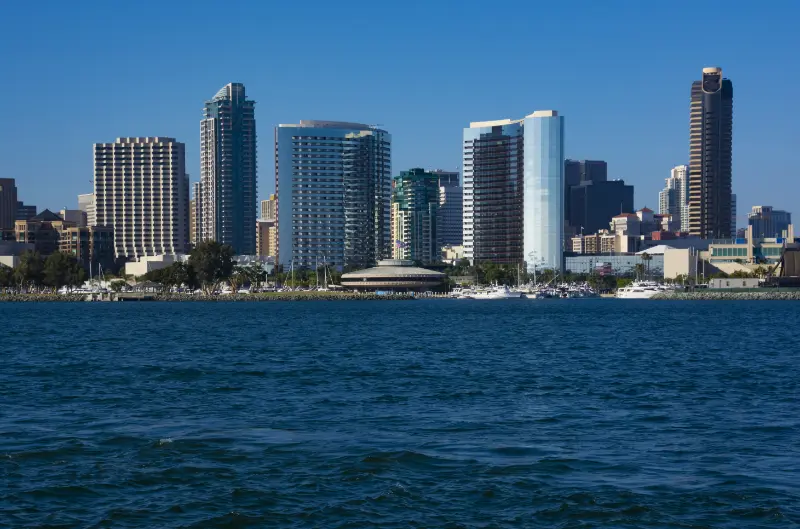
Coronado is one of the easiest places in the San Diego region to build a genuinely relaxed day. The bayfront looks back toward the downtown skyline, Orange Avenue supplies a walkable center, and the broad Pacific beach creates a very different atmosphere a short distance away. The ferry can turn transportation into part of the experience, which is rare in a region where visitors often assume a car is mandatory.
You do not need two full days unless you want substantial beach time or a resort-style stay. For most first-time visitors, one full day is enough; an overnight makes sense when sunset, early beach walking or a slower pace matters more than adding another San Diego neighborhood.
Quick planning snapshot
| Decision | Practical answer |
|---|---|
| Ideal first stay | 1 full day; add a night for a slower beach or resort experience. |
| Car needed? | No for the classic ferry + Orange Avenue + beach day. A car helps for Silver Strand and wider regional plans. |
| Best approach | Ferry from downtown San Diego when schedules and your hotel location make it convenient. |
| Big planning risk | Treating Coronado as only a hotel photo stop instead of planning the bay and ocean sides together. |
Why Coronado works so well as a car-light San Diego day
Coronado’s strongest feature is its scale. Arrive by ferry and the skyline view immediately gives context; walk or use local transport toward Orange Avenue, continue to the Pacific side, then return without dealing with freeway parking twice. That sequence feels like a complete day rather than a collection of isolated attractions.
The word “island” is often used informally for Coronado, but the community is connected southward by the Silver Strand. That matters only because it reminds travelers there are two very different arrival patterns: bridge/ferry from central San Diego, or road access from the south. Choose based on the rest of your route instead of blindly following the shortest map time.
A practical 1-day Coronado plan, with an optional second day
Day 1: Ferry landing, Orange Avenue and Coronado Beach
If you are based downtown, start with the ferry when the schedule fits. Spend a little time on the bayfront before moving across Coronado toward Orange Avenue. This prevents the common mistake of arriving, photographing the skyline and immediately rushing to the beach. Cafés and shops make Orange Avenue a natural lunch zone.
Use the afternoon for Coronado Beach and the public areas around the Hotel del Coronado. You do not need to be a hotel guest to appreciate the architecture from appropriate public spaces, but access rules for specific areas can change. Finish with a sunset walk if conditions are good, then return by ferry or rideshare according to the schedule.

Optional Day 2: Silver Strand, slower beach time or Tidelands
A second day should be slower, not a repeat of the first. Families can use Tidelands Park or another calm bayfront area, cyclists can explore more of the flat network, and drivers can continue toward Silver Strand State Beach. The extra day is most worthwhile for travelers who actually want time on the sand rather than more sightseeing.
If you are continuing south or east, leave from the road side rather than returning across central San Diego unnecessarily. Route planning matters because the bridge, downtown streets and beach traffic can create very different journey times depending on the hour.
What is actually worth prioritizing
Coronado Ferry Landing
The ferry landing is both transportation and a viewpoint. Downtown San Diego appears across the bay, and the area is easy for a short walk before you move toward the Pacific side. Using the ferry also removes the need to find a second central parking space.
Coronado Beach
The broad beach is the main reason many visitors come. Wind, surf and water temperature matter more than the air temperature alone, so a sunny day does not always equal ideal swimming. Families should choose guarded areas and follow lifeguard guidance.
Orange Avenue
Orange Avenue gives the day its town center. It is useful for meals and browsing and makes Coronado feel like more than a resort strip. Build the route so you pass through naturally between bay and beach rather than driving there as a separate attraction.
Hotel del Coronado area
The historic hotel is visually iconic, but the experience should not depend on accessing guest-only spaces. Public beach and surrounding viewpoints provide the context. If dining or a paid experience at the property is important, check current reservation and access policies before the day.
Where to stay
Staying on Coronado makes sense for travelers who want early beach walks, resort time and quiet evenings. It is usually less efficient for a first San Diego city trip built around Balboa Park, downtown, La Jolla and multiple neighborhoods because you will cross the bay repeatedly.
If you are based downtown San Diego, a day trip is often the better value. The ferry can make the transfer enjoyable and leaves your hotel unchanged. For families carrying a lot of beach equipment, however, driving may still be easier than managing bags through multiple transport stages.

Getting there and getting around
Ferry schedules should be checked for the exact day. The car-free version works best when your starting hotel is reasonably close to the downtown ferry terminal. Once on Coronado, walking, cycling, local transit and rideshare can handle the classic visitor route.
Driving is straightforward outside peak pressure, but parking near popular beach access can take time. If you enter by car, avoid repeatedly crossing back to downtown for meals or attractions. Finish the Coronado portion first, then make one deliberate transfer to the next part of San Diego.
Best time to go
Coronado works year-round for walking, dining and bay views. Summer brings the strongest beach demand; shoulder seasons can be easier for parking and still pleasant for outdoor time. Marine-layer mornings are common enough that you should not abandon the day simply because breakfast begins under gray skies.
Winter is often best treated as a scenic coastal outing rather than a swimming trip. Wind can make the beach feel cooler than inland San Diego. If a ferry ride is central to the plan, check conditions and service notices rather than assuming the same experience every day.
Families, older travelers and accessibility
The flat town layout is helpful for older travelers and families, and many central areas are easier than hilly coastal destinations. Sand remains the main accessibility challenge. Check beach-access information and availability of mobility equipment if needed. Families using strollers will generally find Orange Avenue and the bayfront easier than the beach itself.
Budget and booking strategy
A Coronado day can be relatively economical if you use the ferry, walk and spend primarily on food. Resort dining, beach rentals and premium accommodation can move the total quickly upward. Decide whether the day is a sightseeing excursion or a resort experience; trying to do both without a clear budget can produce expensive impulse choices.
Common mistakes to avoid
- Driving from downtown when the ferry would be simpler for your exact itinerary.
- Assuming the whole Coronado experience is the Hotel del Coronado.
- Crossing the bay multiple times in one day for unrelated attractions.
- Planning swimming without considering wind, surf and water temperature.
- Booking an expensive Coronado hotel when most of the trip is actually focused elsewhere in San Diego.
How to combine this stop with the rest of California
Coronado is easiest to pair with downtown San Diego because the ferry creates a natural connection. Keep La Jolla and North County for separate days. Use San Diego first-time guide to organize the city geographically instead of treating every famous coastal stop as part of one giant beach day.
Useful California for You guides
Read San Diego first-time guide, best California beaches for families, and California with kids guide.
Official planning resources
Ferry schedules, beach conditions and parking regulations can change, so verify same-day details.
Final advice
Coronado is strongest as a change of pace from the rest of San Diego. Arrive by ferry if it suits your route, cross the town gradually and give the beach enough time to feel like a beach rather than another photo stop.
One full day is enough for most first visits. Add a night only when you want the slower atmosphere itself—early sand, sunset, resort time—not because a map suggests there are more attractions to collect.
Small planning details that make the trip easier
Before leaving for Coronado, save the exact address of your first stop, download an offline map and check the official conditions page rather than relying only on a navigation app. California destinations that look compact on a map can behave very differently when parking fills, coastal fog arrives, a mountain road changes status or an event changes local traffic. I also like to identify one easy backup activity before the day begins, so a weather or access problem does not force an improvised long drive.
Build margin into the day instead of treating every stop as an appointment. Families usually need extra time for food and restrooms, older travelers may prefer fewer transfers between car and attraction, and photographers often want to stay longer when the light improves. In Coronado, the best itinerary is rarely the one with the most pins on a map; it is the one that preserves enough time to enjoy the strongest places without turning the final hours into a rushed return.