
California’s strongest museums are spread across several cities and cover very different interests. A traveler who loves art may build a Los Angeles day around the Getty, while a family in San Francisco may get more value from the Exploratorium or California Academy of Sciences. The point of this list is not to rank every institution by prestige; it is to help you choose which museum deserves scarce vacation time.
1. Getty Center, Los Angeles — best for art plus architecture and views
The Getty Center combines a major art collection with gardens, modern architecture and city views. Admission policy, timed entry and parking details should be checked directly before travel. Because the site itself is part of the experience, allow more time than you would for a compact downtown museum. See Getty Center guide.
2. California Academy of Sciences, San Francisco — best all-in-one family museum
The Academy combines aquarium, natural history, rainforest and planetarium experiences in Golden Gate Park. It is expensive compared with many museums, but families can spend most of a day there. Use California Academy of Sciences guide to compare it with other San Francisco attractions.
3. Exploratorium, San Francisco — best hands-on science museum
The Exploratorium is built around experimentation rather than quiet display cases. School-age children, teenagers and adults who like interactive science can spend hours testing exhibits. It is especially useful on a foggy or rainy Bay Area day. See Exploratorium guide.
4. USS Midway Museum, San Diego — best for naval history and big machinery
The aircraft carrier setting makes the Midway memorable even for visitors who are not dedicated military-history fans. Ladders, narrow spaces and long walking distances matter for mobility planning, although accessible routes are available. Use USS Midway guide.
5. Monterey Bay Aquarium — best marine-life museum experience
Technically an aquarium rather than a museum, it belongs in any California learning-focused list because exhibits connect marine biology with the Monterey Bay ecosystem. Parking is offsite and timed-entry practices can change. The Monterey Bay Aquarium guide covers a realistic visit.

6. The Broad, Los Angeles — best compact contemporary-art stop
The Broad is useful for travelers who want contemporary art without committing an entire day. Reservation practices, special exhibitions and lines can vary. Pair it with downtown Los Angeles rather than crossing the city only for a short visit.
7. Los Angeles County Museum of Art (LACMA) — best for a broad art collection
LACMA’s campus has been in a major transformation period, so current gallery access and exhibition locations must be checked before travel. The surrounding Museum Row area makes it easy to combine art with La Brea Tar Pits and other cultural stops without a second cross-city drive.
8. La Brea Tar Pits — best for Ice Age history in the middle of Los Angeles
The active fossil site makes this fundamentally different from a conventional museum. Exhibition access can change during construction and renovation periods, so verify the current visitor setup. Families often enjoy the outdoor pits as much as indoor displays.
9. California Science Center, Los Angeles — best value for science-focused families
The Science Center has long been a strong family option in Exposition Park. Major exhibition projects and construction can affect what is on view, so check current galleries before planning the day around one famous object. Combine it geographically with nearby museums rather than with Hollywood or the coast.
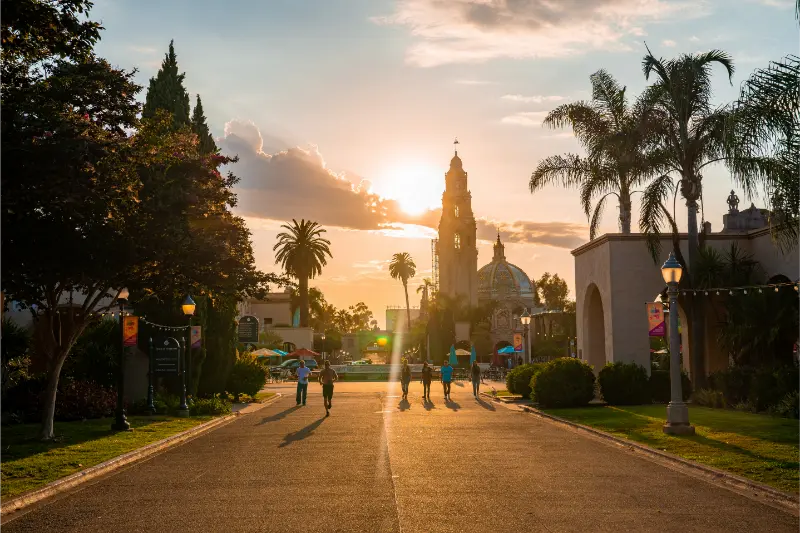
10. San Diego Air & Space Museum — best aviation stop in Balboa Park
This museum is one of the easiest ways to turn Balboa Park into a focused half-day for children or adults interested in aircraft and space history. Its biggest advantage is location: you can add gardens, another museum or a meal in the same park without moving the car.
11. Fleet Science Center, San Diego — best hands-on science stop in Balboa Park
The Fleet suits school-age children especially well and can be combined with other Balboa Park institutions. Families should resist buying tickets to several museums simply because they are adjacent; one strong museum plus outdoor park time often makes a better day.
12. Crocker Art Museum, Sacramento — best historic art museum in the capital
The Crocker pairs a historic building with a broad art collection and works well on a Sacramento trip. It gives adults a substantial cultural stop while remaining manageable in scale. Combine it with Sacramento guide rather than treating Sacramento only as a transit city.
13. California State Railroad Museum, Sacramento — best for trains and family history
Large locomotives and railroad history give this museum immediate appeal to children and transport enthusiasts. Its Old Sacramento location makes it easy to combine with riverfront walking and historic streets. Check current excursion-train schedules separately because they are not identical to museum admission.
14. The Tech Interactive, San Jose — best Silicon Valley family museum
The Tech Interactive turns Silicon Valley themes into hands-on exhibits and works especially well with children old enough to experiment independently. It is a good reason to include downtown San Jose in a Bay Area family itinerary; see San Jose guide.
15. Oakland Museum of California — best for understanding the state itself
OMCA brings together California art, history and natural science, making it unusually useful for travelers who want context for the rest of the trip. It is not just an “Oakland attraction”; it helps explain the state you are traveling through.
How to choose the right museum
- Art-first trip: Getty Center, LACMA, The Broad or Crocker.
- Hands-on science: Exploratorium, The Tech Interactive or Fleet Science Center.
- Family all-day experience: California Academy of Sciences or Monterey Bay Aquarium.
- California history: Oakland Museum of California or California State Railroad Museum.
- Military/transport interests: USS Midway or San Diego Air & Space Museum.
Do not overbook museum days
Two large museums in one day often sounds efficient and feels exhausting. Choose one anchor institution, then pair it with a park, neighborhood or smaller second stop nearby. This is especially important with children, who absorb less when every indoor hour becomes another ticketed exhibit.
How to pace the day so it still feels like a vacation
California museum planning is mostly about choosing the institution that matches your interests and grouping it with nearby neighborhoods so you are not crossing a major city repeatedly. A useful rule is to choose one anchor experience for the morning, one flexible activity for the middle of the day and one optional late-day stop. That structure survives traffic, weather, tired children and seasonal changes far better than a minute-by-minute checklist.
Build in one genuine break. In California that can mean a picnic table, a shaded plaza, a visitor center, a café or simply an hour at the hotel. The break is not lost sightseeing time: it protects the quality of the second half of the day, particularly for young children, older travelers and anyone adjusting to heat, altitude or long driving.
Where to stay and how to choose the right base
Stay according to the city itinerary, not the museum. In Los Angeles, location can save hours; in San Francisco and San Diego, public transit or compact cultural districts can reduce parking needs.
For one night, practical access usually matters more than atmosphere. For two or more nights, walkability, food options and a pleasant evening environment become more valuable. Always check the real drive time to the first stop of the next morning rather than trusting a hotel description that says “near” a park, beach or attraction.
Families, seniors and travelers with limited mobility
Interactive science museums work particularly well for school-age children, while art museums may be easier with shorter focused visits. Seniors should compare seating, elevator access and gallery size; most major institutions publish accessibility information.
Accessibility can change because of construction, snow, storm damage, temporary shuttle patterns or maintenance. When step-free access is essential, confirm the official accessibility information shortly before travel and keep one backup viewpoint or activity that requires less walking.
Common mistakes to avoid
- Choosing museums only because they are famous rather than because they fit your group.
- Booking two full-scale museums back-to-back with young children.
- Ignoring construction or temporary-gallery changes.
- Driving across Los Angeles multiple times instead of grouping Museum Row, Exposition Park or the Getty geographically.
- Assuming free admission means parking and special exhibitions are also free.
What to combine with this trip
Use museums as anchors inside city itineraries. Combine the Getty with west Los Angeles, Balboa Park museums with central San Diego, and San Francisco institutions with the neighborhood you are already exploring.
The best combinations are geographic rather than aspirational. A nearby second stop can improve a day; a famous destination two hours in the wrong direction usually creates more driving than value. Treat transfer time as part of the itinerary and cut stops before you cut sleep, meals or safe driving time.
A practical decision framework before you go
The evening before the visit, identify the one experience you would be disappointed to miss, the condition that could disrupt it, the easiest backup and the point at which you will stop adding activities. Save the official conditions page, the first parking location and any reservation to your phone for offline access. This simple routine prevents most avoidable travel stress.
Separate stable information from information that must be checked again. Geography, general trail length and the character of a destination are relatively stable. Parking rules, shuttle schedules, road access, wildfire restrictions, surf, snow and opening hours can change quickly. Use official sources for the second group and treat old screenshots or social posts only as inspiration.
Budget and comfort strategy
Spend where it removes a real constraint. A better-located hotel can eliminate an hour of driving, a shuttle can remove parking stress and a grocery stop can prevent an expensive food search late in the day. At the same time, many of California’s strongest experiences—forest walks, viewpoints, beaches and scenic drives—do not require a large attraction budget.
Carry water, a light layer and simple food even on short sightseeing days. California can shift quickly between foggy coast, hot inland valleys, high elevation and cold evening air. Comfort is part of logistics, not an afterthought, because it determines whether the whole group still enjoys the final hours of the day.