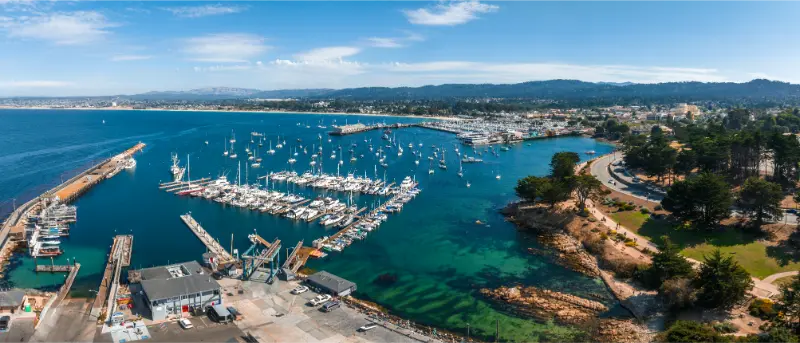
Monterey Bay Aquarium is one of the easiest major California attractions to recommend to families, but that does not mean the day plans itself. The exhibits are dense, the waterfront location encourages you to combine too much, and young children can spend forty minutes at one tank while adults keep looking at the map and worrying about everything they have not seen.
The right approach is to let the aquarium be the main event and build Monterey around it. Use the first-time aquarium guide for general logistics and the Monterey and Carmel with kids guide if you are turning the visit into a two- or three-day family stay.
Quick planning summary
| Best for | All ages, especially preschool through middle school |
|---|---|
| Time needed | 4–6 hours for most families |
| Tickets | Buy through the official aquarium site |
| Parking | Use public parking in Monterey; no public visitor lot inside the aquarium |
| Best pace | Two exhibit blocks with a real break |
| Best base | Monterey for easiest logistics |
Why this works well for families
The aquarium works across ages because different family members can focus on different layers of the same exhibit. A toddler watches movement and color, a school-age child asks how animals survive, and a teenager can engage with conservation and ocean science. Few attractions bridge ages this naturally.
The location on Cannery Row also makes it easy to step outside, see the real bay and connect exhibits to the landscape. That is more educational than treating the building as an isolated museum: otters, kelp forests and seabirds make more sense when children can look at Monterey Bay itself.
The age question matters more than the attraction list
Preschoolers often need fewer exhibits than adults expect. Choose the most visually active galleries, let them stay longer where they are engaged and use hands-on areas to break up quiet observation. The goal is not to ‘complete’ the aquarium.
Older children can take more ownership. Give them the map and ask each child to choose one must-see habitat. Teenagers may respond better to behind-the-scenes conservation stories, photography and the bay setting than to a parent delivering a constant educational lecture.
Kelp forest and open-water scale
Large habitats give children an immediate sense that the ocean is an ecosystem rather than a list of individual animals. Stand back long enough to see interactions instead of moving the moment the most famous species appears.
Parents can make this interactive without turning it into school: ask a child to notice one animal that stays near the surface, one that hides and one that never stops moving. Observation gives the exhibit a purpose without requiring a worksheet.
Sea otters and animal behavior
Otters are often a family favorite because their behavior is easy to read. Check the day’s program schedule and return later if the habitat is crowded; children usually enjoy a second look more than standing behind several rows of adults.
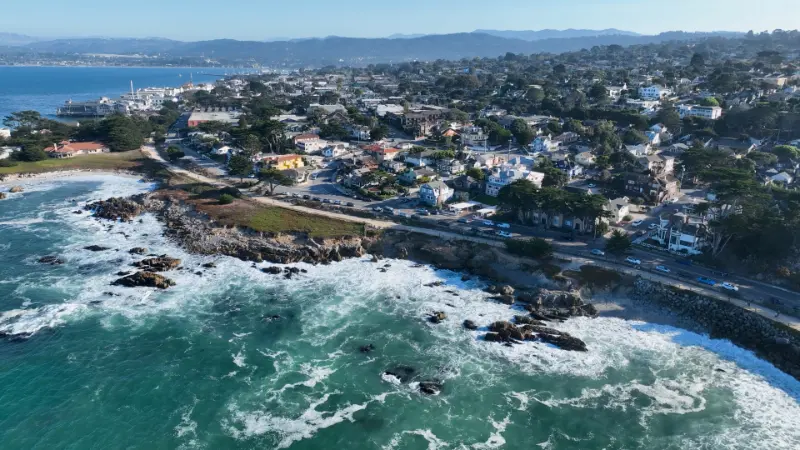
Use the exhibit to talk about Monterey Bay as a living place. After leaving the aquarium, walk the waterfront and see whether the family can spot wildlife outside. The transition from exhibit to real coast is one of the best parts of visiting Monterey.
Hands-on and child-centered spaces
Interactive areas are valuable because young children cannot process an entire day of looking through glass. Physical engagement resets attention and gives parents a chance to stop pushing forward.
Do not treat play areas as wasted ticket time. A child who gets twenty minutes of active exploration is more likely to enjoy another gallery afterward than a child who has been told ‘we paid a lot, keep walking’ for three hours.
The waterfront beyond the building
Cannery Row can be touristy, but the aquarium end of the waterfront still gives families useful space for a walk and food break. Fresh air helps after several indoor hours, especially with strollers or grandparents.
If everyone is tired after the aquarium, stop there. Carmel or 17-Mile Drive is better the next morning than squeezed into the final hour of a day when children have already processed a major attraction.
A realistic family plan
For most families, I would plan the aquarium in two major blocks rather than one continuous march. Arrive with one or two priority exhibits, pause for food and fresh air, then return to whatever the children still care about.
Morning — arrive with a short priority list
Buy tickets in advance and arrive close to opening when possible. Begin with the family’s highest-priority habitat before the busiest middle of the day. Do not stop at every display simply because it is the first one you pass.
Midday — eat and go outside
Take a genuine meal break. Step onto the waterfront, look at the bay and let children move. This is also the right time to decide whether the family has energy for another exhibit block or whether a shorter visit will preserve the day.
Afternoon — repeat favorites before adding new exhibits
Children often want to see one animal again. Let them. Repeating a favorite creates stronger memory than checking four additional boxes. If energy remains, add one new gallery and finish with an easy waterfront walk.
Getting there, parking and moving around
There is no large public visitor parking lot attached to the aquarium, so parking strategy belongs in the plan. Monterey garages and public lots can work well, but allow walking time and do not promise small children that the aquarium begins the second the car stops.
If Monterey is one stop on a road trip, avoid leaving luggage visible in the vehicle. Staying in town and walking can be worth the hotel premium. The broader Monterey, Carmel and Big Sur itinerary helps decide whether Monterey should get one or two nights.
Where to stay
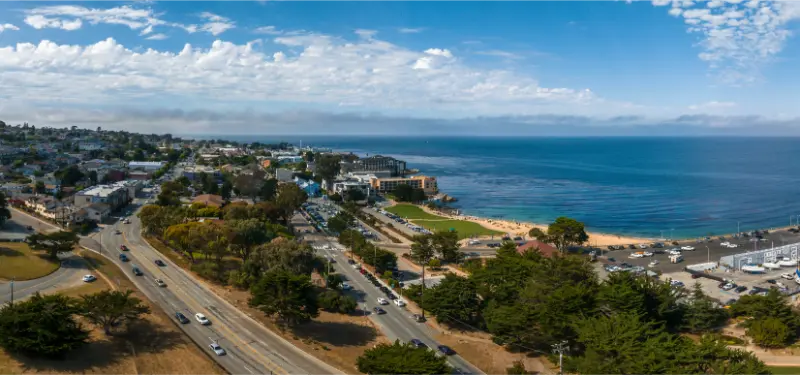
Monterey is the easiest family base because it reduces morning logistics and makes it simple to revisit the waterfront for dinner. Walking distance is especially useful with a stroller or a child who may need an afternoon rest.
Carmel is beautiful and calmer in the evening, but it turns aquarium morning into a drive and parking exercise. Choose Carmel when the village and beach matter more than maximizing convenience at the aquarium.
Best time to go
The aquarium is an all-season attraction, which makes it valuable on foggy or rainy Central Coast days. Summer and school holidays bring more families, so advance tickets and early arrival become more important.
Tickets should be purchased through the aquarium’s official ticket page. Hours vary by date, so check the calendar rather than relying on a fixed opening-time assumption.
Meals, breaks and the part families often underestimate
Young children need predictable meal timing. Decide whether you will eat inside, nearby on Cannery Row or bring an allowed snack strategy before everyone is hungry. Peak lunch time is a poor moment to start comparing menus.
The best meal is often the one that provides seats and a reset, not the restaurant with the longest social-media queue. Save the destination dining choice for dinner if your children are already at the edge of patience.
Toddlers, school-age children and teenagers
Toddlers: plan two to three hours of strong engagement plus breaks. A toddler does not need to understand every ecosystem to have a successful visit.
Elementary age: let children read, ask questions and revisit favorites. This is the age where the aquarium can easily become the educational highlight of a California trip without feeling like school.
Teenagers: connect the visit to photography, marine conservation, climate and the real Monterey Bay. Give them space to move at their own pace rather than narrating every exhibit.
Grandparents, strollers and accessibility
The aquarium is designed to serve visitors with different mobility needs, but families should still review current accessibility information and stroller policies. Crowds, not just physical barriers, can be the real challenge at popular exhibits.
With grandparents, build seating and waterfront breaks into the schedule. A four-hour visit with one long pause is often more enjoyable than a six-hour continuous visit that leaves everyone tired for dinner.
How to think about the budget
Admission is a major family expense, so protect the day by buying through the official site and avoiding a schedule that leaves only two rushed hours. If the aquarium is a priority, give it enough time to justify the cost.
Parking, food and souvenirs add up. Set a souvenir expectation before entering, and remember that the waterfront itself provides a free extension of the experience after the ticketed visit ends.
Mistakes I would avoid
- Trying to see every exhibit in one continuous loop.
- Buying tickets from an unofficial third party.
- Underestimating parking and walking time.
- Adding Carmel, 17-Mile Drive and Big Sur after a full aquarium day.
- Skipping food because the children seem engaged until they suddenly are not.
- Forcing children away from a favorite exhibit just to complete the map.
A family aquarium day is successful when curiosity stays high. The building is too rich to ‘finish,’ so design for attention rather than completion.
What to reserve and what to leave flexible
Buy the admission date first, then let the rest of Monterey stay relatively flexible. If you add a tour or special experience, place it around the child’s best energy window rather than around the adults’ ideal schedule.
Keep dinner flexible unless a particular restaurant is a priority. Aquarium exit time can vary by an hour or more depending on the children, and that flexibility is valuable.
A good Plan B
If the aquarium is unexpectedly crowded, use less-famous galleries first and return to headline habitats later. Moving against the crowd is more effective than standing in a dense line of people waiting for a perfect view.
If the children finish early, Cannery Row waterfront, Dennis the Menace Playground in Monterey or a short beach stop can absorb the remaining day without turning it into another major attraction.
How this fits into a larger California trip
Pair the aquarium with Monterey itself, then use Carmel or Point Lobos on a separate half day. The family guide to Monterey and Carmel is designed around that slower rhythm.
If heading south toward Big Sur, leave the major scenic drive for the next morning. Coastal light and family energy are both better when you are not departing Monterey after a full museum day.
Frequently asked questions
How long do families need at Monterey Bay Aquarium?
Four to six hours works for many families. Toddlers may be done earlier; older children who love marine life can easily stay longer.
Should we buy tickets in advance?
Yes. The aquarium recommends advance purchase through its official site for a smoother entry.
Is the aquarium good for toddlers?
Yes, especially when parents focus on visually active habitats and breaks rather than trying to see everything.
Can we do Carmel the same day?
You can, but I prefer Carmel on a separate half day if the aquarium is a major priority. Families enjoy both more when neither is rushed.
My final planning rule
Give the aquarium the same respect you would give a national park or major theme park: one main attraction deserves one main block of the day. The family does not need a longer checklist; it needs enough time to become interested.
The best Monterey Bay Aquarium visit ends with children still talking about one animal at dinner, not with parents proving they walked through every gallery.