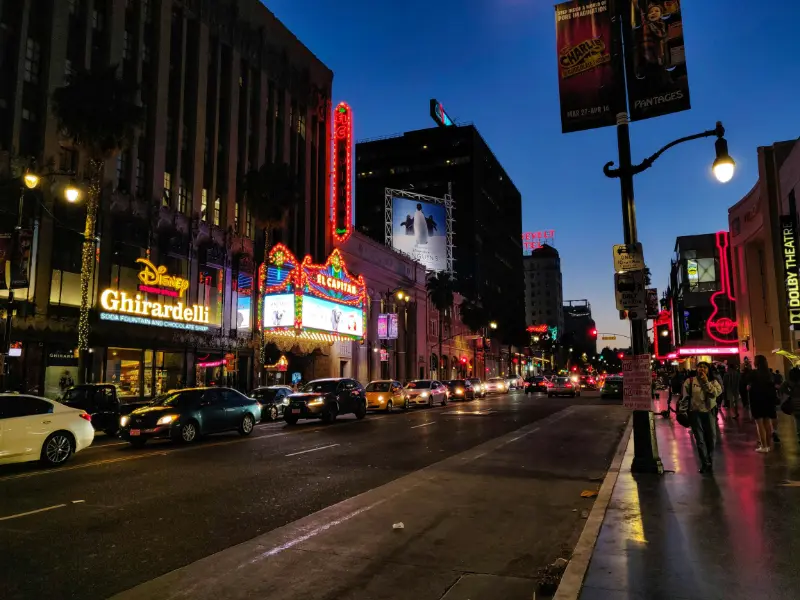
The Hollywood Walk of Fame is one of Los Angeles’ most famous sights and one of its most misunderstood. The stars are spread along Hollywood Boulevard from Gower to La Brea and along Vine Street from Sunset to Yucca, so ‘seeing the Walk of Fame’ is not a single point on a map. Most first-time visitors do not need to walk the entire route. They need to know which stars they care about, where the TCL Chinese Theatre fits into the visit and how to avoid spending more time in traffic and parking garages than on Hollywood Boulevard.
The area can also disappoint travelers who arrive expecting a polished theme-park version of Hollywood. It is a real, busy urban district with tourists, street performers, commuters, theaters, retail, historic buildings and rough edges. Approached with realistic expectations, it can be a fun two- to four-hour Los Angeles experience. Approached as an all-day pilgrimage without a plan, it often becomes tiring.
Quick planning snapshot
| Decision | Practical answer |
|---|---|
| How much time? | 2–4 hours for the central Walk of Fame, TCL forecourt and one additional attraction or tour. |
| Best starting point | Hollywood & Highland/Ovation area for TCL Chinese Theatre and a dense cluster of famous stars. |
| Best planning tool | Use the official Walk of Fame star map to locate specific names before you arrive. |
| Biggest mistake | Walking long stretches of Hollywood Boulevard hoping to randomly find the stars you care about. |
Why this deserves its own plan
The Walk of Fame matters less as a beautiful street and more as a piece of entertainment history. The official database and star map let you turn an otherwise repetitive sidewalk into a personal route: a musician you grew up with, a filmmaker you admire, a classic actor or a television figure can create a reason to walk a particular block.
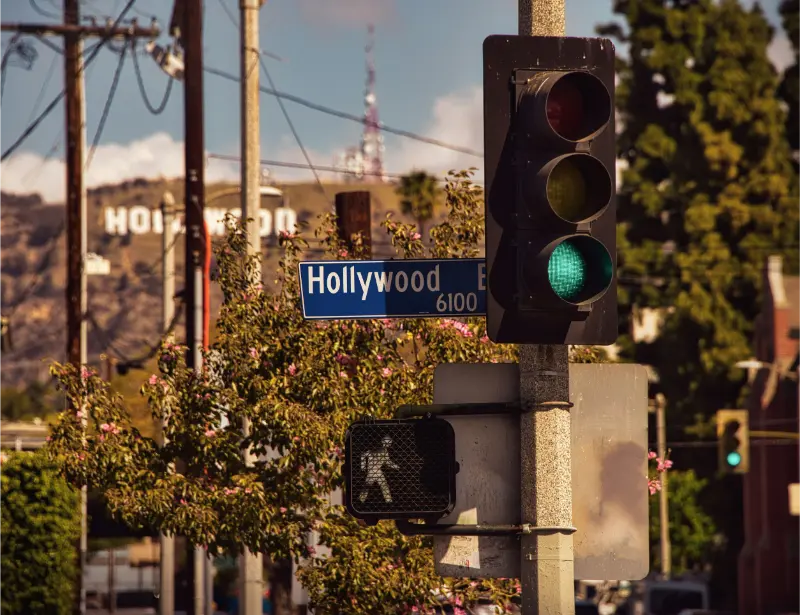
TCL Chinese Theatre adds architectural and film-premiere history that the sidewalk alone cannot provide. Its Forecourt of the Stars contains handprints and footprints, while the theater offers an interior tour that is usually around 30 minutes and operates most days except when special events interfere. Pairing the free outdoor elements with one structured indoor experience gives the visit more substance.
A realistic half-day in Hollywood
Before leaving: choose five to ten stars
Use the official star map and save exact addresses or screenshots. Do not create a list of fifty names; it will turn the day into navigation. Choose a small group that genuinely matters to you, note which are close together and accept that one or two may be far enough away to skip.
Begin around TCL Chinese Theatre
See the forecourt, study the handprints and footprints and take in the theater exterior before the area becomes more crowded. If the interior tour interests you, check the day’s schedule in advance because film premieres and special events can change access.
Walk one focused section of the boulevard
Follow your saved star locations rather than the flow of the crowd. Look up as well as down: historic theaters, signs and the street scene are part of the experience. If you have reached the final star on your list, stop. There is no prize for walking the full length.
Use the final hour for one nearby choice
Add the Dolby Theatre area, a museum, a meal, or continue to another Los Angeles neighborhood. Do not automatically add Griffith Observatory, Universal Studios and Sunset Strip in the same half-day. Los Angeles travel time turns that kind of list into a race.
What is actually worth prioritizing
The stars you actually care about
The official Walk of Fame database is the key resource. Some famous people do not have stars, and star locations are not organized by fame or era. Search before travel so the visit feels personal rather than random.
TCL Chinese Theatre forecourt and optional tour
The forecourt is one of the most recognizable Hollywood experiences. The interior tour adds context about premieres and the building itself. If you love cinema history, it is a better use of time than walking several extra generic blocks.
One piece of historic architecture beyond the stars
Hollywood Boulevard contains layers of theater and entertainment history. Choose one building or venue to read about before arrival; the street becomes more interesting when you know what you are looking at.
A realistic exit point
Decide in advance where the Hollywood portion ends. This prevents the common pattern of continuing another block because there might be something better ahead, then discovering the group is tired and still far from the car or Metro station.
Getting there, parking and moving around
For the central tourist area, Metro can be easier than driving. The B Line serves Hollywood/Highland and Hollywood/Vine, placing you directly on the corridor. If you are staying somewhere with convenient rail access, this avoids parking searches and lets the group leave whenever it is ready.
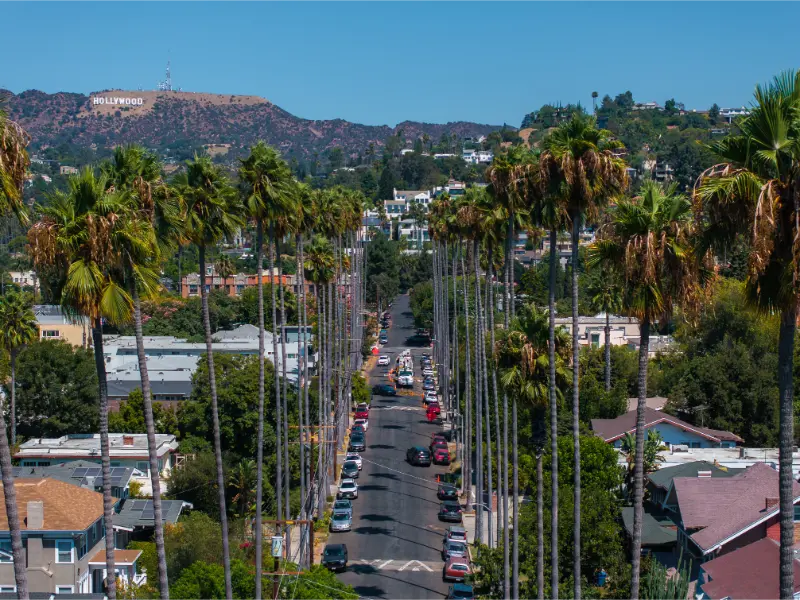
If you drive, use a legitimate garage and read validation rules before leaving the car. Do not circle residential streets looking for free parking while a timed tour is approaching. Los Angeles parking signs can be complex and enforcement is real.
The Walk of Fame is linear, so think about the return. If you walk far east or west, you still need to get back to the starting point. Metro between Hollywood stations can be useful if your route becomes longer than expected.
Families, older travelers and accessibility
The Walk of Fame itself is a public sidewalk, but crowds, curb cuts, street furniture and uneven pavement can affect wheelchair or walker users. The most efficient accessible plan is a short central segment rather than a long end-to-end walk.
TCL Chinese Theatre offers tours and screenings in a historic building; accessibility details for a specific tour or auditorium should be confirmed directly before booking. Special events can change normal pathways.
Families should prepare children for crowds, costumed street characters and busy crossings. Older travelers may prefer an early visit, a shorter star list and a seated café break before moving to another Los Angeles district.
Best time, weather and pacing
Hollywood is inland enough to become much hotter than Santa Monica or the coast. In summer and early fall, morning is more comfortable for walking. Shade is inconsistent, so carry water and sun protection even though this is an urban attraction.
Rain is less common but can make the star plaques slick and the sidewalk less pleasant. If weather is poor, shift more of the visit toward the theater tour, museums or another indoor attraction rather than forcing a long outdoor walk.
Budget and practical trade-offs
Walking the stars and visiting the TCL forecourt can be free. Costs come from parking, tours, museums, food and souvenir purchases. Decide which one paid experience would add real value instead of accumulating small tourist charges along the boulevard.
Street performers and costumed characters may expect payment for posed photos. Clarify any price before taking the picture. Treat this like any busy tourist district: keep valuables secure and do not let a sales pitch derail the group.
What Hollywood Boulevard is — and what it is not
Hollywood Boulevard is not the best place in Los Angeles for celebrity spotting, beaches, studio backlots or a quiet evening stroll. Its value is symbolic and historical. You come for the stars, theaters and entertainment mythology, then use other neighborhoods for the parts of Los Angeles they do better.
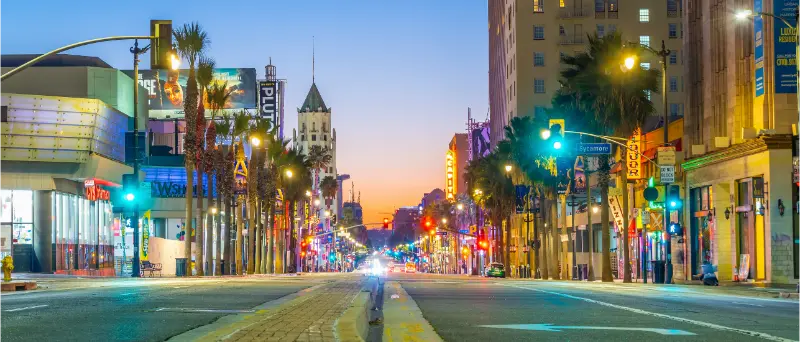
This distinction improves expectations. A traveler who spends three focused hours here can have fun and leave satisfied. A traveler who expects glamour on every corner may focus only on the crowds and souvenir shops.
Common mistakes to avoid
- Trying to walk the entire Walk of Fame without a list of star locations.
- Assuming every favorite celebrity has a star.
- Driving into the central district without a parking plan.
- Trying to combine Hollywood, Griffith, Santa Monica and Universal Studios in one half-day.
- Paying for photos or services without agreeing on the price first.
- Expecting the street to look like a movie set rather than a busy urban entertainment district.
How to combine this with a wider California trip
Hollywood pairs naturally with the Griffith Observatory and Griffith Park guide if you give the combination most of a day and account for traffic. The Universal Studios Hollywood guide is better as a separate full attraction day rather than an add-on after the boulevard.
Use the Los Angeles first-time guide to decide where Hollywood fits in the larger city. If the coast is your priority, keep Santa Monica or Malibu on another day so you are not crossing Los Angeles repeatedly.
Useful California for You guides
Read the Los Angeles first-time guide, the Griffith Observatory and Griffith Park guide, the Universal Studios Hollywood guide and the Beverly Hills and West Hollywood guide.
Official planning resources
Check the official sources close to your travel date because hours, reservations, parking, road conditions and temporary closures can change.
Final advice
The Walk of Fame is much better as a targeted two- or three-hour experience than as an aimless half-day walk. Choose the names that matter to you, see the Chinese Theatre and leave while the experience is still fun.
Hollywood is one chapter of Los Angeles, not the whole story. Use it for film and entertainment history, then let another neighborhood show you a different side of the city.