
California can be an excellent destination with a baby or toddler, but the itinerary that works for two adults often fails as soon as naps, feeding, car seats and early bedtimes enter the schedule. The solution is not to stop traveling. It is to build a different kind of California trip—one with fewer bases, shorter driving days and accommodation that supports normal family life.
The most useful rule I know for this stage is one anchor activity per day. That anchor might be the San Diego Zoo, a morning at Carmel Beach, a short redwood walk or Disneyland. Everything else is optional. When the child naps well and the day is going smoothly, add something. When the day falls apart, you have not “failed” an itinerary that required five timed attractions.
This guide focuses on practical planning for children from infancy through the toddler years, while recognizing that every family’s sleep, feeding and mobility needs are different.
Choose fewer bases than you would without children
A classic California road trip often looks efficient on paper because adults can change hotels every night. With a baby, every move means repacking sleep equipment, bottles, snacks, clothing, diapers and the items you swore you would keep organized.
For a 10-day trip, three bases are often enough. For a week, two bases can be better. A trip that combines Los Angeles, Anaheim and San Diego may look geographically modest, but moving hotels three times still creates work. Stay longer where the daily routine is easiest.
Our broader California with kids guide covers older children as well; this article focuses on the extra decisions babies and toddlers create.
Pick destinations that tolerate an interrupted day
The best baby-and-toddler destinations are not necessarily places marketed to families. They are places where you can stop, feed, return to the hotel, find a park, walk with a stroller and resume the day without losing an expensive reservation.
San Diego is particularly flexible because beaches, Balboa Park, waterfront areas and family attractions can be mixed with rest. Santa Barbara is compact and relaxed. Monterey and Carmel combine short outdoor stops with an aquarium and easy coastal scenery. San Francisco can work well without a car if you choose a stroller-friendly base and accept the hills. Los Angeles requires more neighborhood planning but can still be excellent.
Car-seat rules are not optional vacation logistics
California Highway Patrol states that children under two must ride rear-facing unless they meet the legal weight or height exception, and children under eight generally must be secured in an appropriate car seat or booster in the back seat. Current rules should always be checked before travel because laws and guidance can change.
If you rent a car seat, confirm the model, condition and installation process with the rental company. If you bring your own, understand airline handling and how you will transport it between airport, hotel and vehicle. A seat that solves the driving requirement but is impossible to carry through your trip creates a different problem.
Use the California Highway Patrol child-safety page for current law and installation resources.
Should you rent a car?
For a city-only San Francisco trip, you can avoid a car and therefore avoid daily car-seat installation. For central San Diego, a car-light trip is possible. For a wider California itinerary, a rental car is usually the simplest way to carry child gear and control nap timing.
The key is to avoid driving inside cities simply because you already paid for the car. Park it at the hotel on transit-friendly days. In San Francisco, consider collecting the rental only when leaving the city.
Make road-trip days shorter than adult road-trip days
A three-hour map estimate is not a three-hour family transfer. Add feeding, diaper changes, movement breaks and the possibility that a toddler refuses to return to the seat. Build the timetable around stops rather than treating stops as delays.
I prefer road-trip segments where a park, beach or town appears every one to two hours. Highway 1, the Central Coast and Southern California can support this well. Remote desert and mountain routes require more deliberate planning because services are farther apart.
Hotel features that matter more than luxury
A separate sleeping area can be more valuable than a sea view. If the child goes to bed at 7:30 p.m., a one-room hotel may leave the adults whispering in darkness for the rest of the evening. Suites, connecting rooms or apartments can transform the trip when the budget allows.
Also prioritize a refrigerator, microwave or kitchenette if feeding needs make it useful, blackout curtains, laundry access, elevator, easy parking, bathtub or suitable washing setup and enough floor space for a travel crib. Ask whether the crib is guaranteed or merely “subject to availability.”
Do not underestimate laundry
Babies create laundry at a rate that surprises even experienced travelers. Packing twice as many clothes is not always the answer because extra luggage becomes its own burden. A hotel with guest laundry midway through the trip can reduce suitcase size dramatically.
For longer stays, apartment-style accommodation with a washer may be worth more than a more luxurious room without practical facilities.
Stroller or baby carrier?
For most California trips, both are useful. A stroller is excellent for waterfronts, theme parks, museums, airports and long city days. A carrier is better for stairs, rough coastal paths, redwood trails and places where folding the stroller repeatedly becomes annoying.
San Francisco hills, historic sites and natural areas prove why there is no universal solution. A compact travel stroller plus a comfortable carrier gives the most flexibility without bringing a full nursery.
San Diego with a baby or toddler
San Diego is one of the easiest first California destinations for young families. Mission Bay offers resorts, pools and outdoor space; Little Italy provides stroller-friendly evening food options; Balboa Park gives room to move between museums and gardens; beaches can become short, low-pressure activities.
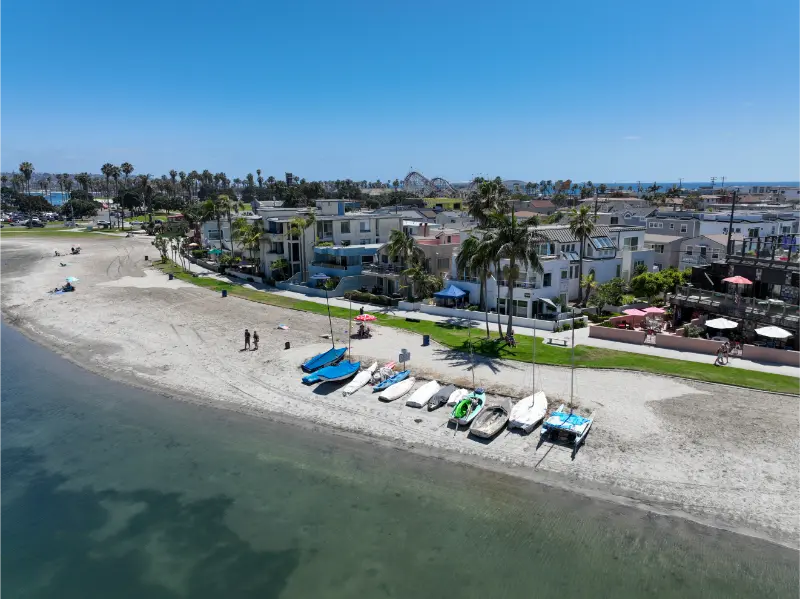
Do not assume you must visit every famous family attraction. The San Diego Zoo is a full day. SeaWorld is another substantial day. LEGOLAND is in Carlsbad, farther north. Choose based on your child’s age and interests rather than buying tickets because a destination appears on a family-travel list.
Our San Diego accommodation guide includes specific family-base advice.
Los Angeles with a baby or toddler
Los Angeles works when you stop crossing the city. Choose a hotel near the cluster you plan to visit and give each day one geographic focus. Santa Monica can be easy for stroller walks and beach time. Griffith Park offers outdoor space. The Getty can provide art, gardens and structured facilities in one place.
Avoid scheduling a morning in Santa Monica, lunch in Downtown and late afternoon at Griffith simply because an app says the drives fit. Traffic and loading a child in and out of the car make that plan far less enjoyable than the map suggests.
San Francisco with a baby or toddler
San Francisco is compact and can be explored without a rental car, but hills change stroller planning. Stay near transit and decide when the stroller helps versus when a carrier is easier. Waterfront areas are relatively forgiving, while steep interior routes can turn a short distance into a workout.
Do not treat cable cars as your primary family transport. They are fun, but buses, streetcars, BART and rideshares may be easier when you are carrying a folded stroller and child gear.
Monterey and Carmel with young children
This is one of California’s strongest combinations for toddlers. The Monterey Bay Aquarium gives you a major indoor anchor, while Pacific Grove, Carmel Beach and coastal viewpoints provide flexible outdoor time. Distances between the towns are manageable, so a missed nap does not destroy the entire day.

Our Monterey Bay Aquarium guide and Carmel guide can be combined into a low-stress two- or three-night stay.
Yosemite with a baby or toddler
Yosemite can be wonderful with a young child because many iconic valley views do not require difficult hikes. The challenge is logistics: accommodation books early, distances inside the park are larger than they appear, and weather changes the available routes.
Choose a few valley stops, use a carrier for rougher paths and protect nap time. Do not plan an adult hiking itinerary and assume the child will simply sleep through it. Our Yosemite first-time guide covers the broader park plan.
Theme parks: one full day is enough at this age
Disneyland can be magical with toddlers because many experiences are designed for families, but the park is also stimulating, crowded and physically long. A midday hotel break can be more valuable than squeezing in three extra rides.
Universal Studios Hollywood has more attractions with height restrictions and intense effects, so check the current ride list against your child’s height and sensitivities. LEGOLAND California is often especially well matched to preschool and early school-age children.
Before booking, compare our Disneyland vs Universal comparison.
Nap strategy: protect the routine, but do not worship it
Some children nap well in a stroller or car; others do not. Build the trip around the child you actually have. If hotel naps are essential, stay close enough to return without a 60-minute drive. If stroller naps work, use them during a museum, waterfront walk or theme-park break.
The key is flexibility. A rigid 1 p.m. attraction reservation every day creates conflict with a routine that naturally shifts after flights and time-zone changes.
Food and feeding
Carry more snacks and water than an adult itinerary would require, especially on road-trip days. Choose at least one meal per day where speed matters more than culinary ambition. A toddler who is hungry at 5:15 p.m. will not appreciate a famous restaurant’s 7:30 reservation.
If you use formula, bottles or refrigerated foods, confirm hotel facilities before arrival. Do not assume every room has a refrigerator suitable for your needs.
Beaches and water
California beaches vary enormously. Some have gentle-looking shorelines but strong surf, steep access or cold water. Treat the ocean as a natural environment, supervise constantly and choose beaches by access and conditions rather than by Instagram photographs.
Our family beaches guide compares destinations by age, access and wave environment.
Build buffer time around flights
Airports are harder with a child because every transition takes longer. Returning a rental car, unloading a car seat, checking luggage and moving through security can add multiple steps before you reach the gate.
Do not finish a long road-trip segment immediately before an international flight. Spend the final night near the departure city and let the last morning be simple.
What to pack without overpacking
Bring the safety and sleep items your child truly needs, then plan to buy ordinary consumables locally. California has supermarkets and pharmacies throughout major visitor regions; you do not need to carry a two-week supply of every diaper or snack unless you are entering a remote area.
A small first-aid kit, sun protection, layers, reusable water bottles, child utensils if necessary and a familiar comfort item are more useful than filling a suitcase with “just in case” toys.
Final advice
California with a baby or toddler works best when the trip becomes smaller on purpose. Choose fewer bases, one anchor activity per day, hotels that support sleep and feeding, and road-trip segments short enough to absorb real family stops.
You will see fewer attractions than two adults racing across the state. You may also enjoy the places more. Beaches, parks, waterfront walks and slow mornings are not compromises—they are often the parts of California that families remember most.