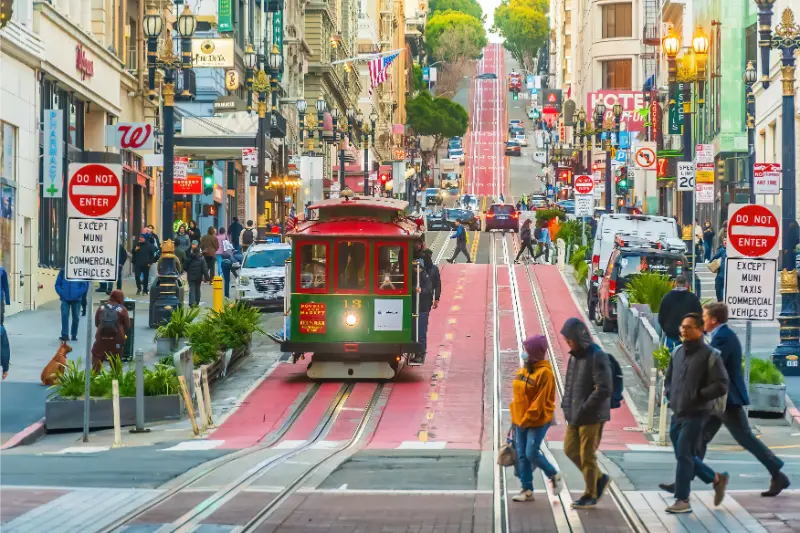
San Francisco is one of the easiest major California cities to visit without a rental car, but its transportation network can look confusing because several systems overlap. Muni buses and light rail handle most trips inside the city, BART is useful for the airport and regional connections, cable cars are both transportation and attraction, and ferries can be the best way to combine sightseeing with a Bay crossing.
The goal is not to master every line. A first-time visitor only needs to understand which system solves which problem, how to pay, and when walking is faster than waiting for another vehicle.
Muni vs BART: the distinction that saves confusion
Muni is San Francisco’s local network: buses, Muni Metro, historic streetcars and cable cars. BART is a regional rapid-transit system that is especially useful for airport trips and travel to parts of the East Bay. Visitors often overuse BART for city sightseeing because its map looks simple, even when a Muni route would place them closer to the destination.
Think of BART as regional and Muni as local. For current Muni fares and visitor passes, use the official SFMTA fare page.
| Mode | Best use | Visitor note |
|---|---|---|
| Muni bus | Neighborhood-to-neighborhood trips | Often the closest stop to your destination |
| Muni Metro | Fast travel on key corridors | Useful for downtown and western neighborhoods |
| BART | Airport and regional trips | Not a complete city sightseeing network |
| Cable car | Historic experience + steep corridors | Popular; queues can be long |
| Historic streetcar | Waterfront/Market corridor | Scenic and practical on the right route |
| Ferry | Sausalito, Tiburon, East Bay connections | A transport ride with great Bay views |
How to pay in 2026
Payment technology continues to evolve. Adult riders can use Clipper and supported contactless bank cards on many transit services; SFMTA continues to offer visitor products, while some MuniMobile functions are being phased out. Because payment details can change, check the official fare page shortly before your trip rather than relying on an old travel blog screenshot.
If you are traveling as a family, make sure each rider has an appropriate payment method. A single bank card may not function as a magic group ticket simply because everyone is boarding together.
Cable cars: use them strategically
Cable cars are worth riding at least once if the experience interests you, but they are not always the fastest way to move. Terminal queues can be long at popular times. Boarding at an intermediate stop may help, but vehicles can also arrive full.
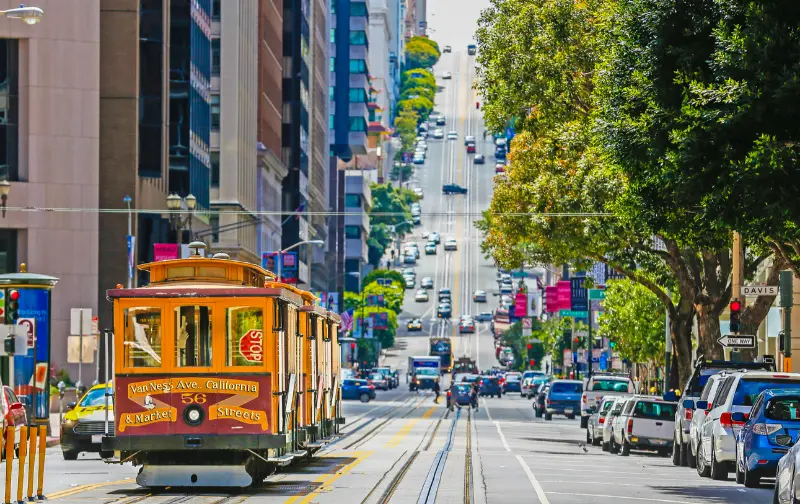
Use our San Francisco cable-car guide for route choice, queues and the difference between a scenic ride and an efficient transfer.
The waterfront: streetcar, walking and ferry
Fisherman’s Wharf, the Ferry Building and the Embarcadero are easy to connect with a mix of walking and historic streetcar service. If your legs are fresh, walking part of the waterfront often gives you more than repeatedly boarding transit for short segments.
Our Fisherman’s Wharf guide can help you decide how much time the tourist waterfront deserves.
Golden Gate Bridge and the Presidio
Muni buses reach the Presidio and Golden Gate Bridge area, and the Presidio also operates its own free shuttle network. The exact best route depends on where you start, so use live trip planning rather than memorizing a bus number months before travel.
The Presidio guide and Golden Gate Bridge guide explain the walking distances around the viewpoints.
Golden Gate Park
Golden Gate Park is long enough that entering at the wrong end can add a lot of walking. Decide whether your anchor is a museum, garden, the western end near Ocean Beach or simply a park walk, then choose transit around that anchor.
Our Golden Gate Park guide gives a one-day structure that avoids crossing the entire park repeatedly.
BART from the airport
BART is one of the most useful ways to reach central San Francisco from SFO. The best station for your hotel depends on the neighborhood, and the last part may still involve walking, Muni or a short rideshare.
With heavy luggage, children or mobility needs, compare total door-to-door effort rather than fare alone. A train can be cheaper but not automatically easier for every hotel.
Ferries as part of the itinerary
A ferry to Sausalito can replace a conventional sightseeing cruise while also getting you somewhere useful. Angel Island and other ferry destinations require more schedule awareness because missing the return sailing has larger consequences than missing a city bus.
See our Sausalito guide and Angel Island guide before building a ferry day.
Walking: the hidden variable is the hill
San Francisco is compact on a map but vertical in real life. A route that is one mile long can feel completely different depending on the grade. When walking with small children, older travelers or anyone with limited mobility, check the elevation profile and use transit for the steepest segment.
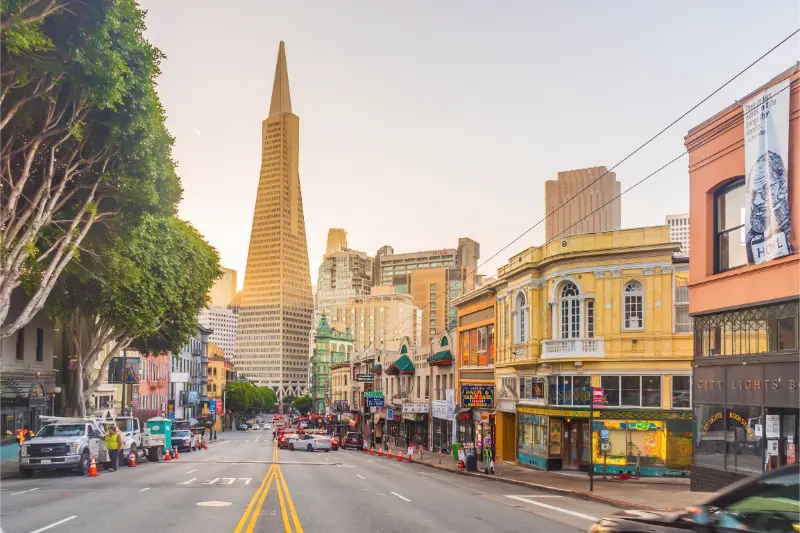
A classic mistake is planning a day by straight-line distance and only discovering the hill after lunch.
Families and strollers
Low-floor buses and rail make many journeys manageable, but crowded vehicles and steep sidewalks can still be challenging with a large stroller. A compact stroller or carrier often works better for cable cars and older infrastructure.
Children may also enjoy transit as part of the experience, especially ferries, historic streetcars and cable cars. Build that enjoyment into the day instead of treating every ride as dead time.
Accessibility and older travelers
Many Muni vehicles and stations are accessible, but elevator outages and stop-specific boarding conditions can matter. Check live alerts when step-free access is essential and allow a backup route.
If your group has different mobility levels, use transit to shorten the steepest sections and let more active travelers add optional walking loops.
Do you need a car for San Francisco?
Usually not for the city itself. A rental car adds parking cost and can be inconvenient in dense neighborhoods. Rent one when you leave for a road trip, wine country, Point Reyes or a destination where transit would consume too much time.
For a broader first visit, combine this article with our three-day San Francisco itinerary.
A simple transport strategy for first-timers
Use BART for airport/regional trips, Muni for everyday city movement, cable cars once or twice for the experience, ferries when they are part of the sightseeing, and your own feet for compact neighborhood clusters. Add rideshare only when it solves a specific difficult connection.
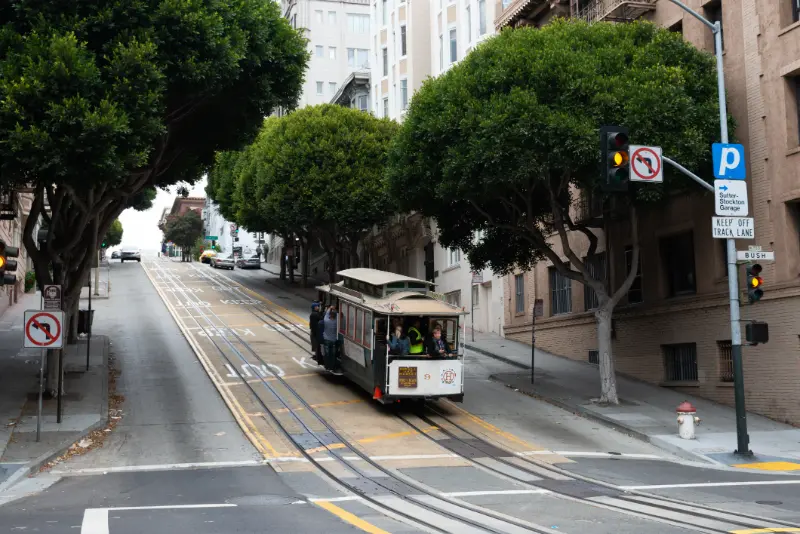
That approach is easier than trying to buy a different pass for every system or forcing one transport mode to do everything.
A practical morning-to-evening rhythm
Use transit for the first major move of the day, then spend several hours in one walkable cluster before making another cross-city transfer. This reduces the number of times you have to re-plan around delays, elevators, missed connections or a tired child.
Download the official transit app or live map before leaving Wi-Fi, keep a charged phone and carry a backup payment option. If a disruption would make you miss a timed ticket, leave more margin than the journey planner’s best-case estimate.
One more practical point
The best version of this trip is the one that matches the people traveling, the season and the conditions on the day. Avoid building the schedule from isolated map pins; think in complete blocks that include parking or transit, walking, meals and rest.
Reconfirm time-sensitive details with official sources and keep a simple backup plan. California is easier to enjoy when the itinerary can absorb one closure, delay or weather change without collapsing.