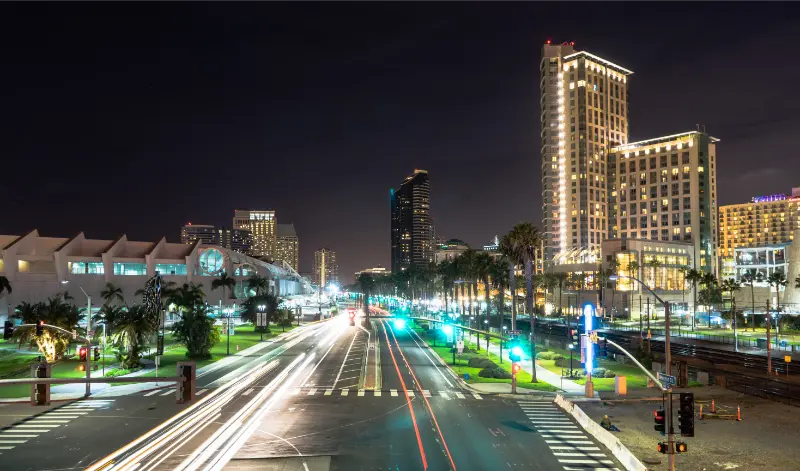
San Diego is easier without a car than its spread-out map suggests, but only if you separate the destinations that sit on the Trolley and frequent bus network from those that require slower coastal connections. Downtown, Old Town, Little Italy, Mission Valley and several major attractions are straightforward; La Jolla, some beaches and the Safari Park require more planning.
A car-free San Diego trip works best for visitors who want a relaxed city-and-coast itinerary rather than a daily tour of the entire county. The following plan uses public transportation where it is strong and recommends a rideshare or organized transfer when public transport would consume too much of the day.
San Diego public transport in plain English
The Metropolitan Transit System operates the Trolley, buses and Rapid services across much of the urban area. The PRONTO system uses pay-as-you-go fare capping, and eligible transfers are easier when you use the same card or app consistently. Check current fares and payment rules on the official MTS fare chart before travel.

The Trolley is especially useful for Downtown, Old Town, Mission Valley and the border corridor. Buses fill many gaps, but coastal trips can involve more time and transfers than the map initially suggests.
| Area | Without a car | What to know |
|---|---|---|
| Downtown/Little Italy | Excellent | Walk + Trolley + buses |
| Old Town | Excellent | Easy Trolley stop and compact historic area |
| Balboa Park | Good | Bus/rideshare from central areas |
| Coronado | Good | Ferry + walking/bus works well |
| La Jolla | Mixed | Bus or rideshare; allow extra time |
| Mission/Pacific Beach | Mixed | Bus access, slower than driving |
| Safari Park | Poor | Far inland; plan a dedicated transfer |
Where to stay for a car-free San Diego trip
Downtown and Little Italy are the most flexible bases because they combine walkability with Trolley access and easy connections toward Old Town. Old Town itself can work well for families who value parking-free access to the historic park and transit, although evening dining options feel different from Downtown.
If beach time is the main reason for your trip, staying at the beach and using rideshare for city attractions may be better than staying Downtown and commuting to the sand every day. Our where to stay in San Diego guide compares the main areas.
Day 1: Downtown, waterfront and Little Italy
Keep the arrival day geographically tight. Walk the waterfront, choose the USS Midway or another major attraction, continue through the Embarcadero, and have dinner in Little Italy or the Gaslamp depending on your interests.
The USS Midway guide can take a substantial part of the day. Do not add La Jolla simply because sunset looks appealing on a map; save the coast for a day when you can enjoy it without rushing.
Day 2: Balboa Park and the zoo
Balboa Park is one of the best reasons to avoid an overpacked schedule. Choose the San Diego Zoo as the anchor or select a small number of museums and gardens. Transit from central San Diego is manageable, but walking inside the park adds up quickly.

Use our Balboa Park guide and San Diego Zoo guide to decide whether the zoo should be the whole day.
Day 3: La Jolla or Coronado
Choose one coast-focused day. La Jolla offers coves, coastal scenery and marine wildlife viewing; Coronado offers a simpler ferry-based experience from Downtown and a long, walkable beachfront area. Doing both can be possible, but it changes the day from relaxed to transfer-heavy.
Our La Jolla guide and Coronado guide explain the trade-offs.
Mission Beach and Pacific Beach without a car
These beach areas are reachable by bus, but the trip can take longer than visitors expect. If they are a priority, start early and spend a substantial block of time there. Using a rideshare for one direction can turn a tiring multi-transfer evening into a simple return.
See our Mission Beach and Pacific Beach guide for a realistic beach-day plan.
What about the San Diego Zoo Safari Park?
The Safari Park is far inland near Escondido and should not be treated like another Balboa Park attraction. For a visitor without a car, compare organized transportation, rideshare cost and travel time before buying a ticket. Public-transit-only options may be possible but can be inefficient for a vacation day.
Our Safari Park guide explains why the two zoo properties require different planning.
Airport arrival
San Diego International Airport is close to Downtown, which makes a car-free trip easier than in many large California cities. Bus and shuttle connections may work well, while taxi or rideshare can be sensible with luggage because the distance is short relative to the rest of the city.
Check current airport ground-transport information shortly before travel; construction and pickup locations can change even when the basic geography does not.
Families without a car
Families can do very well without a rental car if they stay central and limit the number of distant beach days. A stroller is useful Downtown and in large attractions, but bus boarding and crowded vehicles may be easier with a compact model.
For younger children, one rideshare at the end of a long zoo day can be worth more than the money saved by forcing a complicated transit return. Our San Diego with kids itinerary provides age-based planning.

Older travelers and accessibility
Trolley stations and buses provide accessible features, but the practical challenge is often distance between the stop and the attraction. Balboa Park, waterfront areas and beaches can involve more walking than the transit map suggests.
Plan around benches, restrooms and shorter segments. If a person in the group has limited stamina, combine transit with targeted rideshares rather than making every transfer a test of endurance.
When you should rent a car anyway
A car becomes more useful when your itinerary includes the Safari Park, multiple North County beach towns, Anza-Borrego, Julian or a continuation toward Orange County and Los Angeles. Renting only for those days can preserve the convenience of a car-free city stay while avoiding unnecessary parking.
For a broader route, compare our San Diego to Los Angeles coastal road trip.
The mistakes that make car-free San Diego feel harder than it is
Do not stay far from the Trolley to save a small amount on the room, then spend the difference on rideshares. Do not combine La Jolla, Coronado and Mission Beach in one day unless you specifically enjoy moving around. And do not assume every attraction called ‘San Diego’ is near Downtown.
The city works without a car when you group the center, Balboa Park and the coast into separate days and use the right mode for each.
A practical morning-to-evening rhythm
Use transit for the first major move of the day, then spend several hours in one walkable cluster before making another cross-city transfer. This reduces the number of times you have to re-plan around delays, elevators, missed connections or a tired child.
Download the official transit app or live map before leaving Wi-Fi, keep a charged phone and carry a backup payment option. If a disruption would make you miss a timed ticket, leave more margin than the journey planner’s best-case estimate.
One more practical point
The best version of this trip is the one that matches the people traveling, the season and the conditions on the day. Avoid building the schedule from isolated map pins; think in complete blocks that include parking or transit, walking, meals and rest.
Reconfirm time-sensitive details with official sources and keep a simple backup plan. California is easier to enjoy when the itinerary can absorb one closure, delay or weather change without collapsing.