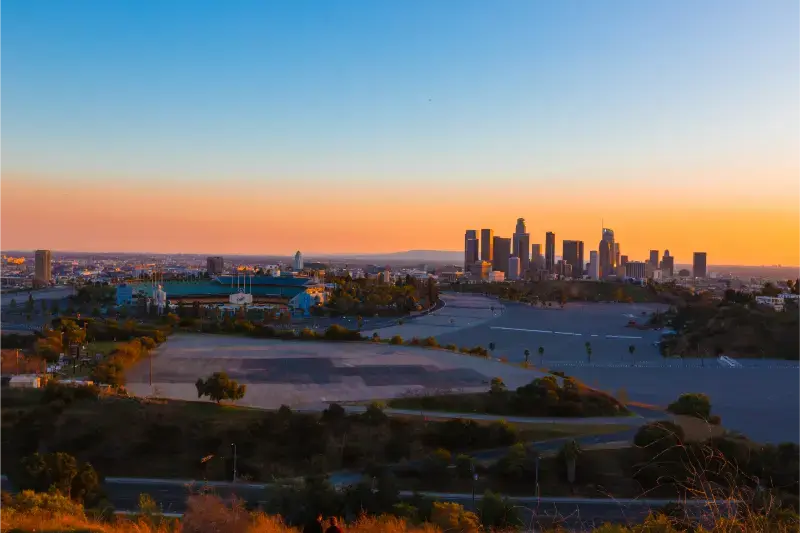
Los Angeles can be expensive, but many of its defining experiences do not require an admission ticket. The catch is that “free” often still means paying for parking, transportation or food. The best budget strategy is to group free attractions by neighborhood so you do not spend more moving between them than you saved on tickets.
Use our Los Angeles first-time guide to understand the city’s scale. The list below prioritizes experiences that are actually worth part of a vacation day, not obscure stops included only because they cost nothing.
1. Griffith Observatory and the surrounding views
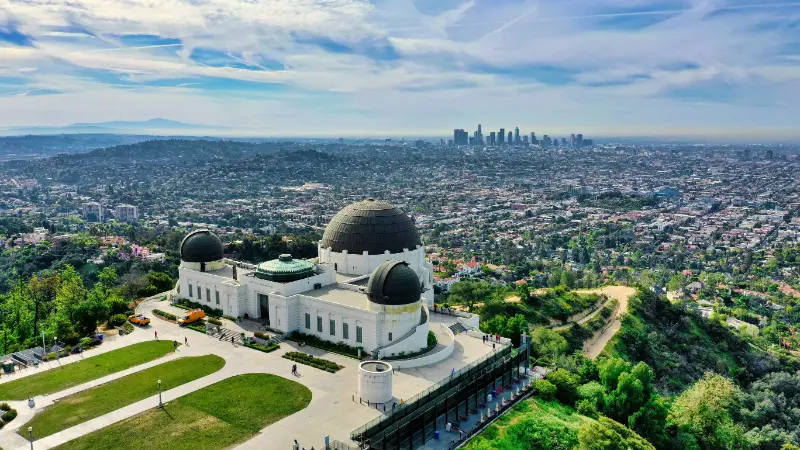
Admission to the Observatory building is free, while parking and some planetarium shows are not. The terraces provide one of the classic Los Angeles panoramas and a strong Hollywood Sign view. Combine it with a walk in Griffith Park using our Griffith Observatory and Griffith Park guide.
2. Walk a section of Griffith Park
You do not need a long hike. Short trails and viewpoints can turn the Observatory visit into a half-day without an admission fee. Bring water and avoid exposed trails during dangerous heat.
3. Getty Center general admission
The Getty Center is one of the best-value cultural experiences in California because general admission is free, although parking is charged. Reserve the required timed entry when applicable and use our Getty Center guide for transport and timing.
4. Santa Monica Beach
The beach itself is free. Parking, bike rental and pier rides are not. Walk the shoreline, watch sunset and decide whether the pier attractions are worth extra spending. Our Santa Monica guide explains where the day becomes expensive and where it does not need to.
5. Venice Beach and the boardwalk atmosphere
Walking the boardwalk, seeing street performers and continuing toward the beach costs nothing. Keep valuables secure and visit during daylight if your group is uncomfortable with busy urban beach environments.
6. Abbot Kinney Boulevard window-shopping
You do not have to buy anything to enjoy the architecture, murals and atmosphere. Pair it with Venice rather than driving across the city for a standalone stop.
7. Hollywood Walk of Fame
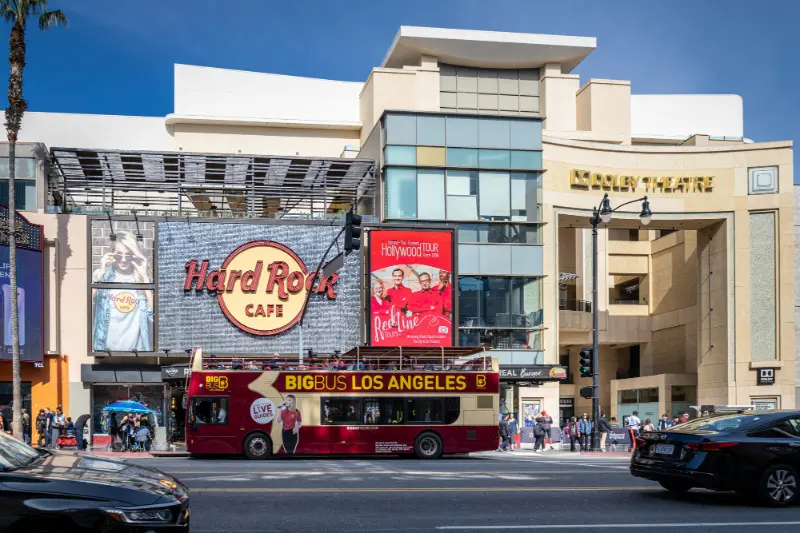
The sidewalk attraction is free. The experience is also crowded and commercial, so keep it short unless Hollywood history matters to you. Spend money only on a museum or tour that genuinely interests you rather than because you feel obligated.
8. Hollywood Sign viewpoints
Several public viewpoints and Griffith Park trails provide views of the sign without a ticket. Choose legal parking and do not enter residential roads simply because a navigation app suggests a shortcut.
9. Downtown Los Angeles architecture walk
A self-guided walk can include Grand Avenue, public plazas, historic facades and exterior views of landmarks. Museum admission and concerts are separate, but the cityscape itself can fill a good morning.
10. Grand Central Market atmosphere
Walking through is free; eating is not. It works best as a lunch stop within a downtown day rather than a destination that requires a separate trip.
11. Olvera Street
The historic pedestrian area near Union Station is free to explore. Shops and food cost extra. Combine it with downtown rail access and nearby civic landmarks.
12. Union Station
The main public spaces are worth seeing for architecture and history, especially if you are already using transit. It pairs naturally with Olvera Street.
13. The exterior of Walt Disney Concert Hall
Walking around the building and its public areas can be a satisfying architecture stop even without a performance ticket. Combine it with Grand Avenue rather than driving there only for a photograph.
14. Malibu beaches with public access
California beaches are generally public below the mean high-tide line, but access routes and parking rules matter. Choose a clearly signed public access point and respect local parking restrictions. Malibu is better as a half-day coastal plan than a quick detour across Los Angeles traffic.
15. Runyon Canyon
Runyon is a popular urban hike with city views. It can be hot, crowded and difficult to park near, so use it only if hiking close to Hollywood fits your day. Griffith Park often gives first-time visitors a more varied experience.
16. Exposition Park grounds
The public spaces around major museums can be enjoyed without buying a special-exhibition ticket. The California Science Center also typically offers free general admission, though special exhibitions and parking may cost extra.
17. California Science Center general exhibits
General admission is typically free, making this one of the strongest family budget options in Los Angeles. Confirm the current status of major exhibits before visiting because the Space Shuttle Endeavour project continues to change what is visible.
18. LACMA Urban Light exterior installation
The outdoor installation is visible without museum admission and is especially atmospheric after dark. Pair it with Museum Row rather than driving long distance for a ten-minute photo stop.
19. Farmers Market and The Grove atmosphere
Browsing costs nothing, but food and shopping quickly change the budget. It is a practical evening stop after Museum Row because it requires little additional sightseeing energy.
20. Sunset from the coast or a city overlook
One of the best Los Angeles experiences is simply choosing a legal, safe viewpoint and watching the light change. The beach, Griffith Park and elevated neighborhoods all create different sunset experiences without an admission ticket.

How to keep a “free” day actually cheap
Group stops by area, use transit or rideshare selectively and compare parking costs before driving. A free attraction that requires two hours of cross-city traffic and expensive garage parking may be worse value than a paid museum next to your hotel.
A realistic free day
Morning: Getty Center or Griffith Observatory. Afternoon: one neighborhood or beach area. Evening: sunset plus a walkable dinner zone. Do not try to collect all 20 items; choose three or four that naturally fit together.
Planning for families, seniors and a slower travel pace
A good California itinerary should work for the slowest realistic pace in the group, not the fastest person. Families need bathroom, snack and reset time; older travelers may prefer shorter walks and more reliable parking; travelers with mobility limitations need to know which viewpoints or facilities can be reached without stairs or rough terrain. Build at least one comfortable break into the middle of the day and keep one attraction optional. That simple choice makes the plan far more resilient when traffic, heat, altitude, queues or fatigue change the day.
If accessibility is essential, use the official attraction or park accessibility page shortly before the visit. Construction, seasonal shuttle routes and temporary closures can change which paths are practical. A short accessible viewpoint that everyone can enjoy together is often a better choice than splitting the group simply to complete a famous hike or attraction.
Budget and booking strategy
Separate the costs that are unavoidable from the costs that are optional. Parking, entrance fees, fuel and accommodation usually matter more than a small difference in meal prices. Reserve the elements that are capacity-limited or difficult to replace, but avoid turning every hour into a reservation. California travel is easier when part of the day remains flexible for weather, traffic and spontaneous stops.
Before paying for an upgrade, ask what problem it solves. A closer hotel can be worth more than a larger room if it removes two rideshare trips every day. A paid shuttle can be better value than parking if it reduces stress. Conversely, a premium tour may add little when the main experience is already easy to visit independently. Compare the total day cost rather than one headline price.
How to fit this into a longer California trip
California distances are deceptive, so combine places by geography rather than by fame. Two attractions can both appear under the same city or park name yet require a substantial transfer. Use real driving or transit time at the hour you expect to travel, and avoid changing hotels for a single attraction unless the move clearly improves the following day. A longer stay in one well-chosen base is often more enjoyable than collecting one-night stops.
Protect the experiences you care about most by scheduling them earlier in the trip or earlier in the day. Keep a backup nearby rather than on the opposite side of a metropolitan area or mountain range. Road work, fog, wildfire smoke, snow, heat and sold-out parking can all force changes. Flexibility is not wasted time in California; it is part of a realistic plan.
Before you leave
Check the official website again within 24–48 hours of the visit. Confirm opening hours, reservations, road conditions, parking instructions and any weather or safety alerts. Carry water, a phone charger and one extra layer even when the forecast looks simple. Most importantly, be willing to shorten the day if conditions or energy are worse than expected. A well-paced California trip is usually more memorable than a perfectly completed checklist.
One final practical rule is to separate the one experience that would disappoint you to miss from everything else. Put that priority first, then build the rest of the day around it. This keeps a late meal, parking delay or weather change from destroying the itinerary and makes it easier to adapt without feeling that the trip has failed.
One final practical rule is to separate the one experience that would disappoint you to miss from everything else. Put that priority first, then build the rest of the day around it. This keeps a late meal, parking delay or weather change from destroying the itinerary and makes it easier to adapt without feeling that the trip has failed.