California has no shortage of famous views, but some of the best require much less effort than visitors assume. You do not need a ten-mile hike to look across Yosemite Valley, the Golden Gate, Death Valley badlands or the Pacific. For families, senior travelers and road-trippers with limited time, an easy viewpoint can deliver the visual highlight of a day without consuming the whole schedule.
This list focuses on scenic stops that are generally reached by road, short walk or modest urban approach in normal conditions. ‘Easy’ still depends on weather, seasonal road openings, parking and mobility. Mountain viewpoints can close for snow, desert overlooks can be dangerously hot, and coastal pullouts are never safe places to improvise parking.
1. Tunnel View — Yosemite National Park
Tunnel View is one of the most efficient scenic stops in any U.S. national park. From a roadside overlook on Wawona Road, you get the classic composition of Yosemite Valley with El Capitan, Bridalveil Fall and Half Dome in the distance.
The stop can take ten minutes or half an hour depending on crowds and light. It works for almost every first-time Yosemite itinerary, especially on arrival from the south. Use our Yosemite first-time guide to avoid turning the rest of the day into a sequence of viewpoints with no time in the valley itself.
2. Glacier Point — Yosemite, when the road is open
Glacier Point gives a much higher perspective over Yosemite Valley and Half Dome, but unlike Tunnel View it depends on seasonal road access. Snow typically closes the road in winter, and opening dates vary by year.
When open, it is a powerful option for travelers who want a high-elevation view without a full-day hike. Check NPS road status before departure and never assume that a summer calendar date guarantees access after an unusually snowy year.
3. Zabriskie Point — Death Valley
Zabriskie Point is a short-access overlook with eroded golden badlands and broad desert views. Sunrise can be spectacular, but you do not need to visit at a famous photography hour to appreciate the landscape.
The primary challenge is heat, not trail difficulty. In warm months, minimize time outside the vehicle and follow current park safety guidance. Our Death Valley in winter guide explains why the cooler season is usually the better first experience.
4. Dante’s View — Death Valley
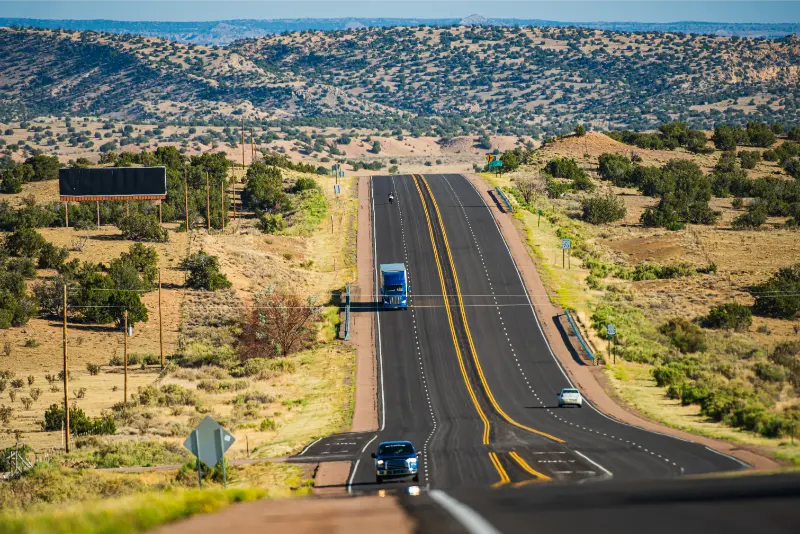
Dante’s View sits high above the basin and gives a completely different sense of Death Valley’s scale. Because of its elevation, temperatures can be much cooler than the valley floor and the road can be affected by weather.
This is an excellent example of why you should compare conditions across elevations rather than relying on one park forecast. Check road status before committing to the drive, especially around winter storms.
5. Keys View — Joshua Tree National Park
Keys View is the classic drive-up panorama in Joshua Tree, looking across the Coachella Valley toward mountain ranges and, on clear days, far beyond. It fits well near the end of a day built around short walks and rock formations.
Sunset is popular, which means parking and traffic can become the limiting factor. If crowds are heavy, a clear late-afternoon visit can be more enjoyable than waiting for one exact moment. Our Joshua Tree guide covers the broader park strategy.
6. Mount Diablo summit area — East Bay
Mount Diablo rises above the East Bay and offers broad views from a summit road reached through Mount Diablo State Park. On exceptionally clear days the range of visible landscapes is remarkable, but haze is common enough that you should enjoy the mountain rather than treating a distant landmark as guaranteed.
The drive is winding and cyclists share the road. Use turnouts, obey speed limits and give bicycles space. Our Mount Diablo day-trip guide includes hiking, timing and family considerations.
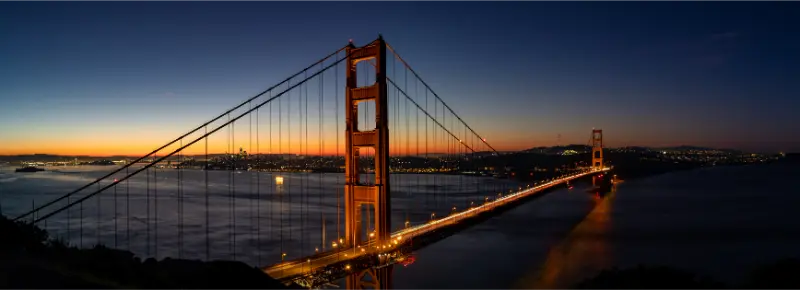
7. Golden Gate viewpoints in the Marin Headlands
The Marin Headlands provide some of the most recognizable Golden Gate Bridge views, but parking is limited and weekend closures or traffic-management measures can affect specific lots. The best strategy is to check current conditions and be ready to use a second viewpoint instead of circling one full lot.
Our Golden Gate Bridge guide compares viewpoints and explains why public transportation, walking or carefully timed driving often beats arriving at peak afternoon with a car.
8. Griffith Observatory terraces — Los Angeles
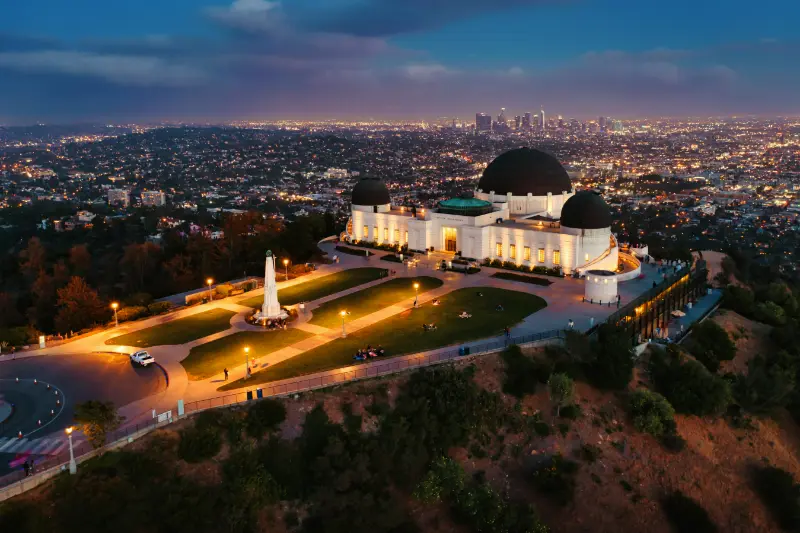
Griffith Observatory offers an urban panorama rather than wilderness: the Los Angeles basin, skyline, hills and the Hollywood Sign from one compact destination. The view is accessible without a major hike, though parking and shuttle logistics can add time.
Go for the combination of city view and observatory, not only for a sunset photo. Our Griffith Observatory guide explains transport choices and why arrival timing matters.
9. Palisades Park — Santa Monica
For a low-effort Pacific view, Palisades Park along the bluff in Santa Monica is hard to beat. You can walk as little or as much as you want, with repeated ocean overlooks and easy access to cafés, the pier and city streets.
It is especially useful for multigenerational trips because one traveler can take a longer walk while another enjoys a bench and the same view. Pair it with our Santa Monica guide for a full beach-city day.
10. 17-Mile Drive coastal viewpoints
17-Mile Drive combines multiple signed coastal viewpoints between Pacific Grove and Pebble Beach. The attraction is not one single overlook but the ability to choose several short stops without hiking long distances.
Do not stop at every turnout. Pick three or four that match your interests and leave time for Carmel or Monterey. Our 17-Mile Drive guide explains the current entry system and route planning.
11. Point Lobos roadside and short-walk overlooks
Point Lobos is more rewarding if you walk at least a short trail, but several coastal viewpoints can be reached with relatively modest effort when parking is available. Sea conditions, wildlife and light change enough that the view never feels static.
Parking fills, and roadside overflow outside the reserve can create a longer walk. Use our Point Lobos guide to choose one cove or loop instead of trying to cover the entire reserve.
12. Lake Tahoe scenic pullouts and lakeside overlooks
Lake Tahoe has numerous viewpoints around the basin, but the safest and most satisfying experience comes from established overlooks and parks rather than roadside improvisation. Emerald Bay is the obvious classic, while the north and east shores provide different water-and-mountain perspectives.
Summer traffic and winter snow change access significantly. Our Lake Tahoe guide and where to stay in Lake Tahoe guide help reduce the temptation to drive the whole lake in one rushed loop.

How to photograph viewpoints without making the trip about photography
Arrive with enough time to look before taking out the phone or camera. The strongest views often change over ten minutes as fog, cloud or light moves. A tripod can be useful at legal, uncrowded spaces but becomes an obstacle on narrow overlooks.
Never step beyond barriers, onto unstable cliffs or into the road for a cleaner composition. California has enough official viewpoints that no photo is worth inventing a dangerous one.
Best viewpoints for families
Tunnel View, Palisades Park and many 17-Mile Drive stops work well because children get an immediate payoff without a long approach. Pair one viewpoint with an activity where they can move—beach, short trail, visitor center or picnic—rather than spending the entire day getting in and out of the car.
For toddlers, keep cliff edges and busy parking lots in mind. A scenic overlook can be more demanding to supervise than a contained trail.
Best viewpoints for senior travelers
Drive-up overlooks can make a California road trip accessible to travelers who do not want strenuous hiking, but altitude, heat and uneven surfaces still matter. Glacier Point and mountain roads may involve higher elevation; desert viewpoints can be exposed; coastal sites can be windy.
Use official accessibility information for the exact viewpoint when mobility is limited. The Accessible California guide provides a broader planning framework.
The biggest viewpoint mistake: too many stops
Scenic road trips become exhausting when every pullout is mandatory. On Highway 1 or around Tahoe, choose a few anchor views and let others remain optional. The goal is to remember the landscape, not the parking maneuvers.
Build viewpoints into travel days where they naturally fit. Driving two hours out of the way for a five-minute overlook usually makes less sense than choosing a strong view already on your route.
Check conditions before the day begins
Road openings, wildfire smoke, fog, snow and construction can completely change the value or accessibility of a viewpoint. Use National Park Service alerts for federal parks, California State Parks for state lands and Caltrans QuickMap for highways.
A backup viewpoint is easy to build into the plan. If mountain clouds hide a summit, spend the time lower down. If coastal fog erases a sunset, enjoy the town or trail instead of waiting in a parking lot for weather that may not change.
When sunrise or sunset is actually worth the effort
Famous viewpoints often look best near the edges of the day, but sunrise and sunset are not automatically better for every traveler. A dark pre-dawn mountain road, full parking lot or tired child can erase the benefit of dramatic light. Choose golden-hour timing only when the route, weather and group make it comfortable.
Midday viewpoints can still be excellent when visibility is clear. On a first trip, seeing the landscape safely is more important than reproducing a photograph you saw online.