
California is often presented as a fast road trip: land in San Francisco, drive the coast, cross to Yosemite, rush to Los Angeles and finish in San Diego. That route can be wonderful, but it is not the only way to travel. For older visitors—or simply anyone who values comfort over constant movement—the state is often better when you slow it down, stay longer in each base and choose attractions according to energy, mobility and the distance from the hotel rather than fame alone.
A senior-friendly California trip does not need to mean avoiding national parks, beaches or cities. It means designing them intelligently. A hotel near the activity you care about can save more energy than a luxury room far away. A scenic drive with short accessible stops may deliver more than a demanding trail. A free shuttle can turn a difficult parking day into an easy one.
California State Parks maintains a dedicated database of accessible features in state parks, including information about trails, picnic areas, camping and beach access. Because conditions can change, use that resource and the individual park page shortly before your visit rather than assuming an accessibility description from an old blog remains current.
The first rule: reduce hotel changes
Moving hotels is tiring even when the driving distance is short. Packing, checking out, finding parking, waiting for a room and reorganizing luggage can consume half a day. For a two-week trip, four bases are often more comfortable than seven or eight.
A good rhythm is three nights in a major city, three or four nights in a nature or coast base, another three nights in a second city and a final slower stop. The exact route depends on flights and interests. Our 14-day California itinerary is a useful starting point, but senior travelers should feel free to remove one region rather than compress the remaining stops.
Choose hotels for the whole day, not only the night
For older travelers, the room itself is only part of the accommodation decision. Check elevator access, the distance from the parking area to reception, shower configuration, bed height if mobility is limited, refrigerator availability, restaurant access and whether the immediate neighborhood is pleasant enough for an easy evening walk.
In San Francisco, hills matter as much as hotel category. A property that looks central on a flat map may sit on a steep block. Our where to stay in San Francisco guide compares neighborhoods by practical movement, not just atmosphere. In Los Angeles and San Diego, location can reduce long car journeys in exactly the same way.
San Francisco without turning every day into a hill climb
San Francisco can be surprisingly comfortable when planned around public transport, ferries and waterfront areas. Stay near a route you expect to use, group attractions by neighborhood and avoid crossing the city several times in one day.

The Presidio is a strong example. The park includes viewpoints, cultural sites and open space, and the Presidio guide explains how to use the free Presidio GO Shuttle rather than driving between every stop. Alcatraz can also work well for many older visitors; accessibility services exist, but the island has steep terrain, so read the current official information before booking.
Los Angeles: stay near your priorities
Los Angeles becomes tiring when accommodation is chosen by price alone and every attraction sits on the other side of the metropolitan area. A beach-focused traveler may prefer Santa Monica. Someone interested in museums, Beverly Hills and central neighborhoods may be better in West Hollywood or Beverly Grove. A Universal Studios-heavy trip can justify Universal City.
Use our Los Angeles accommodation guide to eliminate unnecessary cross-city driving. It is usually better to pay slightly more for the correct district than to save money and spend the difference on parking, fuel and rideshares.
San Diego: one of the easiest large California cities for a slower trip
San Diego works particularly well for travelers who like a combination of waterfront scenery, gardens, wildlife and coastal neighborhoods. Balboa Park can be visited selectively rather than as a marathon of museums. Coronado offers a flatter, slower atmosphere. La Jolla provides scenic coastal viewpoints, though some paths and slopes require more mobility.
The San Diego neighborhood guide helps match accommodation to the day plan. A Mission Bay resort can be ideal for rest days, while Little Italy can work well for travelers who want restaurants close to the hotel.
Yosemite: enjoy the valley without needing a major hike
Yosemite is not reserved for strong hikers. Yosemite Valley has enormous scenery visible from roads, paved routes and short walks. The National Park Service states that the free Yosemite Valley shuttle is fully accessible and connects lodging, food services, campgrounds and major trailheads. Check the current Yosemite accessibility information before your trip because services and seasonal access can change.
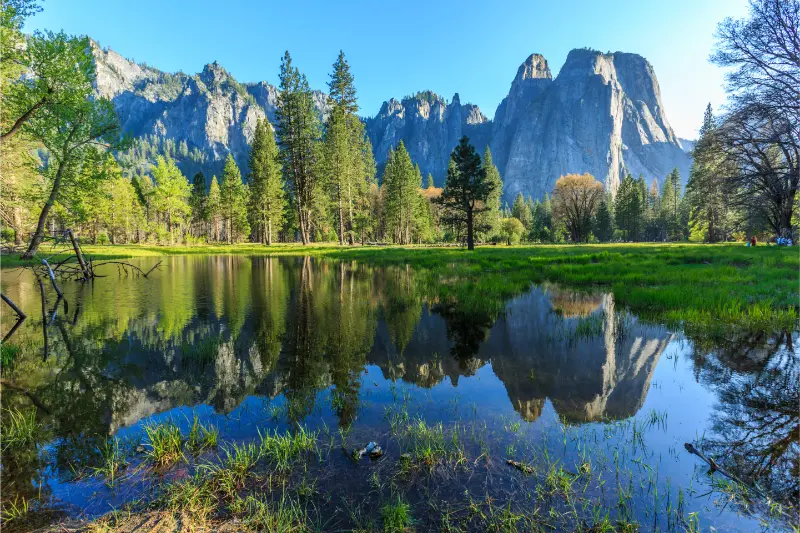
Stay inside the park or as close as your budget allows if reducing daily driving matters. Lodging inside Yosemite can be reserved well in advance and is especially competitive from spring through fall. The Yosemite first-time guide explains the geography so you do not accidentally book a hotel that is technically “near Yosemite” but far from the valley experience you expect.
Redwoods and giant sequoias with limited walking
California’s famous trees can be appreciated without completing a long trail. In the north, several redwood parks have scenic roads and short grove walks. In the Sierra, Sequoia and Kings Canyon offer giant sequoia areas where carefully chosen stops can deliver an extraordinary experience with moderate effort.
The key is to research the exact grove rather than assuming every “redwood” destination is the same. Elevation, road access, parking and trail surfaces differ greatly. Our Redwood National and State Parks guide and Sequoia & Kings Canyon guide provide different planning frameworks for the two regions.
Wine country without overloading the day
Napa and Sonoma are natural choices for a slower trip because the experience improves when you leave space between reservations. Two winery visits can be a full day once lunch, transportation and conversation are included. Avoid driving after drinking; use a designated driver, tour or professional transportation plan.
Yountville works well for travelers who value walkability and restaurants, while Calistoga offers a more relaxed small-town feel. Our Napa vs Sonoma comparison helps choose the region before you start booking tastings.
The coast: use viewpoints selectively
The California coast is beautiful but not every overlook needs to become a stop. Repeatedly getting in and out of the car can be more tiring than the driving itself. Choose three or four meaningful stops, have lunch somewhere comfortable and leave extra time for road work, fog or unexpected traffic.
If you are using Highway 1, check Caltrans road information close to travel because landslides and construction can change through-routes. The Highway 1 road-trip guide is built around realistic overnight stops rather than trying to cover the entire coast in one day.
Medication, heat and altitude
California itineraries can cross from sea level to high mountains and from cool fog to desert heat. Travelers with medical conditions should discuss relevant altitude, heat or activity concerns with their own clinician before departure rather than relying on general travel advice.
Keep essential medication in hand luggage, carry enough for delays and store it according to the manufacturer’s instructions. Desert destinations such as Death Valley and Joshua Tree require particular respect for temperature and hydration. High Sierra areas can also feel very different from the coast even on the same date.
Driving days: shorter is usually better
A map may describe a transfer as four hours, but meal stops, road work, scenic breaks and traffic can turn it into six. On a slower-paced trip, use 2–4 hours of planned driving as a normal transfer day and treat longer days as exceptions.
Share driving if possible. Avoid arriving at an unfamiliar mountain or coastal hotel after dark when the route is narrow or winding. If one person is the only driver, schedule a low-demand day after a long transfer.
A comfortable 12-day sample route
| Days | Base | Suggested rhythm |
|---|---|---|
| 1–3 | San Francisco | Waterfront, Presidio, one booked attraction, rest breaks |
| 4–5 | Sonoma or Napa | Two relaxed wine-country days |
| 6–8 | Monterey/Carmel | Aquarium, coast, short scenic drives |
| 9–12 | Los Angeles or San Diego | Choose one city rather than rushing both |
If Yosemite is the priority, replace wine country or the coast rather than inserting the park on top of everything else. Comfort comes from subtraction.
Accessibility planning that actually helps
Do not rely on the word “accessible” alone. Ask what it means for the activity you need: step-free entrance, accessible restroom, beach wheelchair, firm trail surface, parking space, elevator or shuttle lift. California State Parks provides park-by-park detail, and federal sites publish their own accessibility pages. Call ahead when a specific feature determines whether the visit is possible.
Also plan seating. A scenic place can be technically accessible but still tiring if there is nowhere to rest. Carry a light folding aid only if it is appropriate for the traveler and permitted, and schedule indoor or seated activities between outdoor days.
Final advice
A California trip for seniors is not a reduced version of a younger traveler’s itinerary. It can be a better-designed version: fewer bases, stronger hotel locations, more scenic drives, better meals and enough time to enjoy places after the tour buses leave.
Decide what would make the trip memorable, then remove the stops that exist only because a list says they are famous. California rewards travelers who slow down. You do not need to prove anything by arriving exhausted.