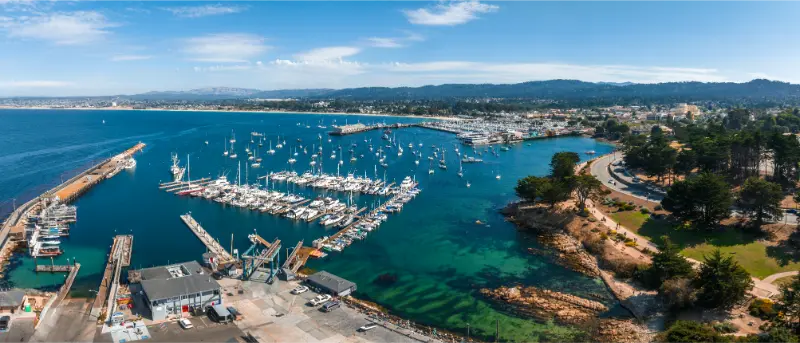
Monterey and Carmel are one of California’s easiest family combinations because the attractions are close together but genuinely different. Monterey offers the aquarium, waterfront and marine-life focus; Carmel adds a walkable village, beach and easy access to Point Lobos. The mistake is trying to turn the area into a one-day checklist that also includes Big Sur and 17-Mile Drive.
With children, two nights is the minimum I would choose for a first visit. Three nights is better if the aquarium is important or if you want a real Big Sur day.
Where should a family stay?
Monterey is usually more practical for families who want the aquarium, larger hotel selection and easier access to family restaurants. Carmel works well for families who value a walkable village and beach and are comfortable with potentially higher lodging costs. Pacific Grove can be a useful middle ground with quieter streets and coastal access.
Choose based on the activity that must happen early in the day, not on which town looks prettier in a photo.
Day 1: Monterey waterfront and aquarium
Make the Monterey Bay Aquarium the main event, not one of four stops. Families can easily spend several hours inside, especially when children want to revisit exhibits. The aquarium recommends planning tickets in advance, and public parking is in surrounding city garages/lots rather than an aquarium-owned visitor lot.
Use our Monterey Bay Aquarium guide for timing and parking details, and confirm current information on the official aquarium visit page.
After the aquarium: do less
Walk Cannery Row or the coastal trail, have an early meal and return to the hotel. Young children do not need a second major attraction after a stimulating museum. Older children may enjoy a short harbor or coastal walk more than additional indoor time.
If everyone still has energy, choose one sunset viewpoint instead of driving to Carmel and back just to say you went there.
Day 2: Carmel and Point Lobos
Start in Carmel for a beach walk and village time, then use Point Lobos as the day’s nature anchor. Families with younger children should choose one or two short trails or viewpoints rather than trying to circle the reserve. Parking can fill, and walking from outside the reserve adds distance.
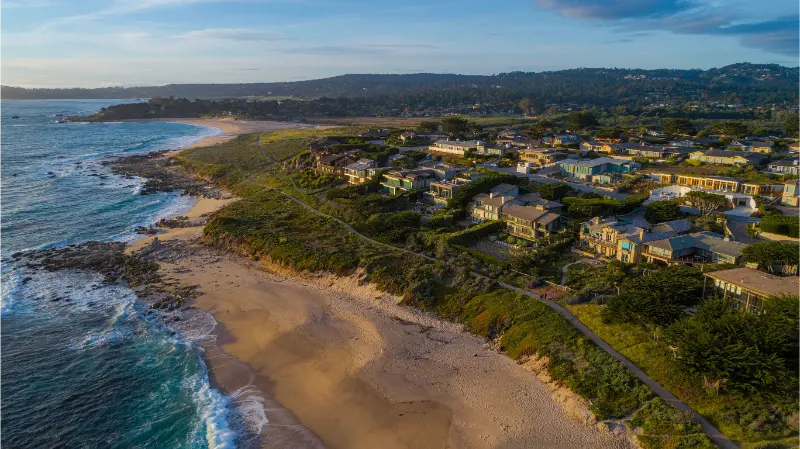
Our Point Lobos guide explains how to choose a realistic route.
17-Mile Drive with children
17-Mile Drive is visually beautiful but can become repetitive for children if adults stop at every marked point. Pick a few highlights, include a bathroom/food plan and move on while the views still feel special. Families with toddlers may prefer Carmel beach and Point Lobos instead.
Our 17-Mile Drive guide lists the stops worth prioritizing.
Should families add Big Sur?
Yes if you have a third day or older children who enjoy scenic drives and short hikes. No if it means leaving the aquarium early, skipping meals and driving into the evening. Big Sur is best as its own day with current Highway 1 conditions checked in advance.
Use Caltrans QuickMap and our Big Sur guide before committing to a long coastal loop.
Toddlers and preschoolers
The aquarium is ideal because it provides indoor time, bathrooms and visual variety. Add a beach period and one short nature walk. Bring a stroller for urban walking but expect some trails and sandy areas to be easier with a carrier.
Plan meals before children become hungry. Carmel’s restaurant waits can be frustrating when the family has already spent hours outdoors.
School-age children
Use the aquarium’s animals and conservation themes to frame the coastal experience. At Point Lobos, challenge children to notice tide pools, birds or sea mammals without turning wildlife into a scavenger hunt that encourages approaching animals.
Let them choose one viewpoint on 17-Mile Drive or one Carmel snack stop to give them ownership of the day.
Teenagers
Teens may enjoy kayaking, photography, coastal cycling or a more active Point Lobos walk. Give them time in Carmel or Monterey rather than filling every hour with adult-designed sightseeing.
A phone-friendly scenic stop can coexist with meaningful nature time; the goal is participation, not forcing everyone to enjoy the coast in the same way.
Marine wildlife expectations
Sea otters, seals, whales and seabirds are part of the region’s appeal, but sightings are not guaranteed. Keep a respectful distance and follow local rules around marine mammals. For whale watching, use reputable operators and consider motion sensitivity before booking.
Our California whale-watching guide explains seasons and shore-versus-boat choices.
Weather and clothing
Monterey Bay can be cool, windy or foggy even when inland California is hot. Bring layers and do not promise children a warm swimming beach. The coast is often better for walking, tide-pool observation and scenery than for long water sessions.
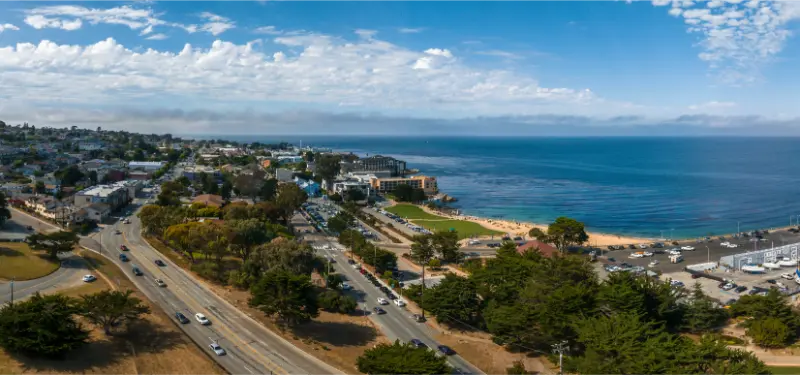
A sunny forecast inland does not tell you what the waterfront will feel like.
Food strategy
Use one planned restaurant meal and keep the rest flexible. Pack water and a simple snack so parking or a waitlist does not become an emergency. Families staying multiple nights may benefit from a hotel room with a refrigerator.
Do not leave visible bags or luggage in the car during coastal stops, especially on transfer days.
Accessibility and strollers
The aquarium and many urban waterfront areas are accessible, while beach sand and natural trails vary. Check exact surfaces and parking for anyone using a wheelchair or walker. Point Lobos has accessible features, but not every trail is suitable for every mobility level.
Mixed-mobility families should choose one shared viewpoint and then allow optional walks rather than making the longest trail the measure of a successful day.
The ideal family length of stay
Two nights gives you aquarium day plus Carmel/Point Lobos day. Three nights allows Big Sur, whale watching or a slower beach morning. One night is possible but often turns the region into a transfer stop.
Families usually remember Monterey and Carmel better when they stop trying to see the entire Central Coast from the same hotel.
Parking without turning the trip into a search
Use one central garage in Monterey and walk when possible. In Carmel and Point Lobos, arrive earlier on busy days and accept that the closest space may not exist. Circling for twenty minutes with children is rarely worth saving a short walk.
If a mobility need requires close access, research the specific accessible spaces and surfaces rather than relying on generic parking advice.
Booking and confirmation checklist
Before travel, reopen official pages for every time-sensitive element in this guide: road conditions, operating calendars, reservations, weather and seasonal closures. Save confirmations offline and keep the exact entrance, terminal or parking destination rather than a generic map pin.
Keep one activity each day optional. If traffic, weather or a closure removes an hour, dropping one lower-priority stop is better than pushing every meal and arrival later.
Accessibility and mixed-mobility groups
If anyone in the group uses a wheelchair, walker, stroller or simply needs shorter walking distances, verify the exact parking area, surface, restroom access and grade for the stops you plan to use. An accessible destination does not mean every beach access or trail is accessible.
Mixed-age groups travel better when the day has one shared anchor and optional shorter activities around it. Flexibility lets one person rest without forcing the whole group to abandon the day.