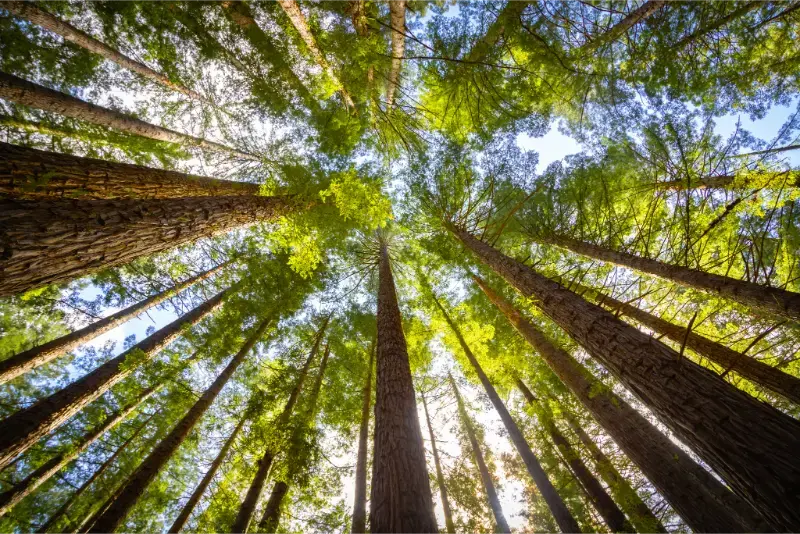
Redwood National and State Parks is not one compact park with a single entrance gate. It is a long chain of protected forests, beaches, rivers and state parks spread across the far Northern California coast. Three days gives you enough time to see multiple redwood environments without turning the trip into a race between trailheads.
The most useful mindset is north–south organization. Choose a base or two, group each day geographically and accept that fog, rain and road conditions are part of the experience. Our first-time Redwood National and State Parks guide covers the overall region; this article turns it into a practical three-day sequence.
Where should you base yourself?
Crescent City works well for the northern sector, while Klamath, Orick, Trinidad or Eureka can reduce driving for central and southern areas. If you dislike hotel changes, choose one central base and accept longer drives. If you want the most efficient itinerary, two nights near the central/northern redwoods and one farther south can work well.
Our Crescent City guide and Eureka and Humboldt Bay guide can help you decide which end of the corridor fits the rest of your trip.
Day 1: Prairie Creek and the classic redwood forest
Start around Prairie Creek Redwoods State Park. Choose one grove walk that matches your energy, then add the Newton B. Drury Scenic Parkway when open. The goal is to spend real time on foot beneath the trees, not simply photograph them from the road.
If Fern Canyon is a priority, understand the permit system before arrival. The National Park Service currently requires a free Gold Bluffs Beach day-use permit for parking in the area from May 15 through September 15, and permits can be obtained as late as the day before when available. Confirm the current rules on the official Redwood permits page.

Fern Canyon: do not force it into every trip
Fern Canyon is memorable, but the access road, permit requirement, creek crossings and seasonal conditions make it more involved than a simple roadside stop. If your group has limited mobility, a tight schedule or poor weather, spend that time on an easier grove walk instead. The redwood experience is not inferior because you skipped one Instagram-famous canyon.
Day 2: coast, elk and northern groves
Use the second day for the Klamath–Crescent City side. Look for coastal viewpoints, beaches and a northern grove walk. Roosevelt elk are often seen in parts of the region, but treat wildlife sightings as a bonus rather than an appointment. Keep distance and never block roads for photographs.
Weather can shift from bright sun to fog quickly. The forest is beautiful in mist, so do not postpone every walk waiting for a perfect forecast. Save coastal overlooks for the clearest window of the day and use dense forest trails when visibility is poor.
Day 3: south toward Humboldt and Avenue of the Giants
On the third day, move south if your larger California itinerary continues toward San Francisco. The Avenue of the Giants road trip is outside the core national/state park complex but creates a natural continuation through Humboldt Redwoods State Park. It is one of the best ways to turn the transfer day into sightseeing rather than dead mileage.
If you are returning north instead, spend Day 3 on a longer trail in the central redwoods and leave the Avenue of the Giants for another trip. Do not add it simply because it looks close on a California-wide map.
Tall Trees Trail: reservation and effort
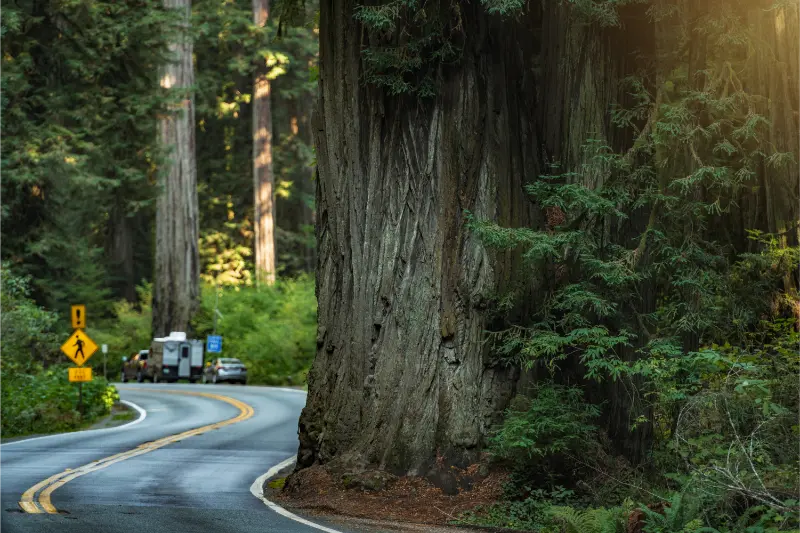
The Tall Trees Trailhead requires a free permit year-round, and the hike is more demanding than the easiest redwood walks. Reserve it only if hiking is a major priority and your group is prepared for the distance and elevation. First-time visitors with three days do not need Tall Trees to have a complete redwood experience.
How much hiking is enough?
One substantial forest walk per day is usually enough. After a while, another grove can blur into the previous one if you are tired. Mixing forest, coast, a scenic drive and a small town produces a more memorable trip than chasing ten named trails.
Families, seniors and rainy days
Choose wider, shorter grove loops when the group includes young children or older travelers. Wet roots can be slippery, and the forest floor remains damp even after rain stops. Waterproof footwear is often more useful than an umbrella. Keep dry socks and a light rain layer in the car.
Common mistakes
- Treating Redwood as one entrance and underestimating the north–south distance.
- Arriving at Fern Canyon without checking the seasonal permit requirement.
- Planning every day around long hikes and forgetting the coast.
- Changing hotels every night when the group hates packing.
- Driving all the way to Avenue of the Giants and back north in one rushed afternoon.
The best three-day rhythm
Think of Day 1 as deep forest, Day 2 as forest plus coast and Day 3 as the transition toward your next region. That rhythm gives you variety and protects the trip from weather. If one coastal viewpoint is fogged in, the redwoods still work; if a trail is muddy or closed, the scenic roads and small towns still give the day structure.
Planning for families, seniors and a slower travel pace
A good California itinerary should work for the slowest realistic pace in the group, not the fastest person. Families need bathroom, snack and reset time; older travelers may prefer shorter walks and more reliable parking; travelers with mobility limitations need to know which viewpoints or facilities can be reached without stairs or rough terrain. Build at least one comfortable break into the middle of the day and keep one attraction optional. That simple choice makes the plan far more resilient when traffic, heat, altitude, queues or fatigue change the day.
If accessibility is essential, use the official attraction or park accessibility page shortly before the visit. Construction, seasonal shuttle routes and temporary closures can change which paths are practical. A short accessible viewpoint that everyone can enjoy together is often a better choice than splitting the group simply to complete a famous hike or attraction.
Budget and booking strategy
Separate the costs that are unavoidable from the costs that are optional. Parking, entrance fees, fuel and accommodation usually matter more than a small difference in meal prices. Reserve the elements that are capacity-limited or difficult to replace, but avoid turning every hour into a reservation. California travel is easier when part of the day remains flexible for weather, traffic and spontaneous stops.
Before paying for an upgrade, ask what problem it solves. A closer hotel can be worth more than a larger room if it removes two rideshare trips every day. A paid shuttle can be better value than parking if it reduces stress. Conversely, a premium tour may add little when the main experience is already easy to visit independently. Compare the total day cost rather than one headline price.
How to fit this into a longer California trip
California distances are deceptive, so combine places by geography rather than by fame. Two attractions can both appear under the same city or park name yet require a substantial transfer. Use real driving or transit time at the hour you expect to travel, and avoid changing hotels for a single attraction unless the move clearly improves the following day. A longer stay in one well-chosen base is often more enjoyable than collecting one-night stops.
Protect the experiences you care about most by scheduling them earlier in the trip or earlier in the day. Keep a backup nearby rather than on the opposite side of a metropolitan area or mountain range. Road work, fog, wildfire smoke, snow, heat and sold-out parking can all force changes. Flexibility is not wasted time in California; it is part of a realistic plan.
Before you leave
Check the official website again within 24–48 hours of the visit. Confirm opening hours, reservations, road conditions, parking instructions and any weather or safety alerts. Carry water, a phone charger and one extra layer even when the forecast looks simple. Most importantly, be willing to shorten the day if conditions or energy are worse than expected. A well-paced California trip is usually more memorable than a perfectly completed checklist.
One final practical rule is to separate the one experience that would disappoint you to miss from everything else. Put that priority first, then build the rest of the day around it. This keeps a late meal, parking delay or weather change from destroying the itinerary and makes it easier to adapt without feeling that the trip has failed.
One final practical rule is to separate the one experience that would disappoint you to miss from everything else. Put that priority first, then build the rest of the day around it. This keeps a late meal, parking delay or weather change from destroying the itinerary and makes it easier to adapt without feeling that the trip has failed.
One final practical rule is to separate the one experience that would disappoint you to miss from everything else. Put that priority first, then build the rest of the day around it. This keeps a late meal, parking delay or weather change from destroying the itinerary and makes it easier to adapt without feeling that the trip has failed.