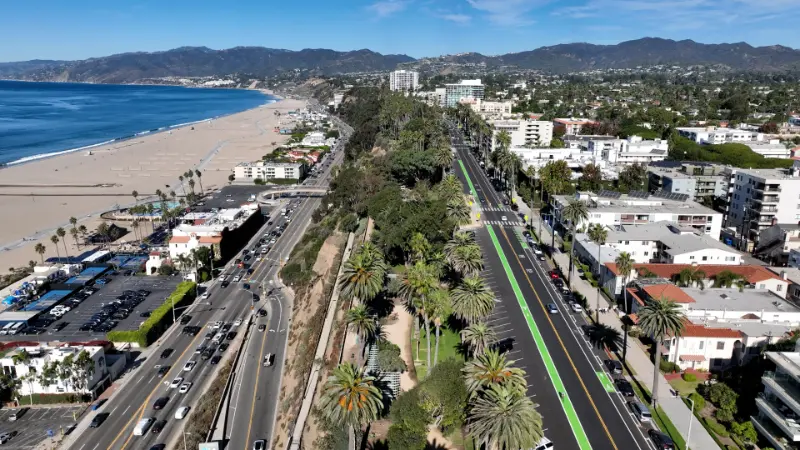
Santa Monica is often described as a beach stop within Los Angeles, but it works better when you treat it as a destination with its own rhythm. It is one of the few places in the Los Angeles area where a visitor can build a satisfying short stay around walking, cycling, the beach and public transport instead of spending most of the day in a car.
For first-time visitors, two days is a useful amount of time. You can enjoy the famous pier without making it the entire trip, explore the waterfront north and south, spend time away from the busiest blocks and still use Santa Monica as a base for selected parts of Los Angeles.
| Ideal stay | 2 days; 3 if you want a slower beach base for Los Angeles |
|---|---|
| Best for | Beach walks, families, car-light trips, sunset, Westside LA access |
| Car needed? | No for Santa Monica itself; useful for wider Los Angeles |
| Best pairing | Venice, Malibu and selected Westside Los Angeles sights |
| Main mistake | Using Santa Monica as a base for attractions on the opposite side of LA every day |
Where to stay in Santa Monica
Near the pier and Ocean Avenue is the most convenient first-time choice if you want to walk to the beach and restaurants, but it can also be the busiest and most expensive. North of the pier feels calmer while keeping the ocean close. Main Street and the southern side are useful if you want easier access toward Venice. Properties farther inland can cost less and may be closer to the Metro E Line.
Compare total hotel cost, not only the nightly rate. Parking charges can be significant, and a slightly more expensive car-free stay can be cheaper overall if you do not need to rent or park a vehicle for several days.
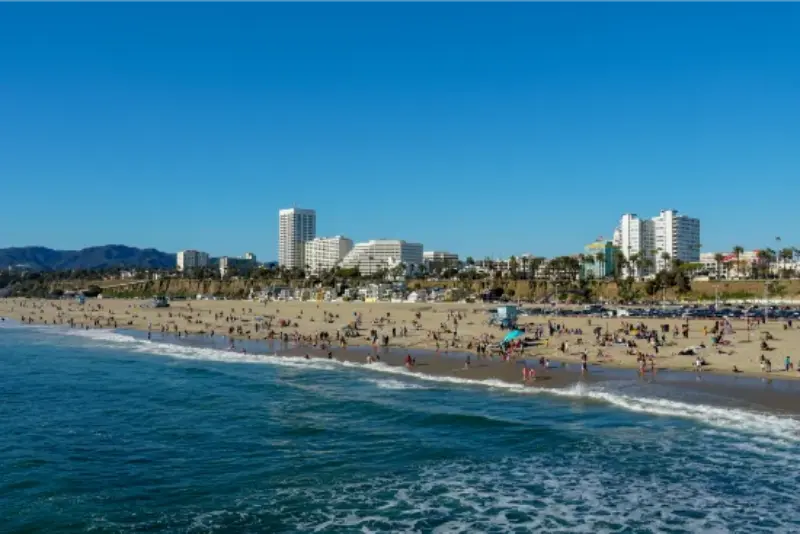
Day 1: pier, beach and the oceanfront
Start early at Santa Monica Pier before the busiest part of the day. Walk to the end, look back toward the city and spend as much or as little time around the amusement rides as suits your group. Families may want more time here; adults who are primarily interested in the coastline may need only an hour.
Continue onto the beach and oceanfront path. The useful thing about Santa Monica is that you can turn a famous landmark into a simple outdoor day. Walk north toward quieter sand or south toward Venice, rent a bike if that fits your group, or stay close to the pier and let children play without adding another destination.
Late afternoon is a good time for Palisades Park and Ocean Avenue. The park gives you elevated views without requiring a long hike, which makes it valuable for older travelers, families with strollers and anyone who wants scenery with minimal effort.
Day 2: Main Street, a car-light neighborhood day and one LA extension
On the second morning, move away from the pier. Main Street and nearby residential blocks offer a different atmosphere with cafés, shops and easier access toward Venice. You can walk or cycle south, but decide in advance how far you actually want to go because a round-trip beach walk can become much longer than expected.
Use the afternoon for one carefully chosen Los Angeles extension rather than several. Depending on your interests, that could be the Getty Center, Westwood, Culver City or another location that does not require crossing the entire metropolitan area. Santa Monica’s value as a base disappears if every day includes hours of travel to distant neighborhoods.
Can you visit Santa Monica without a car?
Yes. Santa Monica is one of the stronger car-light bases in the region. The Metro E Line connects Downtown Santa Monica with parts of Los Angeles, and buses cover additional routes. Public transport takes longer than a private car for some journeys, but it removes parking stress and can be more predictable during heavy traffic.
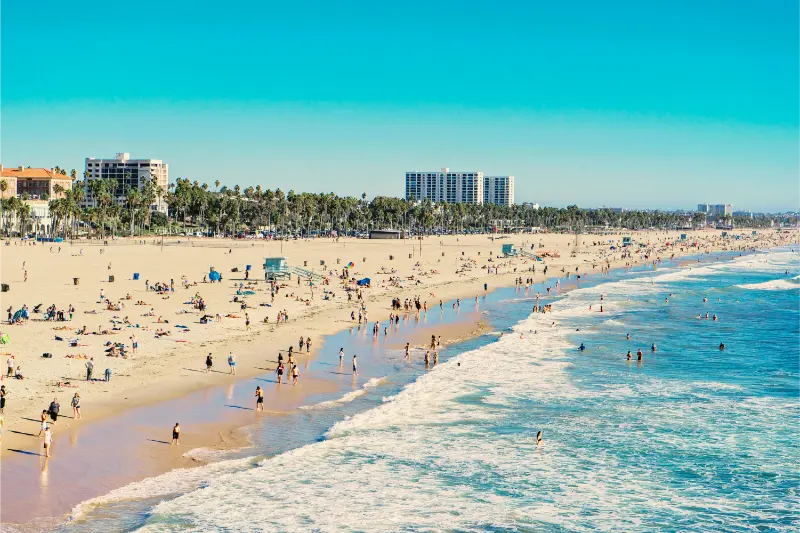
Check the LA Metro before travel for current schedules, service notices and fare information. If you plan to use rideshare late at night or with small children who need car seats, think through those details before deciding to skip a rental car completely.
How much time should you spend at Santa Monica Pier?
There is no universal answer. A family planning rides can easily spend several hours. A visitor who mainly wants the landmark, ocean view and Route 66 end-point atmosphere may be satisfied with a shorter walk. The mistake is allowing the pier to consume the day by default when the beach, parks and surrounding neighborhoods may be more enjoyable for your group.
Ride operations, event schedules and individual attraction hours change, so check current information rather than building a minute-by-minute plan from an old blog post.
Santa Monica with children
Santa Monica works well with children because the day can alternate between structured and unstructured time. A short pier visit can be followed by sand, a playground, cycling or simply returning to the hotel for a rest. You do not need to keep buying tickets to keep the day interesting.
The beach is large and the Pacific can be cold, with surf and rip-current conditions that vary. Treat ocean swimming separately from beach play, and follow lifeguard guidance. For very young children, staying within walking distance of the hotel can be more valuable than a slightly cheaper room inland.
Older travelers and accessibility
The oceanfront and Palisades Park provide many relatively easy ways to enjoy the coast, but distances add up. A walk from the northern hotel zone to the pier, along the beach and then to Main Street can quietly become several miles. Divide the day into shorter loops and use buses or rideshare for the return when needed.
Beach access can involve ramps, pavement and stretches of sand. If someone in your group has limited mobility, check the city’s current accessibility resources and exact access point rather than assuming every entrance is identical.
Best time to visit Santa Monica
The city is a year-round destination, but summer is not automatically the clearest season. Coastal marine layers can produce gray mornings, especially in late spring and early summer. Afternoon conditions often improve, while autumn can bring warm days. Winter may be mild but rain systems occasionally affect beach and travel plans.
Even in warm weather, evenings by the ocean can feel cool. A light layer is useful almost any time of year.
Santa Monica or Malibu?
Choose Santa Monica if you want walkability, restaurants, a rail connection and a base that still feels urban. Choose Malibu if your priority is a scenic coastal drive, more dispersed beaches and a slower road-trip atmosphere. They combine well, but they should not be treated as the same experience.
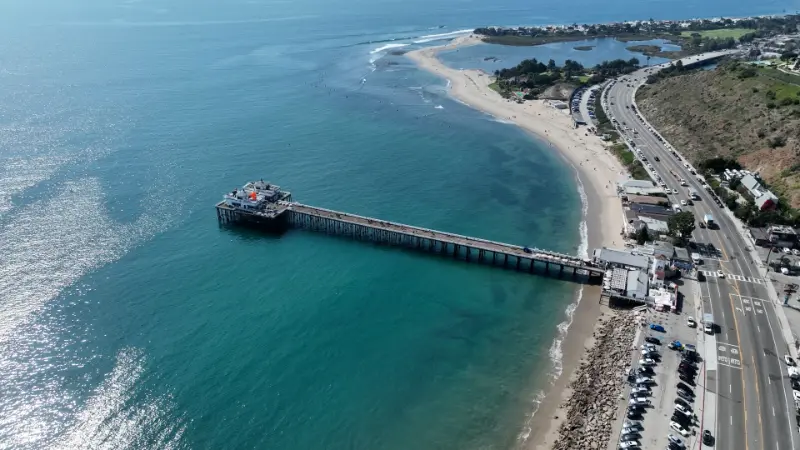
Our Malibu guide explains why the coast west of Santa Monica needs a different parking and driving strategy.
Santa Monica as a Los Angeles base
Santa Monica is excellent for Westside sights and poor for repeatedly visiting distant parts of Los Angeles at peak traffic times. If your must-see list is dominated by Hollywood, Universal, Downtown LA and eastern neighborhoods, splitting the hotel stay may be smarter than commuting from the beach every day.
Use our Los Angeles first-time guide to group attractions geographically.
Parking if you do bring a car
Do not assume your hotel rate includes parking. Municipal structures and beach lots can be useful, but fees, maximum stays and overnight rules differ. If the car will remain parked for most of the visit, price that cost before you book.
For a Malibu day, retrieve the car once and keep it for the excursion. For a local Santa Monica day, leave it parked. This simple rule can remove several unnecessary parking transactions.
Food and daily rhythm
You do not need to reserve every meal. Santa Monica has enough casual options that keeping lunch flexible often makes the beach day easier. If you want one special dinner, book it and then build the afternoon around returning to the area calmly rather than racing back from Malibu or Downtown Los Angeles.
A practical rhythm is active morning, long lunch or hotel break, then beach and sunset. This is especially effective with children and in warmer weather.
Common mistakes
First, spending the entire visit around the pier. Second, renting a car but then moving it for every local stop. Third, assuming Santa Monica is convenient for all of Los Angeles. Fourth, planning a long Venice walk without considering the return. Fifth, packing only for hot weather because the destination is beside a Southern California beach.
Official planning resources
The official Santa Monica visitor site publishes current neighborhood, event and visitor information. Use LA Metro for rail and bus service before relying on a specific departure.
A useful one-day version if you are short on time
If Santa Monica is only a day trip, keep the plan very simple. Arrive in the morning, walk Palisades Park and the pier, spend a long block on the beach or bike path, then have an early dinner before leaving. Do not add Malibu, Hollywood and Downtown Los Angeles simply because each appears reachable on a map.
If you are arriving by Metro, this one-day format is especially efficient because you can avoid parking entirely. If you are driving, choose one garage or lot for the day and walk from there. The best short Santa Monica visit is usually the one with the fewest transport decisions.
Final advice
Santa Monica is most useful when it solves two problems at once: it gives you a genuine beach stay and reduces the need to drive for part of your Los Angeles visit. Stay within walking distance of what matters most, keep one day almost entirely local and use the second for only one wider excursion. That balance makes the city feel like a holiday rather than a parking strategy.