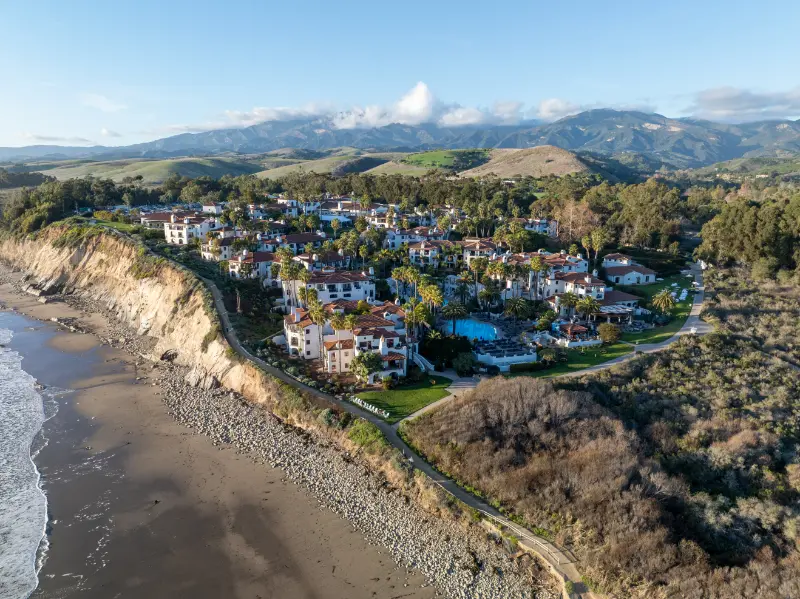
A Highway 1 road trip is easier to enjoy when the overnight stops match the distances and the kind of coast you want to experience. The mistake is choosing hotels from a map without understanding where you will actually spend daylight hours. Monterey, Carmel, Cambria, San Luis Obispo, Morro Bay and Santa Barbara can all be excellent bases, but they solve different problems.
This guide focuses on where to sleep, not just what to see. It assumes you are building a California coast trip between the Bay Area and Southern California and want enough time outside the car to make the route feel like a vacation.
| Base | Best for | Why stay |
|---|---|---|
| Monterey | Aquarium, families, easy logistics | More hotel inventory and practical services |
| Carmel-by-the-Sea | Couples, walkability, atmosphere | Village and beach experience after day-trippers leave |
| Cambria | Quiet coast, Hearst Castle, Big Sur transition | Small-town evening and good route position |
| Morro Bay | Harbor, value, relaxed pace | Easy waterfront and Central Coast base |
| San Luis Obispo | Restaurants, inland/coast access | Good services and flexible route position |
| Santa Barbara | Upscale city + beach | Strong final/first coast stop near Los Angeles |
Monterey: the practical first choice
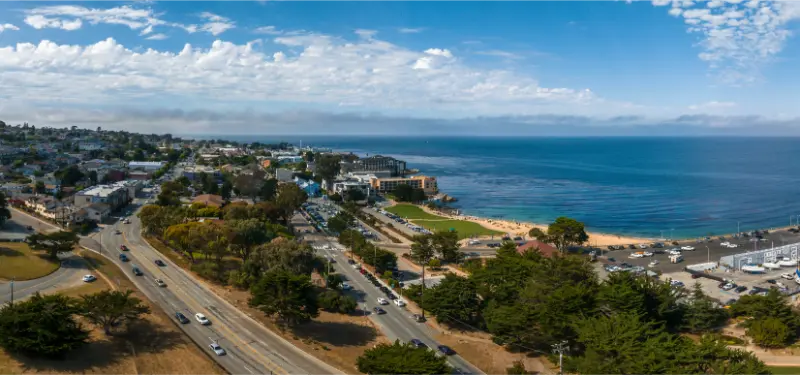
Monterey is the easiest overnight for families and first-time visitors who want the aquarium, Cannery Row and a large choice of hotels. It also gives you practical access to Carmel and Point Lobos without requiring a boutique-village budget.
If the aquarium is a major reason for the trip, stay nearby and make it the anchor rather than trying to drive in, visit quickly and continue south. Our Monterey Bay Aquarium guide explains the timing.
Carmel-by-the-Sea: pay for the evening atmosphere
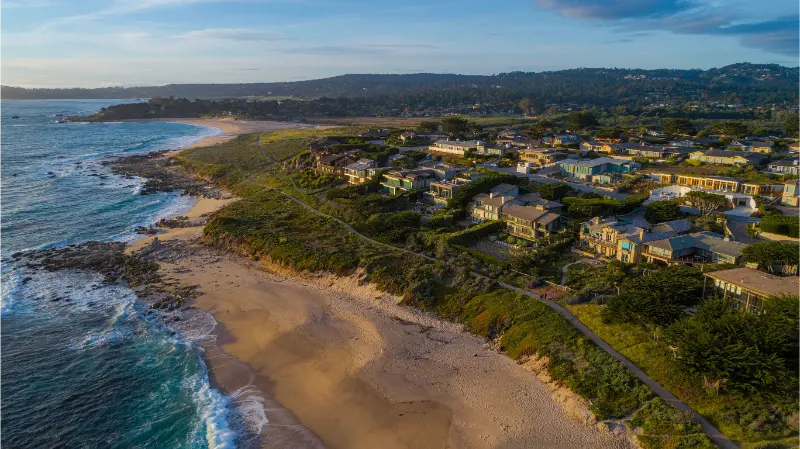
Carmel is the better choice for travelers who want to park the car and walk to dinner, galleries and the beach after the busiest day-trippers have left. Rooms can be expensive, but the location itself becomes part of the experience.
Use our Carmel guide if you are deciding whether the village is worth an overnight rather than a few-hour stop.
Cambria: one of the most useful road-trip overnights
Cambria sits in a valuable position between Big Sur and the broader Central Coast. It is quieter than Monterey and Santa Barbara and works especially well when Hearst Castle, Moonstone Beach or a slower coast morning is part of the plan.
It is also a good answer to the question ‘where should we stop so we do not drive Big Sur and all the way to Santa Barbara in one day?’ Our Cambria and San Simeon guide gives the local details.
Morro Bay: relaxed harbor and good value
Morro Bay is a strong base for travelers who prefer a working-harbor feel, waterfront walking and easier pricing than the most famous resort towns. It is close enough to San Luis Obispo to share regional attractions without feeling like a city stay.
Families often appreciate the low-pressure evening atmosphere. See our Morro Bay guide for a two-day approach.
San Luis Obispo: the flexible Central Coast base
San Luis Obispo is not directly on the beach, but it offers restaurants, services and a central position for Pismo Beach, Morro Bay and inland wine areas. It can be the best option when the coast is only one part of your Central Coast stay.
Our San Luis Obispo guide explains why the city can be more practical than sleeping at the water every night.
Santa Barbara: city comfort at the southern end
Santa Barbara works beautifully as the final coast stop before Los Angeles or the first stop after leaving it. The city offers a walkable downtown, beaches, restaurants and more full-service hotels than many small Highway 1 communities.
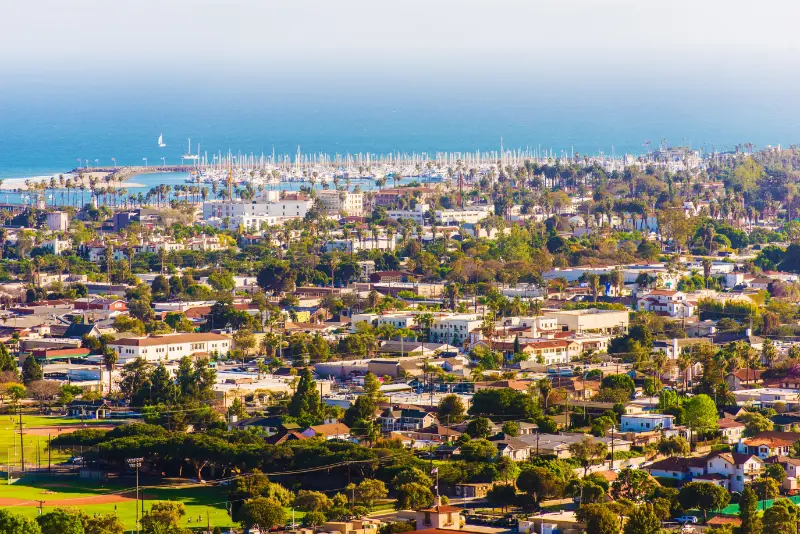
It is less useful as a base for Big Sur because the distance is too great for a relaxed day trip. Use it for Santa Barbara itself and the southern Central Coast. Our Santa Barbara guide covers the city.
Should you stay in Big Sur itself?
Staying in Big Sur can be memorable because it gives you quiet early and late hours in the landscape, but inventory is limited and prices can be high. It is best for travelers who specifically value the setting and accept fewer services.
If your budget is limited, Monterey/Carmel to the north or Cambria to the south can provide more options while still supporting a scenic Big Sur day. Check current road conditions before locking in a non-refundable sequence.
How many nights should each stop get?
For a classic coast trip, two nights in Monterey/Carmel and one or two around Cambria/SLO is a strong core. Add Santa Barbara for one or two nights if the trip continues to Los Angeles. One-night stays everywhere create repeated packing and leave little time for spontaneous coast stops.
Our Central Coast seven-day itinerary shows how to turn these bases into a realistic route.
Families: choose rooms and meals, not just scenery
Families often need refrigerators, laundry, breakfast and easy parking more than a dramatic cliff view. Monterey, Morro Bay, SLO and Santa Barbara generally provide more practical options than remote Big Sur lodging.
If traveling with young children, a hotel within walking distance of dinner can rescue the end of a long driving day.
Senior and accessibility considerations
Historic inns and small coastal properties may have stairs, narrow parking or no elevator. Ask directly about room access and parking before booking. A beautiful ocean-view room on an upper floor may not work for everyone.
Full-service properties in larger towns can provide more predictable accessibility, but verify the specific room and route rather than relying on a generic accessibility icon.
Highway 1 conditions can change the ideal booking
Coastal roads can be affected by slides, construction and weather. Before travel, check Caltrans QuickMap and road information. If a segment is closed, US-101 may become the practical route and an overnight chosen for a pure Highway 1 itinerary may no longer be efficient.
Flexible cancellation is valuable on a road trip with weather-sensitive roads. A slightly higher refundable rate can be worth it.
A simple north-to-south overnight pattern
For many first-timers: San Francisco → Monterey/Carmel (2 nights) → Cambria or Morro Bay/SLO (1–2 nights) → Santa Barbara (1–2 nights) → Los Angeles. This gives the coast room to breathe while keeping daily drives reasonable.
Use our Highway 1 road trip guide for the sightseeing sequence and this article for the sleeping strategy.
How to compare two hotels that look equally good
Map each hotel to your three most important activities, not just to the center of the destination. Then compare parking, breakfast, resort fees, cancellation policy, room layout and walking distance to dinner. The cheaper nightly rate can become the expensive choice once repeated driving and parking are added.
For a road trip, also consider the next morning’s departure direction. A hotel on the correct side of town can save meaningful time when you are leaving during commuter or weekend traffic.
One more practical point
The best version of this trip is the one that matches the people traveling, the season and the conditions on the day. Avoid building the schedule from isolated map pins; think in complete blocks that include parking or transit, walking, meals and rest.
Reconfirm time-sensitive details with official sources and keep a simple backup plan. California is easier to enjoy when the itinerary can absorb one closure, delay or weather change without collapsing.