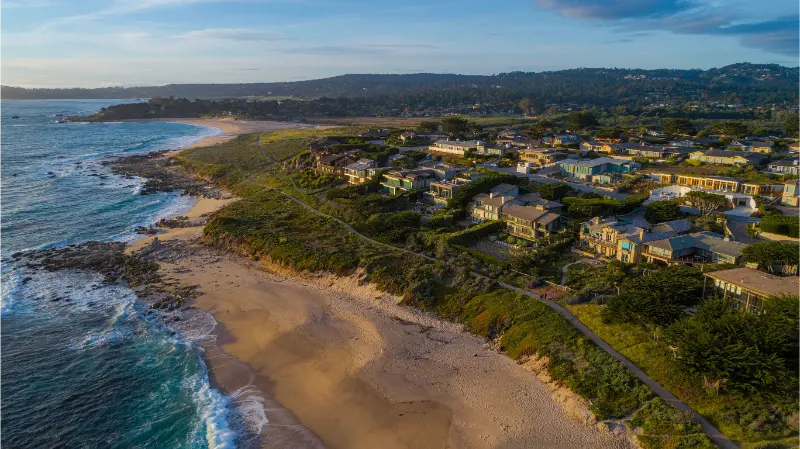
Monterey, Carmel-by-the-Sea and Big Sur are close enough to appear like one compact coastal destination. They are not. Monterey is a historic waterfront city, Carmel is a small walkable village beside a beautiful beach, and Big Sur is a long scenic landscape where the road itself is part of the experience.
Three days is enough to enjoy all three if you resist the urge to add every viewpoint between them. The best itinerary keeps Monterey and Carmel relatively compact, then gives Big Sur a full day with room for road conditions, fog and spontaneous stops.
Where should you stay?
Monterey is practical for families, the aquarium and a wider range of hotels and restaurants. Carmel-by-the-Sea is more intimate and walkable in the evening, with easy access to Carmel Beach. Pacific Grove offers a quieter residential feel between Monterey and the coast.
For a first three-day trip, you do not need to change hotels. Choose one base and drive short local distances. Staying deep in Big Sur can be wonderful, but it is better for travelers whose priority is nature and seclusion rather than the aquarium and town life.
Day 1: Monterey without trying to do everything
Start with the Monterey Bay Aquarium if it is a priority. Allow several hours rather than squeezing it between other attractions. Families can easily spend half a day there, and even adults without children may want more time than expected.
Walk part of Cannery Row and the waterfront afterward, but do not assume the most commercial street is the whole of Monterey. Continue toward Pacific Grove or the coastal recreation trail for a broader sense of the bay.
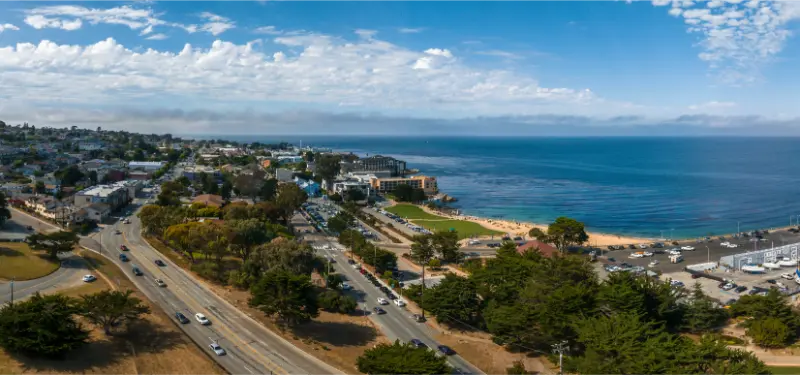
Finish the day with sunset near the water rather than driving to Big Sur. Saving Big Sur for a fresh morning makes a major difference.
Day 2: Carmel, Point Lobos and the nearby coast
Spend the morning walking Carmel-by-the-Sea. The compact center is best explored on foot, with Ocean Avenue leading toward Carmel Beach. The town works because you can wander without a strict route, so give it at least a couple of hours rather than treating it as a lunch stop.
Then choose either the famous 17-Mile Drive or more time at Point Lobos State Natural Reserve. Trying to do both thoroughly, plus Carmel and Big Sur, creates a rushed day. Point Lobos is particularly rewarding for short coastal walks, but parking can fill and access rules can change.
If you choose 17-Mile Drive, treat it as a scenic loop with selected stops, not a mission to photograph every marker. If you choose Point Lobos, give yourself time to walk and watch the coast rather than immediately getting back in the car.
Day 3: Big Sur
Big Sur deserves the entire day. Leave early, check current Highway 1 conditions and select a manageable southern turnaround point. As of October 2026, Monterey County tourism information reports Highway 1 through Big Sur fully open after earlier disruptions, but fires, landslides, construction and weather can change conditions quickly.
Before departure, review the current Monterey County travel alerts and Caltrans road information. A blog itinerary should never be treated as proof that the road is open today.
Which Big Sur stops are really worth prioritizing?
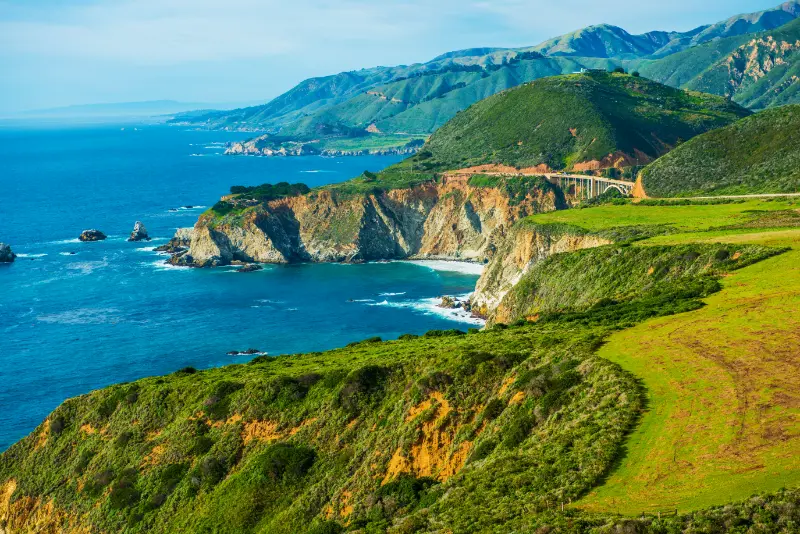
For a first visit, choose a combination rather than a long list: a major bridge or viewpoint, a redwood walk, a beach or coastal trail, and one relaxed meal or picnic. Bixby Creek Bridge is iconic, but the photograph takes less time than parking and traffic can suggest. Do not stop in unsafe road positions because a viewpoint is famous.
Pfeiffer Big Sur State Park offers redwood scenery away from the cliff-edge viewpoints. Other state parks and beaches provide very different experiences. Your day becomes more memorable when it includes both forest and coast.
Why Big Sur travel times are deceptive
A map may show that a stretch of Highway 1 is only a few dozen miles. That does not mean you should expect a normal highway pace. Curves, one-lane control, viewpoints, cyclists and traffic all slow the road. If you stop every fifteen minutes, progress becomes even slower.
Pick a southern limit before you leave. When you reach it, turn around without feeling that you failed to “complete” Big Sur. The return drive reveals different views and often takes longer than expected.
Highway 1 and the broader California coast
If Monterey and Big Sur are part of a larger road trip, read our California Highway 1 road trip guide. It explains how to divide the coast into realistic overnight stops and what to do when through-access changes.
Do not use a Monterey hotel as the base for an aggressive same-day drive all the way to Santa Barbara and back. Big Sur is much better when it connects to an onward coastal itinerary.
Best time to visit
Late spring through early autumn offers long daylight, but the coast can be foggy at any time and summer is not automatically the clearest season. Winter storms can create road problems but also dramatic scenery. Shoulder seasons are often excellent for fewer crowds.
The important thing is to separate temperature from visibility. A cool morning may become beautifully clear by afternoon, while a warm inland day can coexist with fog along the coast.
Monterey and Carmel with children
The aquarium is the obvious family anchor, but children often enjoy the simpler parts of the coast just as much: tide pools, beach time, sea otter watching and short trails. Keep Big Sur day stops limited so children are not repeatedly strapped into the car for ten-minute drives.
Pack layers and snacks. Windy coastal weather can change the mood of a family outing quickly if everyone expected a warm beach day.
Older travelers and limited mobility
This region can be highly rewarding with limited walking. Scenic drives, waterfront areas and selected viewpoints provide substantial scenery. Carmel’s sidewalks and sloped streets vary, and natural coastal paths can be uneven, so choose specific stops based on mobility needs.
Big Sur parking is one of the bigger practical issues. Arriving early can reduce the amount of walking from overflow areas and make the day less stressful.
Parking strategy
In Monterey, choose a central garage or hotel parking and walk rather than moving the car for each attraction. In Carmel, park once and explore the village on foot. In Big Sur, never assume you can improvise a parking space along Highway 1.
A good rule is simple: if a parking maneuver feels unsafe, it probably is. Continue to the next legal turnout.
Food planning
Monterey and Carmel have abundant dining, but Big Sur options are spread out and can be busy. Carry water and a backup snack even if you plan a restaurant lunch. A delay from traffic or road work should not turn into a problem because the group is hungry.
Reserve special meals if they matter to you, but do not schedule a tight reservation immediately after a long Big Sur sightseeing day.
Can you do Monterey, Carmel and Big Sur in two days?
Yes, but something must become secondary. A practical two-day plan is Monterey aquarium and Carmel on day one, then Big Sur on day two. Skip 17-Mile Drive or Point Lobos rather than racing through all of them.
With only one day, choose Monterey/Carmel or Big Sur. Combining all three produces more road time and less experience.
How this fits with San Francisco
The Monterey Peninsula is an excellent next stop after San Francisco on a southbound road trip. It works especially well when you spend one or two nights before continuing through Big Sur.
See our San Francisco guide for first-time visitors if you are building the trip from the north.
A realistic three-day summary
Day 1: Monterey Bay Aquarium, waterfront and Pacific Grove. Day 2: Carmel-by-the-Sea plus Point Lobos or 17-Mile Drive. Day 3: Big Sur, with current road checks and four or five meaningful stops.
This pace gives each place a different identity. Monterey feels like a bay city, Carmel like a small coastal retreat, and Big Sur like a landscape. That contrast is exactly why the area deserves more than a rushed day trip.
What if Highway 1 closes before your trip?
Do not cancel the entire Monterey Peninsula simply because through-driving in Big Sur becomes impossible. Monterey, Pacific Grove, Carmel and the northern Big Sur viewpoints can still justify several days. The key question is whether your onward route can continue south, not whether every local attraction is inaccessible.
If a closure blocks the through-route, turn Big Sur into an out-and-back day from Carmel and use an inland highway for the longer transfer between Northern and Southern California. Do not follow unofficial detours onto private, narrow or unsuitable roads. Caltrans and local tourism alerts should determine the driving route.
This distinction matters because travelers often hear “Highway 1 is closed” and assume the whole coast is closed. In reality, closures are usually location-specific. Find the exact closure point and then redesign the day geographically.