
Choosing where to stay in Los Angeles is more important than choosing a hotel with the longest list of amenities. The city is not built around one compact historic center, and two hotels that look only a few miles apart on a map can produce completely different vacations once traffic, parking, beach access and the location of your main attractions are taken into account.
For a first visit, I would not ask which neighborhood is “best” in the abstract. I would ask a more useful question: which area removes the most difficult journeys from your own itinerary? A family planning Disneyland and Universal has different needs from a couple interested in restaurants and nightlife, while a beach-focused trip should not be based in Downtown simply because a room happens to be cheaper.
This guide compares the main areas I would shortlist for a first trip and explains when each one works, when it does not, and when splitting your stay can save more time than changing hotels costs.
Quick answer: the best Los Angeles areas by trip style
| Area | Best for | Main compromise |
|---|---|---|
| Santa Monica | Beach, walkability, first nights without a car | Long trips to eastern attractions |
| West Hollywood / Beverly Grove | Central sightseeing, restaurants, nightlife | Not on the beach and parking can add up |
| Hollywood | Walk of Fame, Griffith, Universal access | Busy tourist zone and variable street atmosphere |
| Downtown Los Angeles | Museums, events, rail connections | Less convenient for beach-heavy itineraries |
| Beverly Hills | Luxury, polished streets, west-side access | Higher room rates |
| Universal City | Universal Studios-focused visits | Weak base for a broad LA beach trip |
| South Bay | Relaxed beach towns and LAX access | Far from Hollywood and many classic sights |
Why there is no single “central” hotel location in Los Angeles
Los Angeles is a collection of districts connected by freeways, surface streets and a growing transit network rather than a city where every major attraction radiates from one square. That matters because travel time is not proportional to distance. A 10-mile transfer can be easy at one time of day and frustrating at another. If you book based only on a map pin, you can spend a surprising amount of your vacation moving between neighborhoods.
The practical solution is to group your priorities. Our Los Angeles guide for first-time visitors is useful for deciding what you actually want to see before choosing a base. Once your top four or five places are clear, the hotel decision becomes much easier.
Los Angeles Tourism itself presents the city as a collection of distinct neighborhoods rather than one visitor core. That is the right mental model for accommodation as well: choose the district that fits the trip, not the district someone else calls “central.”
Santa Monica: best for beach atmosphere and an easier first day
Santa Monica is one of the easiest Los Angeles bases to understand. You can walk to the beach, pier, restaurants and parts of the shopping district, and you can begin or end the day by the ocean without driving. This makes it especially attractive after a long international flight, for families that want outdoor time between attractions, and for travelers who dislike using the car for every meal.
The compromise is geography. Hollywood, Universal Studios and some east-side attractions are not next door. If your itinerary is mostly inland, the beach view may be costing you an hour or more of extra transportation across several days. Santa Monica works best when the coast itself is a major part of the holiday. See our Santa Monica 2-day guide before committing multiple nights.

West Hollywood and Beverly Grove: the most balanced base for many adults
For travelers trying to divide time between Hollywood, Beverly Hills, museums, restaurants and the west side, West Hollywood and neighboring Beverly Grove can be a useful compromise. You are not directly on the beach and you are not walking to the major downtown museums, but you avoid placing yourself at one extreme of the metro area.
This zone often makes sense for couples, friends and repeat visitors who care as much about evenings as daytime attractions. Restaurant choice is strong, rideshare trips can be practical for nights out, and several classic neighborhoods are relatively close. The downside is that a car still helps for many itineraries, and hotel parking can materially change the nightly price. Always compare the total cost, not just the room rate shown on the first booking screen.
Hollywood: convenient for specific sights, not automatically best for everyone
Staying in Hollywood can be efficient if the Walk of Fame, TCL Chinese Theatre, Griffith Observatory and Universal Studios are high on your list. Some visitors also value having Metro access rather than driving into the busiest tourist corridor. Our Hollywood Walk of Fame guide explains how to see the famous section without spending an entire day there.
However, “Hollywood” covers a wide area, and the atmosphere can vary block by block. A hotel described as being near Hollywood may still require transportation to the section you expect to walk. Look at the exact address, recent guest comments about the immediate surroundings, and late-evening access rather than booking on the neighborhood name alone.
Downtown Los Angeles: best for events, museums and rail-minded travelers
Downtown can be a smart base for travelers attending a game, convention, concert or event, and for visitors who want access to cultural sites, historic districts and rail connections. It also gives you a different version of Los Angeles from the beach-city image many first-time visitors expect.
The weakness is a beach-heavy plan. Santa Monica, Malibu and the South Bay become deliberate journeys rather than casual add-ons. Downtown is therefore strongest when your actual schedule points there. It can also work as a car-light base if you are willing to combine Metro, walking and occasional rideshares. For a trip that spreads widely across the county, however, you may prefer a more central west-side location.
Beverly Hills: polished and convenient, but pay for what you value
Beverly Hills is appealing if you want an upscale environment, easy access to Rodeo Drive and a location between Hollywood and the coast. The area can work particularly well for travelers who prefer quieter evenings, full-service hotels and the ability to walk to restaurants rather than staying beside a freeway interchange.
The obvious trade-off is price. A premium room makes sense if the hotel experience is part of the vacation; it makes less sense if you leave at breakfast and return at bedtime. Our Beverly Hills and West Hollywood guide can help you decide whether the area deserves one day or several nights.
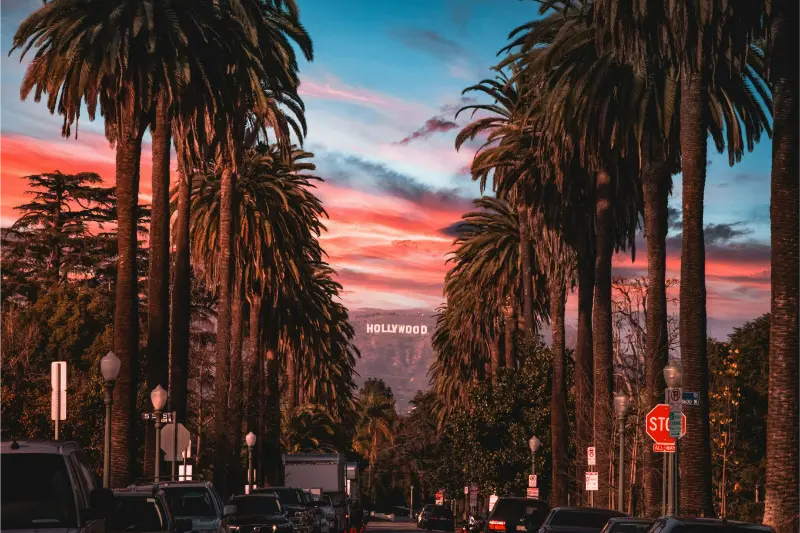
Universal City: the specialist choice for Universal Studios
If Universal Studios Hollywood is the main reason for the trip, staying near Universal City can remove one of the most annoying variables: the morning cross-city drive. This is especially useful with children, when arriving before the park becomes busy can matter more than having a beach outside your hotel.
It is less attractive as a general base for Santa Monica, Malibu or the South Bay. If your holiday includes several Los Angeles zones, consider one or two nights near Universal rather than forcing the whole trip to operate from there. Our Universal Studios Hollywood first-time guide covers the park day itself.
South Bay: Manhattan Beach, Hermosa and Redondo for a calmer coastal stay
The South Bay can be an excellent fit for travelers who want a real beach-town rhythm without the intensity of central Santa Monica or Hollywood. Manhattan Beach, Hermosa Beach and Redondo Beach offer oceanfront paths, piers, restaurants and an easier relationship with LAX than many other coastal areas.
This is not the place I would choose for a short trip dominated by Griffith Observatory, Hollywood and Universal. But for a final two nights before a flight, a family beach break or a slower California itinerary, the South Bay can feel far more relaxing than sleeping beside the airport itself. The key is accepting that Los Angeles is the trip, not one compact downtown you must remain close to.
Should you stay near LAX?
An airport hotel is useful for a late arrival, an early departure or a one-night connection. It is rarely the best base for four days of sightseeing. The airport corridor can look convenient on a regional map, but it is not a walkable resort district and repeated trips to Hollywood, Downtown or Malibu quickly cancel the convenience.
A better strategy for many visitors is to stay where the sightseeing happens and move to an airport hotel only for the final night if the flight schedule makes that worthwhile. If your departure is later in the day, even that move may be unnecessary.
Do you need a car at your hotel?
Not always, but accommodation choice should be made together with the transport plan. Santa Monica, Downtown, Hollywood and parts of the central city can support several car-light days when you use rail, buses and rideshares intelligently. A broader itinerary involving Malibu, multiple beaches, mountain trailheads or distant neighborhoods is easier with a car.
Read our California without a car guide before assuming that avoiding a rental automatically saves money. Parking charges matter, but repeated rideshares across Los Angeles can also become expensive.

Best areas for families with young children
Families usually benefit more from reducing transitions than from being close to nightlife. Santa Monica works well for beach time and stroller-friendly outdoor breaks. Universal City can make sense for a park-focused stay. Beverly Grove and parts of West Hollywood can be useful if you want a central base and a hotel with a pool.
Look for practical room features: a refrigerator, laundry access, enough floor space for luggage and a crib, breakfast options nearby, and parking that does not require a long off-site walk. A hotel that saves 20 minutes every morning can be worth more than a slightly cheaper room in the wrong part of town.
Older travelers and visitors with limited mobility
Los Angeles can be physically easier when you stay close to the specific attractions you care about. Do not assume a “walkable” district means you should walk all day. Distances along large boulevards add up, summer heat can be tiring, and rideshares can be a useful tool between short walking sections.
Check the hotel itself for step-free entry, elevators, accessible bathrooms and valet or close parking if those features matter. For mobility-sensitive trips, paying more for location can reduce daily fatigue dramatically.
When a split stay makes sense
A split stay is useful when the trip naturally has two halves. Examples include three nights in Santa Monica followed by two near Universal; two nights in Hollywood followed by two in the South Bay; or Los Angeles followed by Anaheim for Disneyland. It is less useful when you are changing hotels just to save 20 minutes on one attraction.
The cost of moving is not only the taxi or parking fee. You lose packing time, check-out time, luggage storage time and mental energy. I would split only when the second hotel clearly improves at least two days of the itinerary.
The booking mistake that costs the most time
The biggest mistake is booking the cheapest acceptable hotel before building the itinerary. In Los Angeles, a bargain room can be expensive in a different currency: time. If the location forces two long cross-city trips every day, the holiday becomes a transport exercise.
Choose your priorities first, map them by neighborhood, then compare hotels. That sequence is less exciting than browsing pools and rooftop bars, but it produces a much better trip.
Final recommendation
For many first-time visitors, Santa Monica is the easiest beach-oriented choice, while West Hollywood/Beverly Grove is one of the strongest all-round compromises for mixed sightseeing. Hollywood is useful when its attractions and Universal dominate the plan, and Downtown works when events, museums and transit connections are the priority.
There is no universal winner. The best Los Angeles hotel is the one that removes your hardest journeys. Build the itinerary first and let the map choose the neighborhood for you.