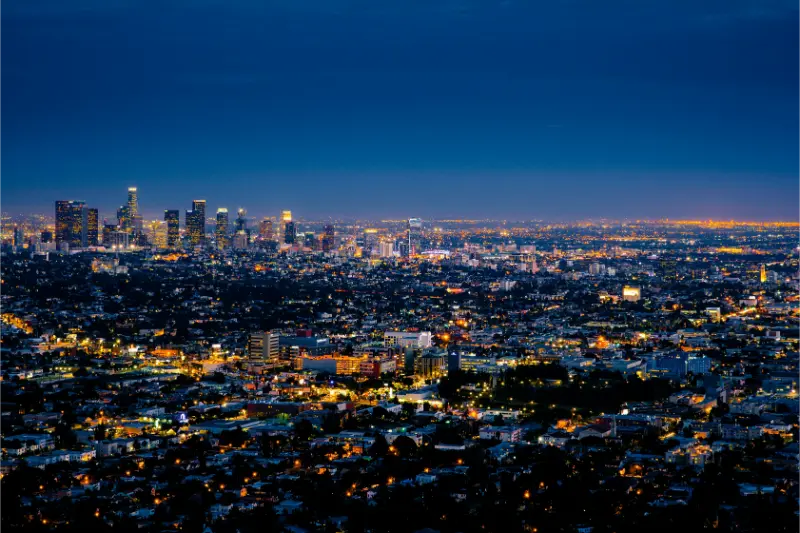
Los Angeles is famous for freeways, but a first-time visitor does not automatically need a rental car every day. A car-free trip can work surprisingly well when you choose the hotel around the places you actually want to see, group attractions by neighborhood, and accept that Los Angeles is not a city where crossing the entire metro area several times a day is a good plan.
The key is not pretending public transportation makes every attraction equally convenient. Metro rail, buses, walking and occasional rideshare can cover many classic sights; Malibu, some hilltop viewpoints and scattered suburban attractions remain much easier with a car. This guide shows where the car-free strategy is strong, where it becomes inefficient, and how to build a realistic four-day trip.
Can you really visit Los Angeles without a car?
Yes, especially if your priorities are Downtown Los Angeles, Hollywood, Koreatown, parts of the Westside, Santa Monica, museums and Universal Studios Hollywood. The rail network and frequent bus corridors connect more visitor areas than many first-time travelers expect, but distances remain large and transfers can add time.
The most important decision is hotel location. Staying close to a rail station can save more time than choosing a cheaper room several miles away. Compare this guide with our where to stay in Los Angeles guide before booking.
How LA Metro fares work in 2026
LA Metro currently uses a simple base fare with fare capping. You can pay with TAP or, for regular fares, supported contactless bank cards and digital wallets. Transfers are included within the applicable transfer window when you tap correctly. Because rules and prices can change, confirm the latest details on the official LA Metro fares page shortly before travel.
For visitors, the practical lesson is more important than memorizing the current dollar amount: use one consistent payment method for each rider so fare capping works as intended, and tap whenever required rather than assuming a previous ride automatically covers the next vehicle.
| Area | Car-free usefulness | Best for |
|---|---|---|
| Downtown LA | Very good | Museums, Grand Central Market, Little Tokyo, events |
| Hollywood | Good | Walk of Fame, TCL Chinese Theatre, Griffith connections |
| Universal City | Very good | Universal Studios Hollywood |
| Santa Monica | Good | Beach, pier, Third Street, coastal time |
| Beverly Hills/West Hollywood | Mixed | Bus/rideshare usually more useful than rail |
| Malibu | Limited | Much easier with a car for multiple beaches/stops |
Where to stay for a car-free trip
Downtown is the strongest transit hub, but it is not automatically the best base for every visitor. Hollywood is convenient for first-time sightseeing and Universal; Koreatown offers central geography and good transit; Santa Monica is excellent when the beach matters more than fast access to eastern Los Angeles.
Choose the area that matches at least half of your planned activities. If most of your trip is beaches and Westside neighborhoods, a Downtown hotel simply because it sits on several rail lines can still create long travel days.
Day 1: Downtown Los Angeles by transit and on foot
Use the first day for a compact area: Grand Central Market, historic core sights, Little Tokyo, The Broad or another museum, and an evening close to the hotel. Downtown works best when you walk between clusters rather than boarding transit for every few blocks.
Our Downtown Los Angeles guide gives a realistic half- or full-day plan. Families and travelers with limited mobility should check the exact gradients and station elevator status before relying on a specific entrance.

Day 2: Hollywood, Griffith and Universal
Hollywood Boulevard is served by rail and is easy to combine with Universal Studios on the same transit corridor, although Universal deserves most of a day if you have a ticket. Griffith Observatory is the awkward piece: public transit can work, but it requires more planning than simply taking the train.
Do not schedule Griffith, Hollywood, Universal and a Westside sunset on the same day. Pick one major anchor and one nearby secondary area. See our Griffith Observatory guide for the hilltop logistics.
Day 3: Santa Monica and the Westside
Metro reaches Santa Monica, making it one of the easiest beach destinations for a visitor without a car. Spend enough time there to justify the cross-city journey: pier, beach, Palisades Park and a walk toward Venice if energy and weather cooperate.
Our Santa Monica guide and Venice Beach and Abbot Kinney guide help decide whether to combine the two or give Santa Monica the full day.
Day 4: choose one interest, not another cross-city marathon
Use the last full day for one priority: a museum cluster, Beverly Hills/West Hollywood, Universal if you skipped it, or a neighborhood-focused day. This is where an occasional rideshare can be worth the cost because it replaces a complicated multi-transfer journey without forcing you to rent and park a car all week.
A car-free trip becomes frustrating when every day has three geographically distant anchors. It becomes pleasant when each day has one part of the city as its focus.
Airport transfers without a rental car
LAX is improving its transit connections, but airport access systems can change, so check the airport and Metro trip planners immediately before arrival. If you land late with children, heavy luggage or mobility needs, a taxi/rideshare can still be the sensible first transfer even if the rest of the trip is transit-based.
Do not choose a hotel solely because a map shows one uninterrupted rail line from the airport area. Count the terminal-to-station step, luggage handling and the time of day.
Families: when car-free works and when it does not
Families with older children who can walk and handle escalators often do well with transit, especially for Downtown, Hollywood, Universal and Santa Monica. Toddlers add stroller, nap and luggage logistics; a mixed plan with transit plus a few rideshares can be easier than insisting on either 100% car or 100% public transportation.
If you plan Disneyland, beach towns outside central Los Angeles or several stroller-heavy days, a rental car for part of the trip may still be worthwhile. Our Los Angeles with kids guide covers the broader family strategy.
Senior travelers and accessibility
Metro rail stations and buses generally provide accessible options, but individual elevators can be temporarily out of service and walking distances inside large stations may be longer than expected. Check live service alerts and allow extra time when an elevator is essential.
For mixed-mobility groups, a rideshare from the nearest convenient station can be a useful last-mile solution. The goal is not to prove the city can be visited without a car; it is to reduce unnecessary driving while keeping the day comfortable.
Safety and evening travel
Use the same situational awareness you would in any large city: stay alert, keep valuables controlled, avoid empty-looking platforms when another waiting area is available, and check service changes before a late return. If a station or stop feels uncomfortable, move to a busier location or use another mode.
The safest-feeling option also depends on the traveler. Families, solo visitors and older travelers may make different choices after an evening event, and that is fine.
When a rental car is still the better choice
Rent a car for days built around Malibu, mountain trailheads, scattered beaches, studio-area stops far from rail or a road trip leaving Los Angeles. Consider renting only for those days instead of paying hotel parking for the entire stay.
If you do drive, use our driving in California guide and California rental-car guide before picking up the vehicle.
The biggest car-free mistakes
The first mistake is booking a hotel far from transit to save money. The second is treating the Metro map like a compact European network where every destination is a short walk from a station. The third is refusing to use rideshare even when it saves an hour and a difficult transfer.
A successful car-free Los Angeles trip is hybrid and geographic: rail where rail is strong, buses where corridors are direct, walking within neighborhoods, and occasional rideshare for the gaps.

A practical morning-to-evening rhythm
Use transit for the first major move of the day, then spend several hours in one walkable cluster before making another cross-city transfer. This reduces the number of times you have to re-plan around delays, elevators, missed connections or a tired child.
Download the official transit app or live map before leaving Wi-Fi, keep a charged phone and carry a backup payment option. If a disruption would make you miss a timed ticket, leave more margin than the journey planner’s best-case estimate.
One more practical point
The best version of this trip is the one that matches the people traveling, the season and the conditions on the day. Avoid building the schedule from isolated map pins; think in complete blocks that include parking or transit, walking, meals and rest.
Reconfirm time-sensitive details with official sources and keep a simple backup plan. California is easier to enjoy when the itinerary can absorb one closure, delay or weather change without collapsing.