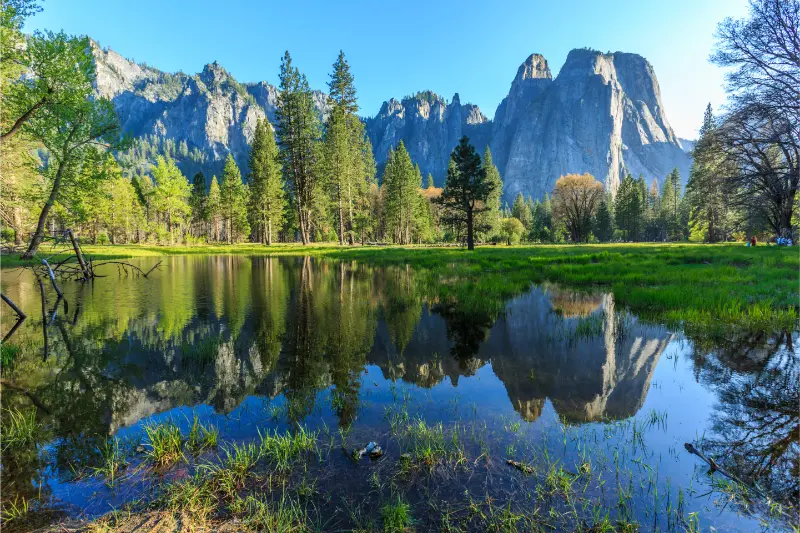
Spring is one of the most rewarding times to visit Yosemite, but it is also the season when many first-time visitors misunderstand the park. Yosemite Valley may feel like spring while the high country remains buried in snow. Waterfalls can be spectacular, yet Tioga Road and often Glacier Point Road are still closed. A good spring trip therefore focuses on what is open rather than treating the park like a summer itinerary with colder weather.
The National Park Service describes April and May as prime waterfall season and notes that Yosemite Valley and Wawona remain accessible by car year-round, while Tioga Road and Glacier Point Road often stay closed until late May or June. Waterfalls are usually strongest around mid- to late May. Check the official Yosemite spring page and current conditions shortly before travel.
Why spring is special
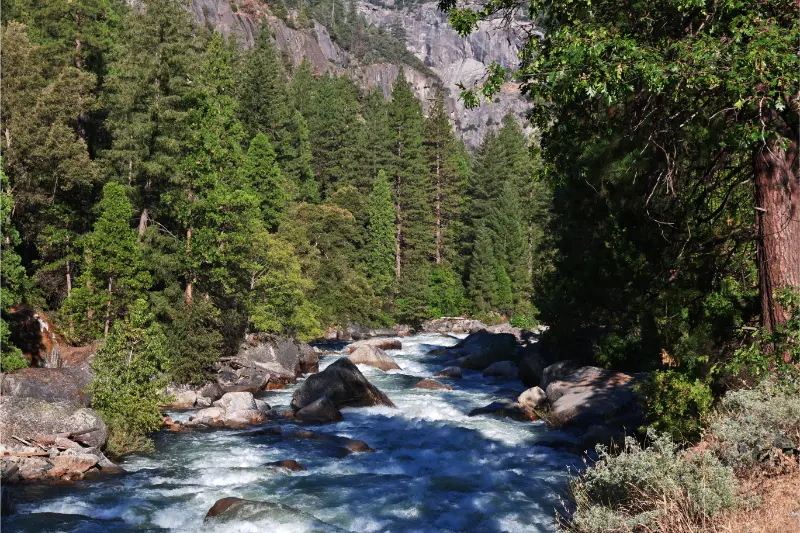
Snowmelt gives Yosemite Falls, Bridalveil Fall and the Merced River a power that summer visitors often never see. Meadows turn green, dogwoods may bloom and the granite walls still hold snow high above the valley. The tradeoff is uncertainty: a warm spell can accelerate melt, a late storm can bring snow back to roads and trails, and higher-elevation routes may remain inaccessible long after the valley looks mild.
April vs May: which is better?
April is quieter and can feel transitional. Snow may still be common above the valley floor, nights are cold and Mariposa Grove access can be limited. May generally offers stronger waterfalls, longer daylight and easier lower-elevation hiking, but weekends are busier. Late May can be exceptional, yet there is still no guarantee that Tioga Road or Glacier Point Road will be open.
The roads most likely to affect your plan
Do not build a spring itinerary around Tioga Pass. If it is closed, you cannot simply cross Yosemite from east to west through the park. Glacier Point Road can also remain closed by snow. Mariposa Grove Road usually opens sometime in April, but shuttle operations and snow conditions vary. The practical lesson is to treat Yosemite Valley and Wawona as the reliable backbone and add higher-elevation areas only after official opening confirmation.
Tire chains can still matter
Spring sunshine does not eliminate winter driving rules. NPS warns that tire chains can sometimes be required in spring. If chains are required, visitors need to carry and know how to use them regardless of vehicle type. Check Caltrans and NPS conditions before leaving your hotel rather than assuming an all-wheel-drive rental solves every requirement.
Best spring waterfall experiences
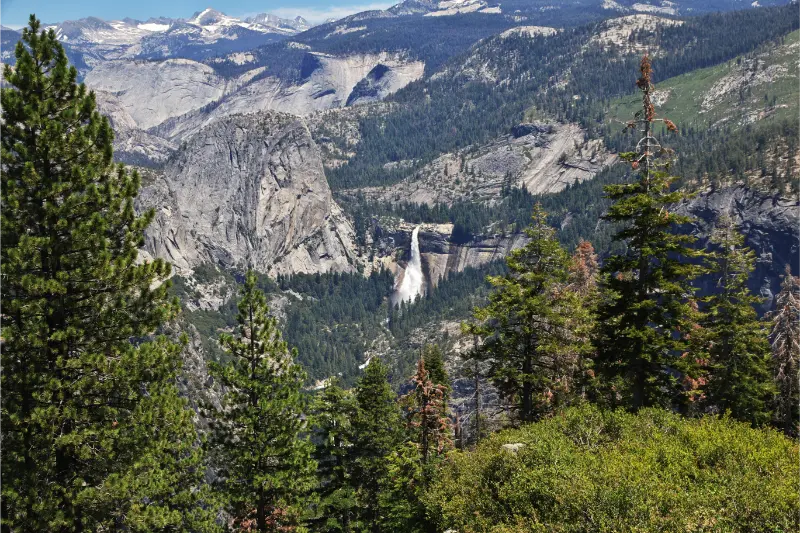
Lower Yosemite Fall is the easiest high-impact option for mixed-age groups. Bridalveil Fall is another classic stop when the access area is open. For stronger hikers, the Mist Trail corridor can be spectacular but wet, slippery and crowded; conditions can change with ice, spray and trail maintenance. The separate Yosemite waterfalls guide helps compare viewpoints and trail effort.
A realistic two-day spring itinerary
Day 1: Yosemite Valley
Arrive early, use the shuttle or park once where practical, then combine Yosemite Falls, Cook’s Meadow, Valley View or Tunnel View and an easy riverside walk. Keep one longer walk optional. Spring water levels and weather can make a short route more memorable than a rushed attempt to see every viewpoint.
Day 2: choose by conditions
If Mariposa Grove access is running smoothly, use the second day for Wawona and the giant sequoias. If snow or shuttle conditions make that awkward, stay in the valley for a longer hike or visit another open lower-elevation area. Do not spend half the day driving toward a closed road because an old itinerary said Glacier Point was essential.
Where to stay in spring
Inside-park lodging is the simplest choice when budget and availability allow. El Portal reduces entrance driving for the valley, while Mariposa and Oakhurst offer more services at the cost of longer daily drives. If you are deciding between areas, use the Yosemite first-time guide and two-day Yosemite itinerary to compare the tradeoffs.
Families and first-time hikers
Spring is excellent for families because huge waterfalls can be enjoyed without long hikes. Keep children away from fast water and slick rocks, carry dry layers and avoid turning a wet trail into a requirement. Families can pair this article with Yosemite with kids for stroller, Junior Ranger and pacing advice.
How to pace the day so it still feels like a vacation
spring Yosemite is a lower-elevation trip first and a high-country trip only when roads actually open. A useful rule is to choose one anchor experience for the morning, one flexible activity for the middle of the day and one optional late-day stop. That structure survives traffic, weather, tired children and seasonal changes far better than a minute-by-minute checklist.
Build in one genuine break. In California that can mean a picnic table, a shaded plaza, a visitor center, a café or simply an hour at the hotel. The break is not lost sightseeing time: it protects the quality of the second half of the day, particularly for young children, older travelers and anyone adjusting to heat, altitude or long driving.
Where to stay and how to choose the right base
For a short spring visit, prioritize Yosemite Valley access over saving a small amount on lodging. Oakhurst is useful for Mariposa Grove, El Portal for the valley, and Mariposa for a broader town base.
For one night, practical access usually matters more than atmosphere. For two or more nights, walkability, food options and a pleasant evening environment become more valuable. Always check the real drive time to the first stop of the next morning rather than trusting a hotel description that says “near” a park, beach or attraction.
Families, seniors and travelers with limited mobility
Families and seniors can enjoy waterfalls, meadows and major viewpoints with relatively little hiking, but wet pavement, cold mornings and spring runoff require more caution than a dry summer day.
Accessibility can change because of construction, snow, storm damage, temporary shuttle patterns or maintenance. When step-free access is essential, confirm the official accessibility information shortly before travel and keep one backup viewpoint or activity that requires less walking.
Common mistakes to avoid
- Assuming Tioga Road will be open because the valley has no snow.
- Building the trip around Glacier Point before checking road status.
- Ignoring chain controls after a warm forecast.
- Walking close to fast spring runoff for photographs.
- Trying to fit every famous hike into a two-day visit.
What to combine with this trip
Yosemite spring works especially well as part of a Sierra foothills trip. Avoid combining it with the Eastern Sierra unless Tioga Road is officially open; otherwise the driving detour is substantial.
The best combinations are geographic rather than aspirational. A nearby second stop can improve a day; a famous destination two hours in the wrong direction usually creates more driving than value. Treat transfer time as part of the itinerary and cut stops before you cut sleep, meals or safe driving time.
A practical decision framework before you go
The evening before the visit, identify the one experience you would be disappointed to miss, the condition that could disrupt it, the easiest backup and the point at which you will stop adding activities. Save the official conditions page, the first parking location and any reservation to your phone for offline access. This simple routine prevents most avoidable travel stress.
Separate stable information from information that must be checked again. Geography, general trail length and the character of a destination are relatively stable. Parking rules, shuttle schedules, road access, wildfire restrictions, surf, snow and opening hours can change quickly. Use official sources for the second group and treat old screenshots or social posts only as inspiration.
Budget and comfort strategy
Spend where it removes a real constraint. A better-located hotel can eliminate an hour of driving, a shuttle can remove parking stress and a grocery stop can prevent an expensive food search late in the day. At the same time, many of California’s strongest experiences—forest walks, viewpoints, beaches and scenic drives—do not require a large attraction budget.
Carry water, a light layer and simple food even on short sightseeing days. California can shift quickly between foggy coast, hot inland valleys, high elevation and cold evening air. Comfort is part of logistics, not an afterthought, because it determines whether the whole group still enjoys the final hours of the day.
How to adapt the plan when conditions change
Do not rebuild the entire trip because one element changes. First ask whether the problem affects access, safety or only convenience. If access is impossible, switch to a nearby alternative that uses the same hotel and general driving direction. If the issue is crowds or weather, change the order of the day before changing the destination. This approach keeps the trip coherent and avoids expensive last-minute detours.
A good backup should be simpler than the original plan, not more ambitious. Choose an indoor museum for heavy rain, a short accessible walk for fatigue, a town stop when a mountain road closes, or a beach viewpoint when surf makes water activities unsafe. The goal is not to reproduce the original experience perfectly; it is to preserve a good day.