California has so many scenic roads that a list can become meaningless unless it helps you decide which drive belongs in your trip. Highway 1 is famous, but it is not automatically the best choice for a traveler focused on deserts or giant trees. Highway 395 can be extraordinary, but it changes completely with season and mountain-road access. Avenue of the Giants is short enough to fit into a redwood day, while a Lake Tahoe loop can be frustrating if summer traffic is heavy.
The 10 drives below are selected because the road itself adds real value rather than merely connecting attractions. For each one, the important question is not only “Is it beautiful?” but also how long to allow, when it works best and what can make it impractical.
1. Highway 1 through Big Sur
Best for: ocean cliffs, first-time California road trips, photography.
The Big Sur section of Highway 1 is California’s iconic scenic drive because the road repeatedly reveals ocean, cliffs, coves and bridges. The mistake is treating it as a fast transfer between Monterey and Southern California. Viewpoints, traffic, construction and lunch stops stretch the day.
Use our Highway 1 guide and allow a full day for the Big Sur section if you want multiple stops. Always check current road conditions; landslides or repair work can close segments and create long detours.
2. Highway 395 through the Eastern Sierra
Best for: mountain walls, high desert, road-trip variety.
US-395 runs along the eastern side of the Sierra Nevada and links places such as Lone Pine, Bishop, Mammoth Lakes and Mono Lake. It combines enormous mountain views with volcanic landscapes, historic sites and side roads into alpine canyons.
Use the five-day Eastern Sierra itinerary if the region is a main destination. The road itself is generally straightforward, but side trips and mountain passes can be seasonal. Summer and fall are popular; winter requires weather awareness.
3. Avenue of the Giants
Best for: immersive redwood forest without a long detour.
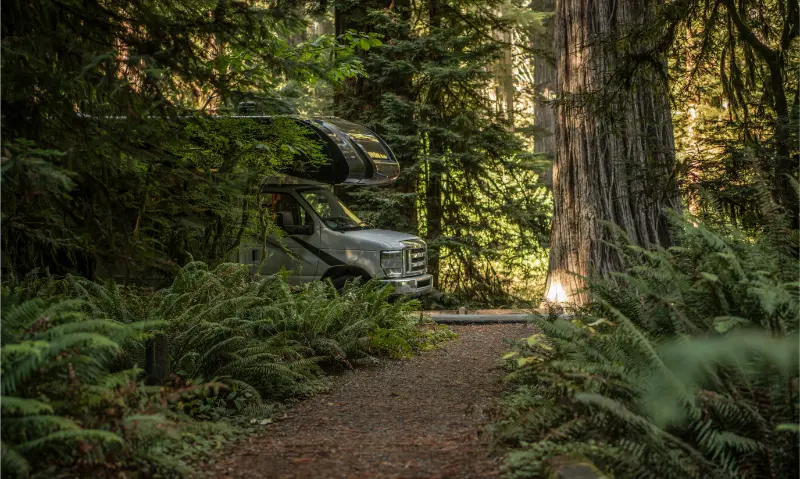
Avenue of the Giants parallels US-101 through Humboldt Redwoods State Park and places you directly among towering coast redwoods. It is far more rewarding when you stop for short grove walks rather than driving the full route without getting out.
Our Avenue of the Giants guide treats the drive as a full day. It can also be used as a scenic segment on a longer Redwood Coast trip.
4. 17-Mile Drive
Best for: a polished half-day coastal drive near Monterey.
17-Mile Drive is shorter and more controlled than Highway 1, with designated coastal viewpoints, famous cypress scenery and easy access from Monterey and Carmel. It works well for travelers who want scenic coast without committing to a full day of cliffside driving.
There is a vehicle entrance fee and operating rules, so check the current official information. Use our 17-Mile Drive guide to decide which stops are worth your time.
5. Lake Tahoe scenic loop
Best for: alpine lake views, beaches and mountain towns.
The road around Lake Tahoe crosses California and Nevada and includes beaches, forest, rocky coves and elevated viewpoints. In theory, it is an easy loop. In peak summer, traffic and full parking lots can make constant stopping inefficient.
If you have only two or three days, do not feel obligated to complete the entire loop. Lake Tahoe in summer is better experienced by choosing one shore and a few high-value stops. The full drive makes more sense on a quieter weekday or when you have an extra day.
6. Highway 49 through Gold Country
Best for: historic towns, foothill scenery and slower road trips.
State Route 49 follows the Sierra foothills through California Gold Rush country. It is less visually dramatic in a single photograph than Big Sur, but it creates one of the state’s best themed road trips because towns, museums, rivers and historic sites connect naturally.
Use our five-day Highway 49 itinerary rather than trying to drive the route in one day. The value comes from stopping in places such as Nevada City, Grass Valley and other historic communities.
7. Redwood Highway / US-101 on the far North Coast
Best for: multi-day redwoods, rugged coast and remote Northern California.
US-101 north of Eureka links redwood parks, coastal towns and scenic side roads. The road is not continuously spectacular in the same way as Big Sur, but it provides access to some of California’s most impressive forests and a very different road-trip atmosphere.
Combine Redwood National and State Parks, Eureka and Humboldt Bay and Crescent City rather than making this a simple out-and-back drive from San Francisco. The distances are long enough to deserve several nights.
8. Tioga Road through Yosemite — when open
Best for: high-country scenery and linking Yosemite with the Eastern Sierra.
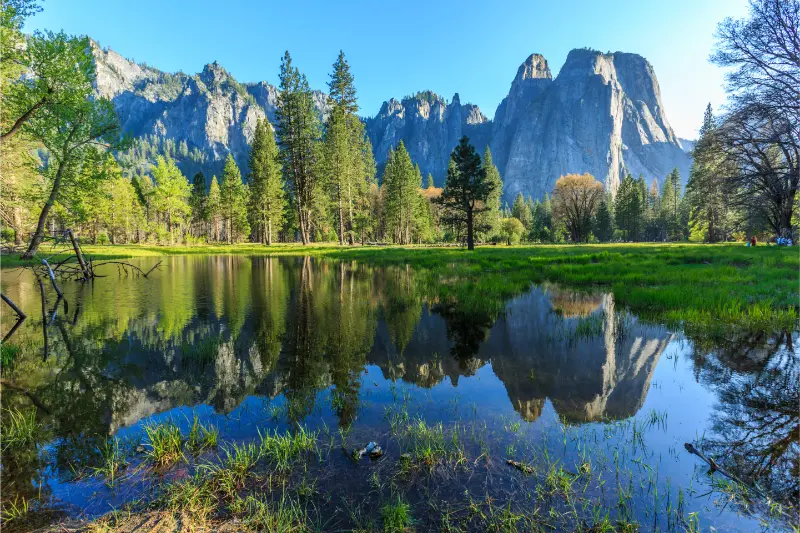
Tioga Road is one of California’s great mountain drives when it is open. It climbs from Yosemite’s west side toward Tuolumne Meadows and Tioga Pass, then descends toward Lee Vining and Mono Lake. Meadows, granite domes and high-elevation views make the road an attraction in its own right.
The critical limitation is season. Tioga Road closes for winter and can remain closed until late spring or early summer depending on snow. Never build a winter or early-spring itinerary that assumes it will be open. Check the official Yosemite road status before travel.
9. Palms to Pines Scenic Byway
Best for: dramatic climate change between desert and mountain.
The Palms to Pines route links the Palm Springs area with higher-elevation communities and forest, showing how quickly Southern California can change with altitude. It is a strong addition to a Palm Springs trip because the drive itself provides relief from desert heat and a completely different landscape.
Mountain weather can differ sharply from the valley, especially in winter. Check current road conditions and do not assume clear skies in Palm Springs mean dry pavement at higher elevation.
10. Rim of the World Scenic Byway
Best for: Southern California mountain views and combining Big Bear with other mountain communities.
Highways through the San Bernardino Mountains provide expansive views and link areas such as Lake Arrowhead and Big Bear. The road can be beautiful, but it is also a real mountain route with curves, elevation and winter-weather exposure.
Use Big Bear Lake or Lake Arrowhead as a base rather than trying to squeeze the whole mountain region into a quick detour from Los Angeles. In winter, chain controls and closures can apply.
Which scenic drive is best for a first California trip?
If you want the classic image of California, choose Highway 1 through Big Sur. If mountains are the priority, choose Highway 395 and add Tioga Road only when open. For giant trees, choose Avenue of the Giants and continue north on US-101. For a short polished coastal experience, 17-Mile Drive is easiest. For history and small towns, Highway 49 is stronger than the more famous coastal routes.
How many scenic drives should you put in one trip?
For a 10-day trip, one major scenic corridor and one shorter drive are usually enough. A first-time itinerary might include Highway 1 plus 17-Mile Drive, or Highway 395 plus Tioga Road. Trying to include Big Sur, Lake Tahoe, Highway 395, redwoods and Gold Country in the same vacation produces more driving than sightseeing.
Season matters more than rankings
A road can be “best” in one month and impractical in another. Tioga Road is seasonal. Tahoe and San Bernardino mountain roads can require chains. Big Sur can experience storm damage. Desert approaches can be dangerous in extreme heat.
Use Caltrans QuickMap for current state-highway conditions and consult park sites for roads managed within national or state parks. Caltrans also maintains information on the California State Scenic Highway Program, though an officially designated road is not automatically the best fit for your personal itinerary.
How to drive scenic roads without exhausting yourself
Start with a full fuel tank, keep water in the car and download maps where service is weak. Choose a small number of planned stops and allow spontaneous ones only where parking is legal and safe. Never stop in a traffic lane or on a blind curve for a photograph.
Share driving on long days if possible. If only one person drives, reduce the number of stops after dark. Scenic roads are most enjoyable when the driver has enough attention left to drive safely rather than trying to keep up with an overfilled schedule.
Final recommendation
Choose scenic drives based on the region you already want to visit, not because a list says you should collect all of them. Highway 1, Highway 395, Avenue of the Giants and the Tahoe Basin each create a different California. Build one of those landscapes into the center of the trip, give it enough time, and the drive becomes part of the experience instead of a line between hotel reservations.
Honorable mentions worth considering
California has more scenic roads than a top-ten list can hold. Mulholland Drive can add city-and-mountain views to a Los Angeles day; Silverado Trail provides a quieter Napa Valley driving corridor; parts of Highway 101 through Sonoma and Mendocino connect coastal landscapes and small towns; and the roads through Joshua Tree create a very different desert version of the scenic drive.
These routes are best used because they fit the itinerary already in place. A two-hour detour to collect another “scenic road” rarely improves a trip. Choose the road that deepens the region you are visiting rather than the one with the highest position on someone else’s ranking.